Notice: تابع WP_Block_Type_Registry::register به طورنادرست فراخوانی شد. نامهای نوع بلوک نباید حروف بزرگ داشته باشند. لطفاً برای اطلاعات بیشتر، اشکال زدایی در وردپرس را مشاهده کنید. (این پیام در نگارش 5.0.0 افزوده شده است.) in /home/ethicsho/public_html/wp-includes/functions.php on line 5313
Warning: Use of undefined constant TDC_PATH_LEGACY - assumed 'TDC_PATH_LEGACY' (this will throw an Error in a future version of PHP) in /home/ethicsho/public_html/wp-content/plugins/td-composer/td-composer.php on line 109
Warning: Use of undefined constant TDSP_THEME_PATH - assumed 'TDSP_THEME_PATH' (this will throw an Error in a future version of PHP) in /home/ethicsho/public_html/wp-content/plugins/td-composer/td-composer.php on line 113 بایگانیهای Lara Deeb - خانه اخلاق پژوهان جوان Notice: Trying to access array offset on value of type bool in /home/ethicsho/public_html/wp-content/plugins/wp-ulike/inc/general-functions.php on line 807
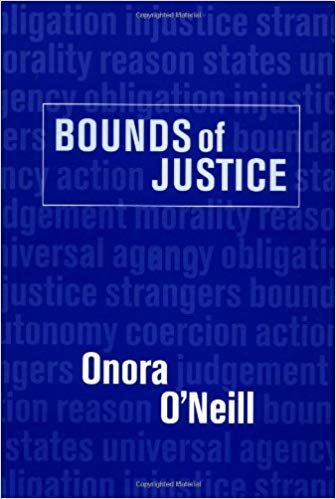
In this collection of essays Onora O’Neill explores and argues for an account of justice that is fundamentally cosmopolitan rather than civic, yet takes serious account of institutions and boundaries, and of human diversity and vulnerability. Starting from conceptions that are central to any account of justice – those of reason, action, judgement, coercion, obligations and rights – she discusses whether and how culturally or politically specific concepts and views, which limit the claims and scope of justice, can be avoided. She then examines the demands and scope of just institutions, arguing that there are good reasons for taking the claims of distant strangers seriously, but that doing so points not to a world without boundaries but to one of porous boundaries and dispersed power. Bounds of Justice will be of interest to a wide range of readers in philosophy, politics and international relations.
The 1991 US Supreme Court decision in Feist Publications Inc. v. Rural Telephone Service Co. held that factual matter is not subject to copyright protection because it is not original to the author, thus dramatically rejecting a two-century-old tradition of protecting factual compilations under copyright. The contributors to this book reassess this decision and its implications, particularly for the protection of electronic databases. The debate over fact-based works has grown still more complicated since Feist with the enactment of worldwide initiatives that extend the protection of databases, such as the European Union’s Database Directive. A number of legal scholars have voiced their opinions on how Congress should react to the Court’s decision and the Database Directive, but none have put forth a viable solution or questioned the debate’s underlying assumptions. The contributors to this insightful book turn their attention to these overlooked aspects, approaching the protection of factual matter from a range of perspectives: policy, historical, comparative, empirical and philosophical. The range of viewpoints and disciplines represented in this compelling book will be of great interest to students, scholars and lawyers working in the area of intellectual property law.
Philosophy: The Basicsisthebook for anyone coming to philosophy for the first time. Nigel Warburton’s popular book gently eases the reader into the world of philosophy. Each chapter considers a key area of philosophy, explaining and exploring the basic ideas and themes. The third edition updates and expands the main text, and is the perfect companion toPhilosophy: Basic Reading. These two books will together make for an ideal and straight forward introduction to philosophy.
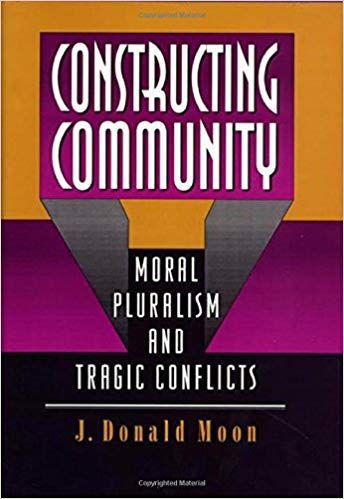
In developing a new theory of political and moral community, J. Donald Moon takes questions of cultural pluralism and difference more seriously than do many other liberal thinkers of our era: Moon is willing to confront the problem of how community can be created among those who have very different views about the proper ends of human life. Experiencing such profound disagreement, can we live together in a society under norms we all accept? In recent years, traditional ways of looking at this query have come under attack by post-modernists, feminists, and thinkers concerned with pluralism. Respectfully engaging their critiques, Moon proposes a reformulated liberalism that is intended to overcome the problems they have identified.In developing a new theory of political and moral community, J. Donald Moon takes questions of cultural pluralism and difference more seriously than do many other liberal thinkers of our era: Moon is willing to confront the problem of how community can be created among those who have very different views about the proper ends of human life. Experiencing such profound disagreement, can we live together in a society under norms we all accept? In recent years, traditional ways of looking at this query have come under attack by post-modernists, feminists, and thinkers concerned with pluralism. Respectfully engaging their critiques, Moon proposes a reformulated liberalism that is intended to overcome the problems they have identified.
ما از اخلاق چه انتظاری داریم؟ این سوال شاید تاحدودی برای عموم مردم و یا متخصصان این رشته قابل پاسخ باشد؛ اینکه خوب بودن را به ما بیاموزد و در تنظیم روابط فردی م...

جشن کتاب تهران به ایستگاه سی و یکم رسیده است. حال و احوال نشر کتاب خوب نیست و باید فرهنگدوستان را به خرید و هدیه دادن کتاب ترغیب نمود. خانه اخلاقپژوهان جوان ب...

بنیاد کتابهای اخلاق اسلامی عمدتا پالایش جان از آلودگیها و آراستن آن به زیباییها است. اندیشه محوری این قبیل کتابها آن است که انسان فعلی آنی نیست که باید باشد...

-
0 Comments