Notice: تابع WP_Block_Type_Registry::register به طورنادرست فراخوانی شد. نامهای نوع بلوک نباید حروف بزرگ داشته باشند. لطفاً برای اطلاعات بیشتر، اشکال زدایی در وردپرس را مشاهده کنید. (این پیام در نگارش 5.0.0 افزوده شده است.) in /home/ethicsho/public_html/wp-includes/functions.php on line 5313
Warning: Use of undefined constant TDC_PATH_LEGACY - assumed 'TDC_PATH_LEGACY' (this will throw an Error in a future version of PHP) in /home/ethicsho/public_html/wp-content/plugins/td-composer/td-composer.php on line 109
Warning: Use of undefined constant TDSP_THEME_PATH - assumed 'TDSP_THEME_PATH' (this will throw an Error in a future version of PHP) in /home/ethicsho/public_html/wp-content/plugins/td-composer/td-composer.php on line 113 بایگانیهای Kevin J. O'Brien - خانه اخلاق پژوهان جوان Notice: Trying to access array offset on value of type bool in /home/ethicsho/public_html/wp-content/plugins/wp-ulike/inc/general-functions.php on line 807
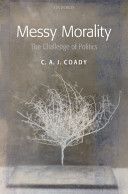
Tony Coady explores the challenges that morality poses to politics. He confronts the complex intellectual tradition known as realism, which seems to deny any relevance of morality to politics, especially international politics. He argues that, although realism has many serious faults, it has lessons to teach us: in particular, it cautions us against the dangers of moralism in thinking about politics and particularly foreign affairs. Morality must not be confused with moralism: Coady characterizes various forms of moralism and sketches their distorting influence on a realistic political morality. He seeks to restore the concept of ideals to an important place in philosophical discussion, and to give it a particular pertinence in the discussion of politics. He deals with the fashionable idea of “dirty hands,” according to which good politics will necessarily involve some degree of moral taint or corruption. Finally, he examines the controversial issue of the role of lying and deception in politics. Along the way Coady offers illuminating discussion of historical and current political controversies. This lucid book will provoke and stimulate anyone interested in the interface of morality and politics.
Ethical constraints on relations among individuals within and between societies have always reflected or invoked a higher authority than the caprices of human will. For over two thousand years Natural Law and Natural Rights were the constellations of ideas and presuppositions that fulfilled this role in the west, and exhibited far greater similarities than most commentators want to admit. Such ideas were the lens through which Europeans evaluated the rest of the world. In his major new book David Boucher rejects the view that Natural Rights constituted a secularisation of Natural Law ideas by showing that most of the significant thinkers in the field, in their various ways, believed that reason leads you to the discovery of your obligations, while God provides the ground for discharging them. Furthermore, the book maintains that Natural Rights and Human Rights are far less closely related than is often asserted because Natural Rights never cast adrift the religious foundationalism, whereas Human Rights, for the most part, have jettisoned the Christian metaphysics upon which both Natural Law and Natural Rights depended. Human Rights theories, on the whole, present us with foundationless universal constraints on the actions of individuals, both domestically and internationally. Finally, one of the principal contentions of the book is that these purportedly universal rights and duties almost invariably turn out to be conditional, and upon close scrutiny end up being ‘special’ rights and privileges as the examples of multicultural encounters, slavery and racism, and women’s rights demonstrate.
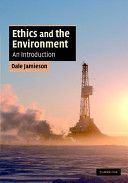
What is the environment, and how does it figure in an ethical life? This book is an introduction to the philosophical issues involved in this important question, focussing primarily on ethics but also encompassing questions in aesthetics and political philosophy. Topics discussed include the environment as an ethical question, human morality, meta-ethics, normative ethics, humans and other animals, the value of nature, and nature’s future. The discussion is accessible and richly illustrated with examples. The book will be valuable for students taking courses in environmental philosophy, and also for a wider audience in courses in ethics, practical ethics, and environmental studies. It will also appeal to general readers who want a reliable and sophisticated introduction to the field.
ما از اخلاق چه انتظاری داریم؟ این سوال شاید تاحدودی برای عموم مردم و یا متخصصان این رشته قابل پاسخ باشد؛ اینکه خوب بودن را به ما بیاموزد و در تنظیم روابط فردی م...

جشن کتاب تهران به ایستگاه سی و یکم رسیده است. حال و احوال نشر کتاب خوب نیست و باید فرهنگدوستان را به خرید و هدیه دادن کتاب ترغیب نمود. خانه اخلاقپژوهان جوان ب...

بنیاد کتابهای اخلاق اسلامی عمدتا پالایش جان از آلودگیها و آراستن آن به زیباییها است. اندیشه محوری این قبیل کتابها آن است که انسان فعلی آنی نیست که باید باشد...

-
0 Comments