Notice: تابع WP_Block_Type_Registry::register به طورنادرست فراخوانی شد. نامهای نوع بلوک نباید حروف بزرگ داشته باشند. لطفاً برای اطلاعات بیشتر، اشکال زدایی در وردپرس را مشاهده کنید. (این پیام در نگارش 5.0.0 افزوده شده است.) in /home/ethicsho/public_html/wp-includes/functions.php on line 5313
Warning: Use of undefined constant TDC_PATH_LEGACY - assumed 'TDC_PATH_LEGACY' (this will throw an Error in a future version of PHP) in /home/ethicsho/public_html/wp-content/plugins/td-composer/td-composer.php on line 109
Warning: Use of undefined constant TDSP_THEME_PATH - assumed 'TDSP_THEME_PATH' (this will throw an Error in a future version of PHP) in /home/ethicsho/public_html/wp-content/plugins/td-composer/td-composer.php on line 113 بایگانیهای Kamden K. Strunk - خانه اخلاق پژوهان جوان Notice: Trying to access array offset on value of type bool in /home/ethicsho/public_html/wp-content/plugins/wp-ulike/inc/general-functions.php on line 807
In recent years, a succession of corporate scandals has rocked the international business community. As a result, many companies have invested considerable time, money and effort on the development of ethics management programs. However, in many cases, such programs are nothing more than insurance policies against corporate liability, designed merely to limit the fallout of scandals should they occur. In Business Ethics as Practice, Mollie Painter-Morland urges us to take business ethics seriously by reconsidering the role of ethics management within organizations. She redefines the typical seven-step ethics management program from within – challenging the reader to reconsider what is possible within each aspect of this process. In doing so, she draws on the insights of Aristotle, Nietzsche, Heidegger, Foucault and numerous contemporary organizational theorists and sociologists to create the space for the emergence of a morally responsive corporate ethos.
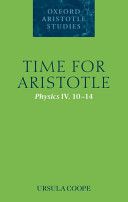
What is the relation between time and change? Does time depend on the mind? Is the present always the same or is it always different? Aristotle tackles these questions in the Physics, and Time for Aristotle is the first book in English devoted to this discussion. Aristotle claims that time is not a kind of change, but that it is something dependent on change; he defines it as a kind of “number of change.” Ursula Coope argues that what this means is that time is a kind of order (not, as is commonly supposed, a kind of measure). It is universal order within which all changes are related to each other. This interpretation enables Coope to explain two puzzling claims that Aristotle makes: that the now is like a moving thing, and that time depends for its existence on the mind. Brilliantly lucid in its explanation of this challenging section of the Physics, Time for Aristotle shows his discussion to be of enduring philosophical interest.
ما از اخلاق چه انتظاری داریم؟ این سوال شاید تاحدودی برای عموم مردم و یا متخصصان این رشته قابل پاسخ باشد؛ اینکه خوب بودن را به ما بیاموزد و در تنظیم روابط فردی م...

جشن کتاب تهران به ایستگاه سی و یکم رسیده است. حال و احوال نشر کتاب خوب نیست و باید فرهنگدوستان را به خرید و هدیه دادن کتاب ترغیب نمود. خانه اخلاقپژوهان جوان ب...

بنیاد کتابهای اخلاق اسلامی عمدتا پالایش جان از آلودگیها و آراستن آن به زیباییها است. اندیشه محوری این قبیل کتابها آن است که انسان فعلی آنی نیست که باید باشد...

-
0 Comments