Notice: تابع WP_Block_Type_Registry::register به طورنادرست فراخوانی شد. نامهای نوع بلوک نباید حروف بزرگ داشته باشند. لطفاً برای اطلاعات بیشتر، اشکال زدایی در وردپرس را مشاهده کنید. (این پیام در نگارش 5.0.0 افزوده شده است.) in /home/ethicsho/public_html/wp-includes/functions.php on line 5313
Warning: Use of undefined constant TDC_PATH_LEGACY - assumed 'TDC_PATH_LEGACY' (this will throw an Error in a future version of PHP) in /home/ethicsho/public_html/wp-content/plugins/td-composer/td-composer.php on line 109
Warning: Use of undefined constant TDSP_THEME_PATH - assumed 'TDSP_THEME_PATH' (this will throw an Error in a future version of PHP) in /home/ethicsho/public_html/wp-content/plugins/td-composer/td-composer.php on line 113 بایگانیهای Joshua Gert - خانه اخلاق پژوهان جوان Notice: Trying to access array offset on value of type bool in /home/ethicsho/public_html/wp-content/plugins/wp-ulike/inc/general-functions.php on line 807
Contemporary Debates in Moral Theory features pairs of newly commissioned essays by some of the leading theorists working in the field today. Brings together fresh debates on the most controversial issues in moral theory Questions include: Are moral requirements derived from reason? How demanding is morality? Are virtues the proper starting point for moral theorizing? Lively debate format sharply defines the issues, and paves the way for further discussion. Will serve as an accessible introduction to the major topics in contemporary moral theory, while also capturing the imagination of professional philosophers.
We are strongly inclined to believe in moral responsibility, that some human agents truly deserve moral praise or blame for some of their actions. However, recent philosophical discussion has put this natural belief in the reality of moral responsibility under suspicion. There are important reasons to think that moral responsibility is incompatible with both determinism and indeterminism, possibly rendering moral responsibility an impossibility. This book lays out the major arguments for skepticism about moral responsibility and subjects them to sustained and penetrating critical analysis. Moral Responsibility lays out the intricate dialectic involved in these issues in a helpful and accessible way. The book goes on to suggest a way in which skepticism can be avoided, arguing that an excessive pre-eminence given to the will might lie at the root of skepticism of moral responsibility. Carlos Moya offers an alternative to skepticism, showing how a cognitive approach to moral responsibility whichstresses the importance of belief would rescue our natural and centrally important faith in the reality of moral responsibility.
In this book, Scott Soames illuminates the notion of truth and the role it plays in our ordinary thought as well as in our logical, philosophical, and scientific theories. Soames aims to integrate and deepen the most significant insights on truth from a variety of sources. He powerfully brings together the best technical work and the most important philosophical reflection on truth and shows how each can illuminate the other. Investigating such questions as whether we need a truth predicate at all, what theoretical tasks it allows us to accomplish, and how we are to understand the content of any predicate capable of accomplishing these tasks, Soames organizes his discussion into three parts. Part I addresses crucial foundational issues as it identifies the bearers of truth, provides a basis for distinguishing truth from other notions (like certainty, with which it is often confused), and formulates positive responses to well-known forms of truth-skepticism. Part II explicates the formal theories of Alfred Tarski and Saul Kripke and evaluates the philosophical significance of their work. It discusses their treatments of the Liar paradox, the relationship between truth and proof, the notion of a partially defined predicate, the concepts of logical truth and logical consequence, and the connection between truth and meaning. Part III extends important lessons drawn from Tarski and Kripke into new domains: vague predicates, the Sorites paradox, and the development of a larger, deflationary perspective on truth. Throughout the book, Soames examines a wide range of deflationary theories of truth, and attempts to separate what is correct and worth preserving in them from what is not. In doing so, he seeks to clear up many of the most significant philosophical doubts about truth. Written for a general audience while offering engaging material to the specialist, this rich study will be profitably read by both.
This volume contains C. D. Broad’s Cambridge lectures on Ethics. Broad gave a course of lectures on the subject, intended primarily for Part I of the Moral Sciences Tripos, every academic year from 1933 – 34 up to and in cluding 1952 – 53 (except that he did not lecture on Ethics in 1935 – 36). The course however was frequently revised, and the present version is es sentially that which he gave in 1952 – 53. Broad always wrote out his lectures fully beforehand, and the manuscript on Ethics, although full of revisions, is in a reasonably good state. But his handwriting is small and close and in places difficult to decipher. I therefore fear that some words may have been misread. There was an additional complication. In the summer of 1953 Broad revised and enlarged two sections of the course, namely the section on “Moore’s theory” and that on “Naturalistic theories” (both sections occur in Chapter 4). The revised version of the section on Moore is undoubtedly superior to the earlier version, and I have therefore included it. But in my opinion this is not true of the new version of the section on naturalistic theories: although more comprehensive than the earlier version, it is not only repetitive in itself, but also repeats, sometimes almost verbatim, passages which occur elsewhere in the lectures. In brief, the new version is not fully integrated with the rest of the course.
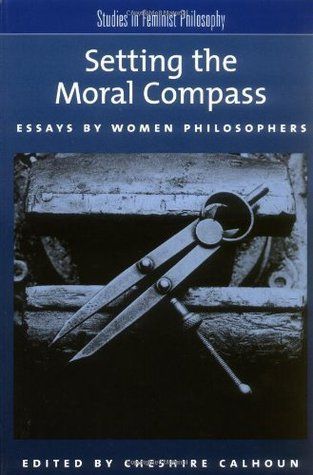
Setting the Moral Compass brings together the (largely unpublished) work of nineteen women moral philosophers whose powerful and innovative work has contributed to the “re-setting of the compass” of moral philosophy over the past two decades. The contributors, who include many of the top names in this field, tackle several wide-ranging projects: they develop an ethics for ordinary life and vulnerable persons; they examine the question of what we ought to do for each other; they highlight the moral significance of inhabiting a shared social world; they reveal the complexities of moral negotiations; and finally they show us the place of emotion in moral life.
ما از اخلاق چه انتظاری داریم؟ این سوال شاید تاحدودی برای عموم مردم و یا متخصصان این رشته قابل پاسخ باشد؛ اینکه خوب بودن را به ما بیاموزد و در تنظیم روابط فردی م...

جشن کتاب تهران به ایستگاه سی و یکم رسیده است. حال و احوال نشر کتاب خوب نیست و باید فرهنگدوستان را به خرید و هدیه دادن کتاب ترغیب نمود. خانه اخلاقپژوهان جوان ب...

بنیاد کتابهای اخلاق اسلامی عمدتا پالایش جان از آلودگیها و آراستن آن به زیباییها است. اندیشه محوری این قبیل کتابها آن است که انسان فعلی آنی نیست که باید باشد...

-
0 Comments