Notice: تابع WP_Block_Type_Registry::register به طورنادرست فراخوانی شد. نامهای نوع بلوک نباید حروف بزرگ داشته باشند. لطفاً برای اطلاعات بیشتر، اشکال زدایی در وردپرس را مشاهده کنید. (این پیام در نگارش 5.0.0 افزوده شده است.) in /home/ethicsho/public_html/wp-includes/functions.php on line 5313
Warning: Use of undefined constant TDC_PATH_LEGACY - assumed 'TDC_PATH_LEGACY' (this will throw an Error in a future version of PHP) in /home/ethicsho/public_html/wp-content/plugins/td-composer/td-composer.php on line 109
Warning: Use of undefined constant TDSP_THEME_PATH - assumed 'TDSP_THEME_PATH' (this will throw an Error in a future version of PHP) in /home/ethicsho/public_html/wp-content/plugins/td-composer/td-composer.php on line 113 بایگانیهای Joseph R. Des Jardins - خانه اخلاق پژوهان جوان Notice: Trying to access array offset on value of type bool in /home/ethicsho/public_html/wp-content/plugins/wp-ulike/inc/general-functions.php on line 807
This volume examines the psychological, social-relational, and cultural foundations of the most basic moral commitments. It begins by looking at the seminal writings of Augusto Blasi, whose writings on moral cognition, the development of self-identity, and moral personality have transformed the research agenda in moral psychology. This work is now the starting point of all discussion about the relationship between self and morality; the developmental grounding of the moral personality; and the moral integration of cognition, emotion, and behavior. Indeed, it is now widely believed that organizing self-understanding around basic moral commitments is crucial to the formation of a moral identity which, in turn, underwrites moral conduct. Using Blasi’s work as a point of departure, a distinguished interdisciplinary and international group of scholars have contributed essays summarizing their own theoretical and empirical research on these topics. This book features new theories of moral functioning that range across several psychological literatures, including social cognition, cognitive science, and personality development. Examining the social-relational, communitarian, and cultural aspects of moral self-identity, it provides a comprehensive account of moral personality. Uniformly integrative, field-expanding, and on the cutting edge of research on moral development and personality, the book appeals to scholars, developmental theorists and graduate students interested in issues of moral development, education, and behavior, as well as cognitive development theory.
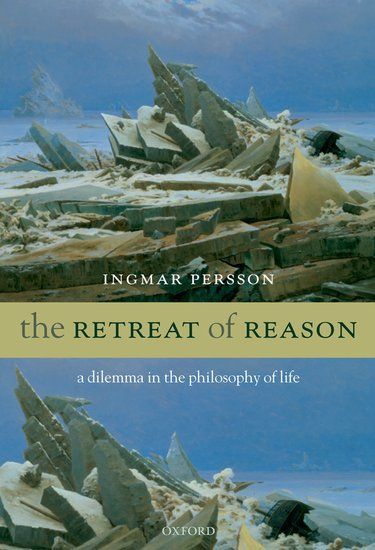
One of the main original aims of philosophy was to give us guidance about how to live our lives. The ancient Greeks typically assumed that a life led in accordance with reason, a rational life, would also be the happiest or most fulfilling. Ingmar Persson’s book resumes this project, which has been largely neglected in contemporary philosophy. But his conclusions are very different; by exploring the irrationality of our attitudes to time, our identity, and our responsibility,Persson shows that the aim of living rationally conflicts not only with the aim of leading the most fulfilling life, but also with the moral aim of promoting the maximization and just distribution of fulfilment for all. Persson also argues that neither the aim of living rationally nor any of the fulfilmentaims can be rejected as less rational than any other. We thus face a dilemma of either having to enter a retreat of reason, insulated from everyday attitudes, or making reason retreat from its aspiration to be the sole controller of our attitudes.The Retreat of Reason explores three areas in which there is a conflict between the rational life and a life dedicated to maximization of fulfilment. Persson contends that living rationally requires us to give up, first, our temporal biases; secondly, our bias towards ourselves; and, thirdly, our responsibility to the extent that it involves the notion of desert and desert-entailing notions. But giving up these attitudes is so overwhelmingly hard that the effort to do so not only makesour own lives less fulfilling, but also obstructs our efficient pursuit of the moral aim of promoting a maximum of justly distributed fulfilment.Ingmar Persson brings back to philosophy the ambition of offering a broad vision of the human condition. The Retreat of Reason challenges and disturbs some of our most fundamental ideas about ourselves.
ما از اخلاق چه انتظاری داریم؟ این سوال شاید تاحدودی برای عموم مردم و یا متخصصان این رشته قابل پاسخ باشد؛ اینکه خوب بودن را به ما بیاموزد و در تنظیم روابط فردی م...

جشن کتاب تهران به ایستگاه سی و یکم رسیده است. حال و احوال نشر کتاب خوب نیست و باید فرهنگدوستان را به خرید و هدیه دادن کتاب ترغیب نمود. خانه اخلاقپژوهان جوان ب...

بنیاد کتابهای اخلاق اسلامی عمدتا پالایش جان از آلودگیها و آراستن آن به زیباییها است. اندیشه محوری این قبیل کتابها آن است که انسان فعلی آنی نیست که باید باشد...

-
0 Comments