Notice: تابع WP_Block_Type_Registry::register به طورنادرست فراخوانی شد. نامهای نوع بلوک نباید حروف بزرگ داشته باشند. لطفاً برای اطلاعات بیشتر، اشکال زدایی در وردپرس را مشاهده کنید. (این پیام در نگارش 5.0.0 افزوده شده است.) in /home/ethicsho/public_html/wp-includes/functions.php on line 5313
Warning: Use of undefined constant TDC_PATH_LEGACY - assumed 'TDC_PATH_LEGACY' (this will throw an Error in a future version of PHP) in /home/ethicsho/public_html/wp-content/plugins/td-composer/td-composer.php on line 109
Warning: Use of undefined constant TDSP_THEME_PATH - assumed 'TDSP_THEME_PATH' (this will throw an Error in a future version of PHP) in /home/ethicsho/public_html/wp-content/plugins/td-composer/td-composer.php on line 113 بایگانیهای John Greco - خانه اخلاق پژوهان جوان Notice: Trying to access array offset on value of type bool in /home/ethicsho/public_html/wp-content/plugins/wp-ulike/inc/general-functions.php on line 807
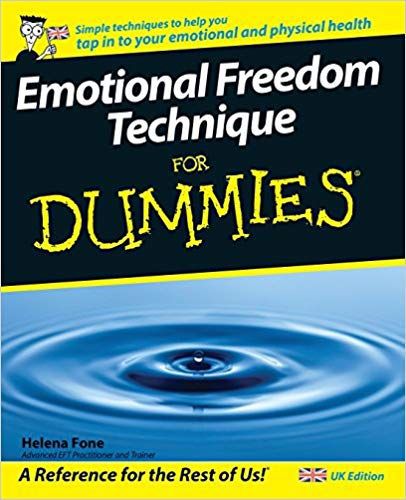
A member of the Energy Therapies family – which includes, acupuncture, acupressure and shiatsu – Emotional Freedom Technique is a simple and increasingly popular self- development therapy used to treat a wide range of physical and emotional issues. Popularised by figures including Paul McKenna, EFT is based on the theory that negative emotions are caused by disturbances in the body’s energy. Often referred to as acupuncture without needles, EFT involves locating and tapping on meridian points in the body while thinking of a negative emotion and using positive suggestion and thoughts to alter the body’s energy flow, restore balance and reprogram thought processes. This no-nonsense guide introduces readers to the theories and methods behind the technique and shows them how to use it to reduce the physical and emotional impact of a wide range of issues including, depression, fears, phobias, anger, addictions, sleeplessness and pain. It’s simple, safe, anyone can practice it at home and with EFT For Dummies readers can banish bad habits for good. Includes information on: The path to emotional freedom – explaining EFT Understanding your emotions Basic EFT tapping routines Improving emotional health with EFT Practising EFT on yourself and others Helena Fone is a registered EFT practitioner and trainer and an advanced hypnotherapist. She has a diploma in advanced holistic hypnotherapy and practices CBT and NLP. Find out more about Helena at www.EFTRegister.com
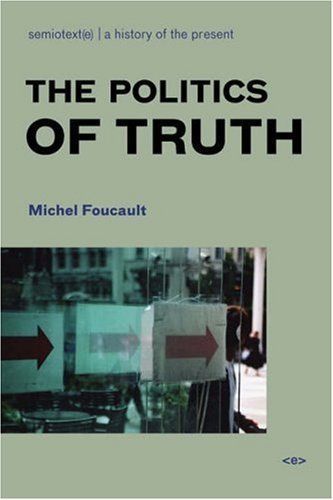
In 1784, the German newspaper Berlinische Monatsschrift asked its audience to reply to the question “What is Enlightenment?” Immanuel Kant took the opportunity to investigate the purported truths and assumptions of his age. Two hundred years later, Michel Foucault wrote a response to Kant’s initial essay, positioning Kant as the initiator of the discourse and critique of modernity. The Politics of Truth takes this initial encounter between Foucault and Kant, as a framework for its selection of unpublished essays and transcripts of lectures Foucault gave in America and France between 1978 and 1984, the year of his death. Ranging from reflections on the Enlightenment and revolution to a consideration of the Frankfurt School, this collection offers insight into the topics preoccupying Foucault as he worked on what would be his last body of published work, the three-volume History of Sexuality. It also offers what is in a sense the most “American” moment of Foucault’s thinking, for it was in America that he realized the necessity of tying his own thought to that of the Frankfurt School.
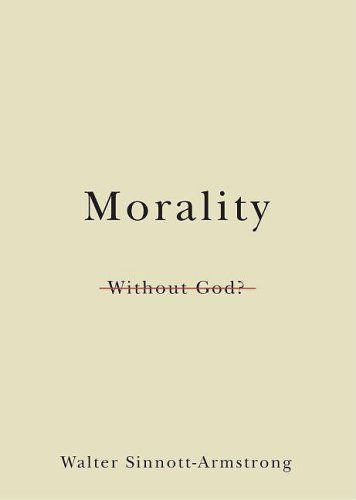
Some argue that atheism must be false, since without God, no values are possible, and thus “everything is permitted.” Walter Sinnott-Armstrong argues that God is not only not essential to morality, but that our moral behavior should be utterly independent of religion. He attacks several core ideas: that atheists are inherently immoral people; that any society will sink into chaos if it is becomes too secular; that without morality, we have no reason to be moral; that absolute moral standards require the existence of God; and that without religion, we simply couldn’t know what is wrong and what is right. Sinnott-Armstrong brings to bear convincing examples and data, as well as a lucid, elegant, and easy to understand writing style. This book should fit well with the debates raging over issues like evolution and intelligent design, atheism, and religion and public life as an example of a pithy, tightly-constructed argument on an issue of great social importance.
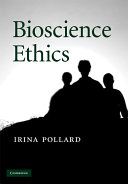
Bioscience ethics facilitates free and accurate information transfer from applied science to applied bioethics. Its major elements are: increased understanding of biological systems, responsible use of technology, and attuning ethnocentric debates to new scientific insights. Pioneered by Irina Pollard in 1994, bioscience ethics has become an internationally recognized discipline, interfacing science and bioethics within professional perspectives such as medical, legal, bio-engineering, and economics. Written for students and professionals alike, the fundamental feature of this book is its breadth, important because bioscience ethics interweaves many diverse subjects in the process of gathering specialist scientific knowledge for bioethical review. It contains chapters which embrace topics affecting human reproduction, end-of-life care and euthanasia, challenge human-dominated ecosystems, and review population growth, economic activity and warfare. A background section describes the evolution of ethical consciousness, explores the future, and proposes that the reworking of ethical boundaries can enhance mature decision-making in harmony with changing technology.
ما از اخلاق چه انتظاری داریم؟ این سوال شاید تاحدودی برای عموم مردم و یا متخصصان این رشته قابل پاسخ باشد؛ اینکه خوب بودن را به ما بیاموزد و در تنظیم روابط فردی م...

جشن کتاب تهران به ایستگاه سی و یکم رسیده است. حال و احوال نشر کتاب خوب نیست و باید فرهنگدوستان را به خرید و هدیه دادن کتاب ترغیب نمود. خانه اخلاقپژوهان جوان ب...

بنیاد کتابهای اخلاق اسلامی عمدتا پالایش جان از آلودگیها و آراستن آن به زیباییها است. اندیشه محوری این قبیل کتابها آن است که انسان فعلی آنی نیست که باید باشد...

-
0 Comments