
Notice: تابع WP_Block_Type_Registry::register به طورنادرست فراخوانی شد. نامهای نوع بلوک نباید حروف بزرگ داشته باشند. لطفاً برای اطلاعات بیشتر، اشکال زدایی در وردپرس را مشاهده کنید. (این پیام در نگارش 5.0.0 افزوده شده است.) in /home/ethicsho/public_html/wp-includes/functions.php on line 5313
Warning: Use of undefined constant TDC_PATH_LEGACY - assumed 'TDC_PATH_LEGACY' (this will throw an Error in a future version of PHP) in /home/ethicsho/public_html/wp-content/plugins/td-composer/td-composer.php on line 109
Warning: Use of undefined constant TDSP_THEME_PATH - assumed 'TDSP_THEME_PATH' (this will throw an Error in a future version of PHP) in /home/ethicsho/public_html/wp-content/plugins/td-composer/td-composer.php on line 113 بایگانیهای John F. Haught - خانه اخلاق پژوهان جوان Notice: Trying to access array offset on value of type bool in /home/ethicsho/public_html/wp-content/plugins/wp-ulike/inc/general-functions.php on line 807
Philosophy of Psychology is an introduction to philosophical problems that arise in the scientific study of cognition and behavior. José Luis Bermúdez introduces the philosophy of psychology as an interdisciplinary exploration of the nature and mechanisms of cognition. He charts out four influential “pictures of the mind” and uses them to explore central topics in the philosophical foundations of psychology, covering all the core concepts and themes found in undergraduate courses in philosophy and psychology, including: * Models of psychological explanation * The nature of commonsense psychology * Arguments for the autonomy of psychology * Fuctionalist approaches to cognition * Computational models of the mind * Neural network modeling * Rationality and mental causation * Perception, action and cognition * The language of thought and the architecture of cognition Philosophy of Psychology: AContemporary Introductionis a very clear and well-structured textbook from one of the leaders in the field.
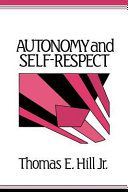
This stimulating collection of essays in ethics eschews the simple exposition and refinement of abstract theories. Rather, the author focuses on everyday moral issues, often neglected by philosophers, and explores the deeper theoretical questions which they raise. Such issues are: Is it wrong to tell a lie to protect someone from a painful truth? Should one commit a lesser evil to prevent another from doing something worse? Can one be both autonomous and compassionate? Other topics discussed are servility, weakness of will, suicide, obligations to oneself, snobbery, and environmental concerns. A feature of the collection is the contrast of Kantian and utilitarian answers to these problems. The essays are crisply and lucidly written and will appeal to both teachers and students of philosophy.
Research Ethics for Social Scientists sets out to do four things: The first is to demonstrate the practical value of thinking seriously and systematically about what constitutes ethical conduct in social science research. Secondly, the text identifies how and why current regulatory regimes have emerged. Thirdly, it seeks to reveal those practices that have contributed to the adversarial relationships between researchers and regulators. Finally, the book hopes to encourage both parties to develop shared solutions to ethical and regulatory problems. (Backcover)
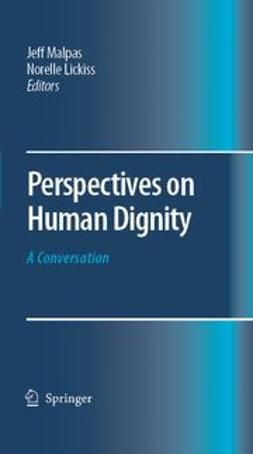
The idea of human dignity is central to any reflection on the nature of human worth, and has become a key concept in international and national law, in medical ethics, and in much philosophical and political theory. However, the idea is a complex one that also takes on many different forms. This collection explores the idea of human dignity as it arises within these many different domains, opening up the possibility of a multidisciplinary conversation that illuminates the concept itself, as well as the idea of the human to which it stands in an essential relation. The book is not only an intriguing and stimulating exploration of human dignity from a range of perspectives, but also provides an important resource for those who wish to take the exploration further.
ما از اخلاق چه انتظاری داریم؟ این سوال شاید تاحدودی برای عموم مردم و یا متخصصان این رشته قابل پاسخ باشد؛ اینکه خوب بودن را به ما بیاموزد و در تنظیم روابط فردی م...

جشن کتاب تهران به ایستگاه سی و یکم رسیده است. حال و احوال نشر کتاب خوب نیست و باید فرهنگدوستان را به خرید و هدیه دادن کتاب ترغیب نمود. خانه اخلاقپژوهان جوان ب...

بنیاد کتابهای اخلاق اسلامی عمدتا پالایش جان از آلودگیها و آراستن آن به زیباییها است. اندیشه محوری این قبیل کتابها آن است که انسان فعلی آنی نیست که باید باشد...

-
0 Comments