Notice: تابع WP_Block_Type_Registry::register به طورنادرست فراخوانی شد. نامهای نوع بلوک نباید حروف بزرگ داشته باشند. لطفاً برای اطلاعات بیشتر، اشکال زدایی در وردپرس را مشاهده کنید. (این پیام در نگارش 5.0.0 افزوده شده است.) in /home/ethicsho/public_html/wp-includes/functions.php on line 5313
Warning: Use of undefined constant TDC_PATH_LEGACY - assumed 'TDC_PATH_LEGACY' (this will throw an Error in a future version of PHP) in /home/ethicsho/public_html/wp-content/plugins/td-composer/td-composer.php on line 109
Warning: Use of undefined constant TDSP_THEME_PATH - assumed 'TDSP_THEME_PATH' (this will throw an Error in a future version of PHP) in /home/ethicsho/public_html/wp-content/plugins/td-composer/td-composer.php on line 113 بایگانیهای Joe Williams - خانه اخلاق پژوهان جوان Notice: Trying to access array offset on value of type bool in /home/ethicsho/public_html/wp-content/plugins/wp-ulike/inc/general-functions.php on line 807
This book uses Viktor Frankl’s Existential Psychology (logotherapy) to explore the ways some professors use unusually personal scholarship to discover meaning in personal adversity. A psychiatrist imprisoned for three years in Nazi concentration camps, Frankl believed the search for meaning is a powerful motivator, and that its discovery can be profoundly therapeutic. Part I begins with four stories of professors finding meaning. Using the case studies as a foundation, Part II investigates issues of epistemology and ethics in unusually personal research from an existential perspective. The book offers advice for graduate students and faculty who want to live and work more meaningfully in the academy.
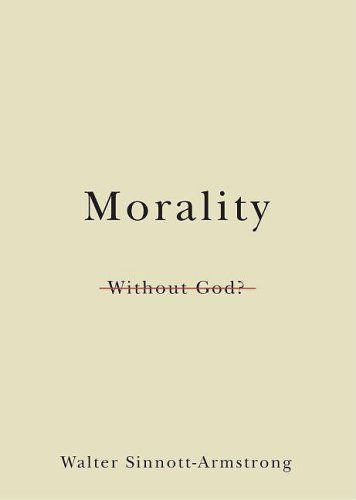
Some argue that atheism must be false, since without God, no values are possible, and thus “everything is permitted.” Walter Sinnott-Armstrong argues that God is not only not essential to morality, but that our moral behavior should be utterly independent of religion. He attacks several core ideas: that atheists are inherently immoral people; that any society will sink into chaos if it is becomes too secular; that without morality, we have no reason to be moral; that absolute moral standards require the existence of God; and that without religion, we simply couldn’t know what is wrong and what is right. Sinnott-Armstrong brings to bear convincing examples and data, as well as a lucid, elegant, and easy to understand writing style. This book should fit well with the debates raging over issues like evolution and intelligent design, atheism, and religion and public life as an example of a pithy, tightly-constructed argument on an issue of great social importance.
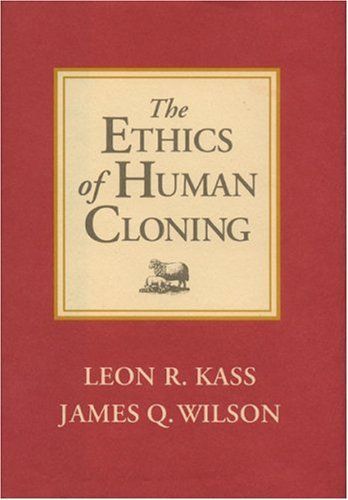
In this engaging book, Leon R. Kass, the noted teacher, scientist, and humanist, and James Q. Wilson, the preeminent political scientist to whom four U.S. presidents have turned for advice on crime, drug abuse, education, and other crises in American life, explore the ethics of human cloning, reproductive technology, and the teleology of human sexuality. Although in their lively dialogue both authors share a fundamental distrust of the notion of human cloning, they base their reticence on different views of the role of sexual reproduction and the role of the family. Professor Kass contends that in vitro fertilization and other assisted reproduction technologies that place the origin of human life in human hands have eroded the respect for the mystery of sexuality and human renewal. Professor Wilson, on the other hand, asserts that whether a human life is created naturally or artificially is immaterial as long as the child is raised by loving parents in a two-parent family and is not harmed by the means of its conception. This accessible volume promises to inform the public policy debate over the permissible conduct of genetic research and the permissible uses of its discoveries.
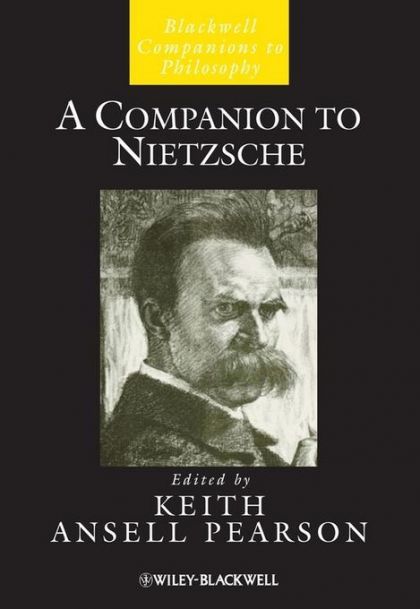
A Companion to Nietzsche provides a comprehensive guide to all the main aspects of Nietzsche’s philosophy, profiling the most recent research and trends in scholarship. Brings together an international roster of both rising stars and established scholars, including many of the leading commentators and interpreters of Nietzsche. Showcases the latest trends in Nietzsche scholarship, such as the renewed focus on Nietzsche’s philosophy of time, of nature, and of life. Includes clearly organized sections on Art, Nature, and Individuation; Nietzsche’s New Philosophy of the Future; Eternal Recurrence, the Overhuman, and Nihilism; Philosophy of Mind; Philosophy and Genealogy; Ethics; Politics; Aesthetics; Evolution and Life. Features fresh treatments of Nietzsche’s core and enigmatic doctrines.
ما از اخلاق چه انتظاری داریم؟ این سوال شاید تاحدودی برای عموم مردم و یا متخصصان این رشته قابل پاسخ باشد؛ اینکه خوب بودن را به ما بیاموزد و در تنظیم روابط فردی م...

جشن کتاب تهران به ایستگاه سی و یکم رسیده است. حال و احوال نشر کتاب خوب نیست و باید فرهنگدوستان را به خرید و هدیه دادن کتاب ترغیب نمود. خانه اخلاقپژوهان جوان ب...

بنیاد کتابهای اخلاق اسلامی عمدتا پالایش جان از آلودگیها و آراستن آن به زیباییها است. اندیشه محوری این قبیل کتابها آن است که انسان فعلی آنی نیست که باید باشد...

-
0 Comments