Notice: تابع WP_Block_Type_Registry::register به طورنادرست فراخوانی شد. نامهای نوع بلوک نباید حروف بزرگ داشته باشند. لطفاً برای اطلاعات بیشتر، اشکال زدایی در وردپرس را مشاهده کنید. (این پیام در نگارش 5.0.0 افزوده شده است.) in /home/ethicsho/public_html/wp-includes/functions.php on line 5313
Warning: Use of undefined constant TDC_PATH_LEGACY - assumed 'TDC_PATH_LEGACY' (this will throw an Error in a future version of PHP) in /home/ethicsho/public_html/wp-content/plugins/td-composer/td-composer.php on line 109
Warning: Use of undefined constant TDSP_THEME_PATH - assumed 'TDSP_THEME_PATH' (this will throw an Error in a future version of PHP) in /home/ethicsho/public_html/wp-content/plugins/td-composer/td-composer.php on line 113 بایگانیهای Jason T. Eberl - خانه اخلاق پژوهان جوان Notice: Trying to access array offset on value of type bool in /home/ethicsho/public_html/wp-content/plugins/wp-ulike/inc/general-functions.php on line 807
Like nature itself, modern economic life is driven by relentless competition and unbridled selfishness. Or is it? Drawing on converging evidence from neuroscience, social science, biology, law, and philosophy,Moral Marketsmakes the case that modern market exchange works only because most people, most of the time, act virtuously. Competition and greed are certainly part of economics, butMoral Marketsshows how the rules of market exchange have evolved to promote moral behavior and how exchange itself may make us more virtuous. Examining the biological basis of economic morality, tracing the connections between morality and markets, and exploring the profound implications of both,Moral Marketsprovides a surprising and fundamentally new view of economics–one that also reconnects the field to Adam Smith’s position that morality has a biological basis.Moral Markets, the result of an extensive collaboration between leading social and natural scientists, includes contributions by neuroeconomist Paul Zak; economists Robert H. Frank, Herbert Gintis, Vernon Smith (winner of the 2002 Nobel Prize in economics), and Bart Wilson; law professors Oliver Goodenough, Erin O’Hara, and Lynn Stout; philosophers William Casebeer and Robert Solomon; primatologists Sarah Brosnan and Frans de Waal; biologists Carl Bergstrom, Ben Kerr, and Peter Richerson; anthropologists Robert Boyd and Michael Lachmann; political scientists Elinor Ostrom and David Schwab; management professor Rakesh Khurana; computational science and informatics doctoral candidate Erik Kimbrough; and business writer Charles Handy.
This book is a long-awaited major statement by a pre-eminent analytic philosopher, Alvin Plantinga, on one of our biggest debates — the compatibility of science and religion. The last twenty years has seen a cottage industry of books on this divide, but with little consensus emerging. Plantinga, as a top philosopher but also a proponent of the rationality of religious belief, has a unique contribution to make. His theme in this short book is that the conflict between science and theistic religion is actually superficial, and that at a deeper level they are in concord. Plantinga examines where this conflict is supposed to exist — evolution, evolutionary psychology, analysis of scripture, scientific study of religion — as well as claims by Dan Dennett, Richard Dawkins, and Philip Kitcher that evolution and theistic belief cannot co-exist. Plantinga makes a case that their arguments are not only inconclusive but that the supposed conflicts themselves are superficial, due to the methodological naturalism used by science. On the other hand, science can actually offer support to theistic doctrines, and Plantinga uses the notion of biological and cosmological “fine-tuning” in support of this idea. Plantinga argues that we might think about arguments in science and religion in a new way — as different forms of discourse that try to persuade people to look at questions from a perspective such that they can see that something is true. In this way, there is a deep and massive consonance between theism and the scientific enterprise.
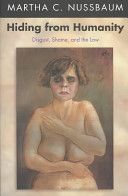
Should laws about sex and pornography be based on social conventions about what is disgusting? Should felons be required to display bumper stickers or wear T-shirts that announce their crimes? This powerful and elegantly written book, by one of America’s most influential philosophers, presents a critique of the role that shame and disgust play in our individual and social lives and, in particular, in the law. Martha Nussbaum argues that we should be wary of these emotions because they are associated in troubling ways with a desire to hide from our humanity, embodying an unrealistic and sometimes pathological wish to be invulnerable. Nussbaum argues that the thought-content of disgust embodies “magical ideas of contamination, and impossible aspirations to purity that are just not in line with human life as we know it.” She argues that disgust should never be the basis for criminalizing an act, or play either the aggravating or the mitigating role in criminal law it currently does. She writes that we should be similarly suspicious of what she calls “primitive shame,” a shame “at the very fact of human imperfection,” and she is harshly critical of the role that such shame plays in certain punishments. Drawing on an extraordinarily rich variety of philosophical, psychological, and historical references–from Aristotle and Freud to Nazi ideas about purity–and on legal examples as diverse as the trials of Oscar Wilde and the Martha Stewart insider trading case, this is a major work of legal and moral philosophy.
ما از اخلاق چه انتظاری داریم؟ این سوال شاید تاحدودی برای عموم مردم و یا متخصصان این رشته قابل پاسخ باشد؛ اینکه خوب بودن را به ما بیاموزد و در تنظیم روابط فردی م...

جشن کتاب تهران به ایستگاه سی و یکم رسیده است. حال و احوال نشر کتاب خوب نیست و باید فرهنگدوستان را به خرید و هدیه دادن کتاب ترغیب نمود. خانه اخلاقپژوهان جوان ب...

بنیاد کتابهای اخلاق اسلامی عمدتا پالایش جان از آلودگیها و آراستن آن به زیباییها است. اندیشه محوری این قبیل کتابها آن است که انسان فعلی آنی نیست که باید باشد...

-
0 Comments