Notice: تابع WP_Block_Type_Registry::register به طورنادرست فراخوانی شد. نامهای نوع بلوک نباید حروف بزرگ داشته باشند. لطفاً برای اطلاعات بیشتر، اشکال زدایی در وردپرس را مشاهده کنید. (این پیام در نگارش 5.0.0 افزوده شده است.) in /home/ethicsho/public_html/wp-includes/functions.php on line 5313
Warning: Use of undefined constant TDC_PATH_LEGACY - assumed 'TDC_PATH_LEGACY' (this will throw an Error in a future version of PHP) in /home/ethicsho/public_html/wp-content/plugins/td-composer/td-composer.php on line 109
Warning: Use of undefined constant TDSP_THEME_PATH - assumed 'TDSP_THEME_PATH' (this will throw an Error in a future version of PHP) in /home/ethicsho/public_html/wp-content/plugins/td-composer/td-composer.php on line 113 بایگانیهای István Pieter Bejczy - خانه اخلاق پژوهان جوان Notice: Trying to access array offset on value of type bool in /home/ethicsho/public_html/wp-content/plugins/wp-ulike/inc/general-functions.php on line 807
Alain de Botton’s bestselling The Consolations of Philosophy–later made into a six-part TV series–has helped popularize ancient philosophy and especially the work of Seneca. This superb volume offers the finest translation of Seneca’s dialogues and essays in print, capturing the full range of his philosophical interests. Here the Stoic philosopher outlines his thoughts on how to live in a troubled world. Tutor to the young emperor Nero, Seneca wrote exercises in practical philosophy that draw upon contemporary Roman life and illuminate the intellectual concerns of the day. They also have much to say to the modern reader, as Seneca ranges widely across subjects such as the shortness of life, tranquility of mind, anger, mercy, happiness, and grief at the loss of a loved one. Seneca’s accessible, aphoristic style makes his writing especially attractive as an introduction to Stoic philosophy, and belies its reputation for austerity and dogmatism. This edition combines a clear and modern translation by John Davies with Tobias Reinhardt’s fascinating introduction to Seneca’s career, literary style, and influence, including a superb summary of Stoic philosophy and Seneca’s interpretation of it. The book’s notes are the fullest of any comparable edition.
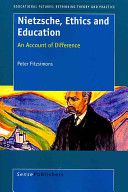
Undermining the fundamental place of freedom, equality and universal reason, Nietzsche’s philosophy recognises that we occupy multiple and contradictory subject positions within social life. With no metaphysical realm of reason, no divine inspiration for morality, and no transcendental basis for human essence, we are left with the embodied, reflective and creative self as a source of ethics. From this perspective arises Nietzsche’s bermensch, a continuous process of overcoming and becoming, interpreted as a metaphor for education that honours difference and incorporates otherness. The book explores the development of Nietzsche’s philosophy and its application to the problems of education, disturbing traditional liberal and democratic accounts of the relationship between individual and society. Threaded throughout is the author’s critique of the way educational institutions are driven by political and economic considerations, explored through notions of autonomy and subjectivity. The book is suitable for graduate students and academics wanting to engage either with postmodern interpretations of ethics in education, or with political philosophy in relation to development of self and community.
The truth commission is an increasingly common fixture of newly democratic states with repressive or strife-ridden pasts. From South Africa to Haiti, truth commissions are at work with varying degrees of support and success. To many, they are the best–or only–way to achieve a full accounting of crimes committed against fellow citizens and to prevent future conflict. Others question whether a restorative justice that sets the guilty free, that cleanses society by words alone, can deter future abuses and allow victims and their families to heal. Here, leading philosophers, lawyers, social scientists, and activists representing several perspectives look at the process of truth commissioning in general and in post-apartheid South Africa. They ask whether the truth commission, as a method of seeking justice after conflict, is fair, moral, and effective in bringing about reconciliation. The authors weigh the virtues and failings of truth commissions, especially the South African Truth and Reconciliation Commission, in their attempt to provide restorative rather than retributive justice. They examine, among other issues, the use of reparations as social policy and the granting of amnesty in exchange for testimony. Most of the contributors praise South Africa’s decision to trade due process for the kinds of truth that permit closure. But they are skeptical that such revelations produce reconciliation, particularly in societies that remain divided after a compromise peace with no single victor, as in El Salvador. Ultimately, though, they find the truth commission to be a worthy if imperfect instrument for societies seeking to say “never again” with confidence. At a time when truth commissions have been proposed for Bosnia, Kosovo, Cyprus, East Timor, Cambodia, Nigeria, Palestine, and elsewhere, the authors’ conclusion that restorative justice provides positive gains could not be more important. In addition to the editors, the contributors are Amy Gutmann, Rajeev Bhargava, Elizabeth Kiss, David A. Crocker, André du Toit, Alex Boraine, Dumisa Ntsebeza, Lisa Kois, Ronald C. Slye, Kent Greenawalt, Sanford Levinson, Martha Minow, Charles S. Maier, Charles Villa-Vicencio, and Wilhelm Verwoerd.
ما از اخلاق چه انتظاری داریم؟ این سوال شاید تاحدودی برای عموم مردم و یا متخصصان این رشته قابل پاسخ باشد؛ اینکه خوب بودن را به ما بیاموزد و در تنظیم روابط فردی م...

جشن کتاب تهران به ایستگاه سی و یکم رسیده است. حال و احوال نشر کتاب خوب نیست و باید فرهنگدوستان را به خرید و هدیه دادن کتاب ترغیب نمود. خانه اخلاقپژوهان جوان ب...

بنیاد کتابهای اخلاق اسلامی عمدتا پالایش جان از آلودگیها و آراستن آن به زیباییها است. اندیشه محوری این قبیل کتابها آن است که انسان فعلی آنی نیست که باید باشد...

-
0 Comments