Notice: تابع WP_Block_Type_Registry::register به طورنادرست فراخوانی شد. نامهای نوع بلوک نباید حروف بزرگ داشته باشند. لطفاً برای اطلاعات بیشتر، اشکال زدایی در وردپرس را مشاهده کنید. (این پیام در نگارش 5.0.0 افزوده شده است.) in /home/ethicsho/public_html/wp-includes/functions.php on line 5313
Warning: Use of undefined constant TDC_PATH_LEGACY - assumed 'TDC_PATH_LEGACY' (this will throw an Error in a future version of PHP) in /home/ethicsho/public_html/wp-content/plugins/td-composer/td-composer.php on line 109
Warning: Use of undefined constant TDSP_THEME_PATH - assumed 'TDSP_THEME_PATH' (this will throw an Error in a future version of PHP) in /home/ethicsho/public_html/wp-content/plugins/td-composer/td-composer.php on line 113 بایگانیهای Ian T. Ramsey - خانه اخلاق پژوهان جوان Notice: Trying to access array offset on value of type bool in /home/ethicsho/public_html/wp-content/plugins/wp-ulike/inc/general-functions.php on line 807
Human rights have become one of the most important moral concepts in global political life over the last 60 years. Charles Beitz, one of the world’s leading philosophers, offers a compelling new examination of the idea of a human right.–
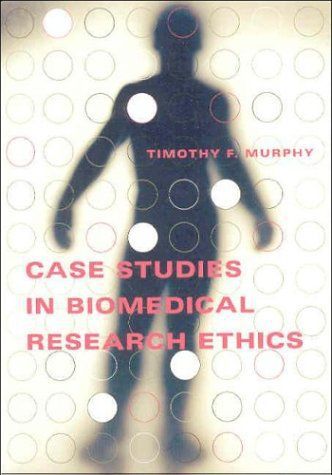
This textbook for instruction in biomedical research ethics can also serve as a valuable reference for professionals in the field of bioethics. The 149 cases included in the book are grouped in nine chapters, each of which covers a key area of debate in the field. Some of the case studies are classics, including the famous cases of the Tuskegee Syphilis Study (in which subjects with syphilis were not given treatment) and the Willowbrook hepatitis studies (in which institutionalized subjects were intentionally exposed to hepatitis). Others focus on such current issues as human embryonic stem cell research, cloning by somatic nuclear transfer, and the design and function of institutional review boards. Each chapter begins with a brief introduction that places the issues raised in context; this is followed by a number of cases (each of which is no more than a few pages). Study questions meant to encourage further discussion follow each case.After an introductory discussion of the history and tenets of ethics in medical research, the book’s chapters cover the topics of oversight and study design; informed consent; the selection of subjects; conflicts of interest; the social effects of research; embryos, fetuses, and children; genetic research; the use of animals; and authorship and publication. Following these chapters are appendixes with the texts of the Nuremburg Code and the World Declaration of Geneva, two key documents in the establishment of bioethical standards for research. Also included are a glossary, a table of cases by general category, and an alphabetical listing of cases.
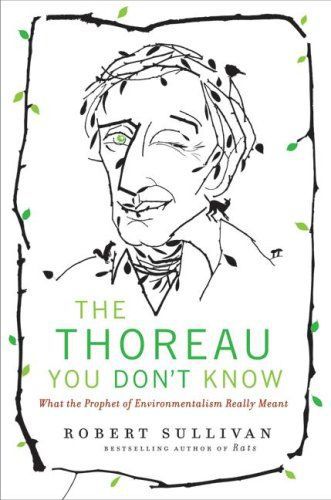
“Thoreau is one of those authors that readers think they know, even if they don’t. He’s the solitary curmudgeon with the shack out in the woods, the mystic worshipping solemnly in the quiet church of nature. He’s our national Natural Man, the prophet of environmentalism. But here Robert Sullivan–who himself has been called an ‘urban Thoreau’ (New York Times Book Review) –presents the Thoreau you don’t know: the activist, the organizer, the gregarious adventurer, the guy who likes to go camping with friends (even if they sometimes accidentally burn the woods down). Sullivan shows us not a lonely eccentric but a man in his growing village, and argues that Walden was a book intended to revive America, a communal work forever pigeonholed as a reclusive one–and that this misreading is at the heart of our troubled relationship with the environment today.”–From publisher description.
This work focuses on divine command, and in particular the theory that what makes something obligatory is that God commands it, and what makes something wrong is that God commands us not to do it. Focusing on the Abrahamic faiths, eminent scholar John E. Hare explains that two experiences have had to be integrated. The first is that God tells us to do something, or not to do something. The second is that we have to work out ourselves what to do and what not to do. The difficulty has come in establishing the proper relation between them. In Christian reflection on this, two main traditions have emerged, divine command theory and natural law theory. Professor Hare successfully defends a version of divine command theory, but also shows that there is considerable overlap with some versions of natural law theory. He engages with a number of Christian theologians, particularly Karl Barth, and extends into a discussion of divine command within Judaism and Islam.0The work concludes by examining recent work in evolutionary psychology, and argues that thinking of our moral obligations as produced by divine command offers us some help in seeing how a moral conscience could develop in a way that is evolutionarily stable.
ما از اخلاق چه انتظاری داریم؟ این سوال شاید تاحدودی برای عموم مردم و یا متخصصان این رشته قابل پاسخ باشد؛ اینکه خوب بودن را به ما بیاموزد و در تنظیم روابط فردی م...

جشن کتاب تهران به ایستگاه سی و یکم رسیده است. حال و احوال نشر کتاب خوب نیست و باید فرهنگدوستان را به خرید و هدیه دادن کتاب ترغیب نمود. خانه اخلاقپژوهان جوان ب...

بنیاد کتابهای اخلاق اسلامی عمدتا پالایش جان از آلودگیها و آراستن آن به زیباییها است. اندیشه محوری این قبیل کتابها آن است که انسان فعلی آنی نیست که باید باشد...

-
0 Comments