Notice: تابع WP_Block_Type_Registry::register به طورنادرست فراخوانی شد. نامهای نوع بلوک نباید حروف بزرگ داشته باشند. لطفاً برای اطلاعات بیشتر، اشکال زدایی در وردپرس را مشاهده کنید. (این پیام در نگارش 5.0.0 افزوده شده است.) in /home/ethicsho/public_html/wp-includes/functions.php on line 5313
Warning: Use of undefined constant TDC_PATH_LEGACY - assumed 'TDC_PATH_LEGACY' (this will throw an Error in a future version of PHP) in /home/ethicsho/public_html/wp-content/plugins/td-composer/td-composer.php on line 109
Warning: Use of undefined constant TDSP_THEME_PATH - assumed 'TDSP_THEME_PATH' (this will throw an Error in a future version of PHP) in /home/ethicsho/public_html/wp-content/plugins/td-composer/td-composer.php on line 113 بایگانیهای Ian H. Witten - خانه اخلاق پژوهان جوان Notice: Trying to access array offset on value of type bool in /home/ethicsho/public_html/wp-content/plugins/wp-ulike/inc/general-functions.php on line 807
Being a consumer is now integral to the human experience, something none of us can avoid. At the same time, many of the products that we buy come to us with histories steeped in highly unethical practices, such as worker exploitation, animal suffering, and environmental damage. Consuming Choices considers the ethical dimensions of consumer life by exploring several basic questions: Exactly what sorts of unethical practices are implicated in today’s consumer products? Does moral culpability for these practices fall solely on the companies that perform them, or does it also fall upon consumers who purchase the products made with such practices? And most importantly, do consumers ever have moral obligations to avoid particular products? To answer, David T. Schwartz provides the most detailed philosophical exploration to date on consumer ethics. He utilizes historical and fictional examples to illustrate the types of wrongdoing currently implicated by consumer products in this age of globalization, offers a clear description of the relevant moral theories and important ethical concepts, and provides concrete suggestions on how to be a more ethical consumer.
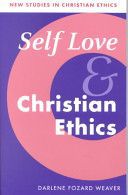
Self love is an inescapable problem for ethics, yet much of contemporary ethics is reluctant to offer any normative moral anthropologies. Instead, secular ethics and contemporary culture promote a norm of self-realization which is subjective and uncritical. Christian ethics also fails to address this problem directly, because it tends to investigate self love within the context of conflicts between the self’s interests and those of her neighbors. Self Love and Christian Ethics argues for right self love as the solution of proper self-relation that intersects with love for God and love for neighbor. Darlene Fozard Weaver explains that right self love entails a true self-understanding that is embodied in the person’s concrete acts and relations. In making this argument, she calls upon ethicists to revisit ontological accounts of the self and to devote more attention to particular moral acts.
Investigates a complex structure of morality, the demands such morality places on individuals, and the behavioral consequences of the system of right and wrong
This work returns to the 19th century tradition of a moral or ethical criticism in the context of important new thinking in the field of ethics and moral philosophy. “Shakespeare and Moral Agency” presents a collection of new essays by literary and philosophy scholars considering character and action in Shakespeare’s plays as heuristic models for the exploration of some salient problems in the field of moral inquiry. Together they offer a unified presentation of an emerging orientation in Shakespeare studies, drawing on recent work in ethics, philosophy of mind, and analytic aesthetics to construct a powerful framework for the critical analysis of Shakespeare’s works. Contributors suggest new possibilities for the interpretation of Shakespearean drama by engaging with the rich body of contemporary work in the field of moral philosophy, offering significant insights for literary criticism, for pedagogy, and also for theatrical performance. This title is part of major scholarly research monographs in “Shakespeare Studies from Continuum”.
Intellectual property rights such as patents can reduce access to knowledge in genetics, health, agriculture, education, and information technology, particularly for people in developing countries. Global Intellectual Property Rights shows how the new global rules of intellectual property have been the product of the strategic behavior of multinationals, rather than democratic dialogue. The final section of the book suggests strategies aimed at developing more flexible standard for poor countries, and for keeping knowledge in the intellectual commons.
ما از اخلاق چه انتظاری داریم؟ این سوال شاید تاحدودی برای عموم مردم و یا متخصصان این رشته قابل پاسخ باشد؛ اینکه خوب بودن را به ما بیاموزد و در تنظیم روابط فردی م...

جشن کتاب تهران به ایستگاه سی و یکم رسیده است. حال و احوال نشر کتاب خوب نیست و باید فرهنگدوستان را به خرید و هدیه دادن کتاب ترغیب نمود. خانه اخلاقپژوهان جوان ب...

بنیاد کتابهای اخلاق اسلامی عمدتا پالایش جان از آلودگیها و آراستن آن به زیباییها است. اندیشه محوری این قبیل کتابها آن است که انسان فعلی آنی نیست که باید باشد...

-
0 Comments