Notice: تابع WP_Block_Type_Registry::register به طورنادرست فراخوانی شد. نامهای نوع بلوک نباید حروف بزرگ داشته باشند. لطفاً برای اطلاعات بیشتر، اشکال زدایی در وردپرس را مشاهده کنید. (این پیام در نگارش 5.0.0 افزوده شده است.) in /home/ethicsho/public_html/wp-includes/functions.php on line 5313
Warning: Use of undefined constant TDC_PATH_LEGACY - assumed 'TDC_PATH_LEGACY' (this will throw an Error in a future version of PHP) in /home/ethicsho/public_html/wp-content/plugins/td-composer/td-composer.php on line 109
Warning: Use of undefined constant TDSP_THEME_PATH - assumed 'TDSP_THEME_PATH' (this will throw an Error in a future version of PHP) in /home/ethicsho/public_html/wp-content/plugins/td-composer/td-composer.php on line 113 بایگانیهای Giovanni Boniolo - خانه اخلاق پژوهان جوان Notice: Trying to access array offset on value of type bool in /home/ethicsho/public_html/wp-content/plugins/wp-ulike/inc/general-functions.php on line 807
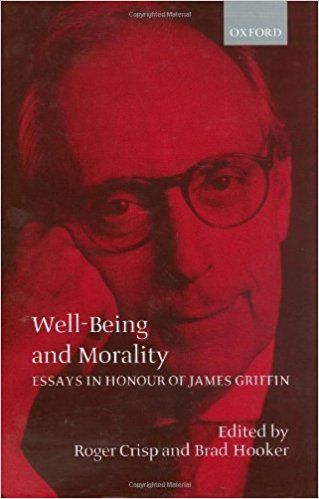
An international line-up of fourteen distinguished philosophers presents new essays in honor of James Griffin, White’s Professor of Moral Philosophy at Oxford University. The essays take up topics relating to well-being and morality, prominent themes in contemporary ethics and particularly in Griffin’s work. Griffin himself provides replies to these essays, offering a fascinating development of his own thinking on these topics.
What are the resources and needs, the strengths and the vulnerabilities of patients, of society, or of nature? How do we evaluate the societal potential of scientific discovery? It is fairly well assured that we are influencing the terms of existence of many inhabitants of this planet, from flora to fauna to humans. Moreover, history has shown that while technologies can be used neutrally, they can be (and have been) used to the great benefit – or the great detriment – of human life and the fate of the world as a whole. How various types of knowledge and technological ability will be deployed is up to us, individually and collectively. How such information and ability should be deployed, and for what reasons, are questions at the core of bioethical inquiry. These are the “expanding horizons in bioethics” to which this volume refers. This volume is comprised of fourteen essays. It is a rare gathering of scholarly opinion, featuring well-known experts from a diversity of disciplines. The topics addressed are of immediate concern to the public. The essays ask questions about human nature, genetic technologies, reproductive rights, human subjects research, and environmental issues – all in provocative and challenging new ways. Yet the themes that emerge throughout the volume are of enduring interest to anyone concerned about the interactions of scientific development, ethics, and society. This volume is of interest to students and teachers of bioethics and related topics, as well as to professionals working in these disciplines. “The collection of essays makes an original contribution through the generally very high standard of scholarship of the papers, and through the engagement by those authors with very contemporary issues in bioethics… It is rare that so many highly original views are collected in one volume.” Quote from a pre-publication review.
“The first of its kind, this cutting edge work of philosophical ethics makes a powerful case for the centrality of moral paradox. Presenting ten diverse and original moral paradoxes, the book challenges some of our deepest moral views. This innovative volume also asks whether the existence of moral paradox is damaging or beneficial, and explores more generally what paradoxicality can teach us about morality and life.”–BOOK JACKET.
Malice that cannot speak its name, cold-blooded but secret hostility, impotent desire, hidden rancor and spite–all cluster at the center of envy. Envy clouds thought, writes Joseph Epstein, clobbers generosity, precludes any hope of serenity, and ends in shriveling the heart. Of the seven deadly sins, he concludes, only envy is no fun at all. Writing in a conversational, erudite, self-deprecating style that wears its learning lightly, Epstein takes us on a stimulating tour of the many faces of envy. He considers what great thinkers–such as John Rawls, Schopenhauer, and Nietzsche–have written about envy; distinguishes between envy, yearning, jealousy, resentment, and schadenfreude (“a hardy perennial in the weedy garden of sour emotions”); and catalogs the many things that are enviable, including wealth, beauty, power, talent, knowledge and wisdom, extraordinary good luck, and youth (or as the title of Epstein’s chapter on youth has it, “The Young, God Damn Them”). He looks at resentment in academia, where envy is mixed with snobbery, stirred by impotence, and played out against a background of cosmic injustice; and he offers a brilliant reading of Othello as a play more driven by Iago’s envy than Othello’s jealousy. He reveals that envy has a strong touch of malice behind it–the envious want to destroy the happiness of others. He suggests that envy of the astonishing success of Jews in Germany and Austria may have lurked behind the virulent anti-Semitism of the Nazis. As he proved in his best-selling Snobbery, Joseph Epstein has an unmatched ability to highlight our failings in a way that is thoughtful, provocative, and entertaining. If envy is no fun, Epstein’s Envy is truly a joy to read.
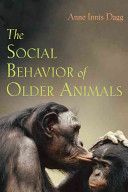
How do young and old social animals view each other? Are aged animals perceived by others as weaker? Or wiser? What is the relationship between age and power among social animals?Taking a cue from Frans de Waal’s seminal work examining the lives of chimpanzees, Anne Innis Dagg in this pioneering study probes the lives of older mammals and birds. Synthesizing the available scientific research and anecdotal evidence, she explores how aging affects the lives and behavior of animals ranging from elk to elephants and gulls to gorillas, examining such topics as longevity; how others in a group view senior members in regard to leadership, wisdom, and teaching; mating success; interactions with mates and offspring; how aging affects dominance; changes in aggressive behavior and adaptability; and death and dying.At once instructive and compelling, this theme-spanning book reveals the complex nature of maturity in scores of social species and shows that animal behavior often displays the same diversity we find in ourselves.
ما از اخلاق چه انتظاری داریم؟ این سوال شاید تاحدودی برای عموم مردم و یا متخصصان این رشته قابل پاسخ باشد؛ اینکه خوب بودن را به ما بیاموزد و در تنظیم روابط فردی م...

جشن کتاب تهران به ایستگاه سی و یکم رسیده است. حال و احوال نشر کتاب خوب نیست و باید فرهنگدوستان را به خرید و هدیه دادن کتاب ترغیب نمود. خانه اخلاقپژوهان جوان ب...

بنیاد کتابهای اخلاق اسلامی عمدتا پالایش جان از آلودگیها و آراستن آن به زیباییها است. اندیشه محوری این قبیل کتابها آن است که انسان فعلی آنی نیست که باید باشد...

-
0 Comments