Notice: تابع WP_Block_Type_Registry::register به طورنادرست فراخوانی شد. نامهای نوع بلوک نباید حروف بزرگ داشته باشند. لطفاً برای اطلاعات بیشتر، اشکال زدایی در وردپرس را مشاهده کنید. (این پیام در نگارش 5.0.0 افزوده شده است.) in /home/ethicsho/public_html/wp-includes/functions.php on line 5313
Warning: Use of undefined constant TDC_PATH_LEGACY - assumed 'TDC_PATH_LEGACY' (this will throw an Error in a future version of PHP) in /home/ethicsho/public_html/wp-content/plugins/td-composer/td-composer.php on line 109
Warning: Use of undefined constant TDSP_THEME_PATH - assumed 'TDSP_THEME_PATH' (this will throw an Error in a future version of PHP) in /home/ethicsho/public_html/wp-content/plugins/td-composer/td-composer.php on line 113 بایگانیهای Georgios Anagnostopoulos - خانه اخلاق پژوهان جوان Notice: Trying to access array offset on value of type bool in /home/ethicsho/public_html/wp-content/plugins/wp-ulike/inc/general-functions.php on line 807
It is hard to overestimate the importance of the work of Augustine of Hippo, both in his own period and in the subsequent history of Western philosophy. Until the thirteenth century, when he may have had a competitor in Thomas Aquinas, he was the most important philosopher of the medieval period. Many of his views, including his theory of the just war, his account of time and eternity, his understanding of the will, his attempted resolution of the problem of evil, and his approach to the relation of faith and reason, have continued to be influential up to the present time. In this volume of specially-commissioned essays, sixteen scholars provide a wide-ranging and stimulating contribution to our understanding of Augustine, covering all the major areas of his philosophy and theology.
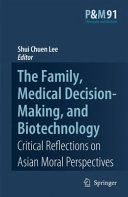
East Asian medicine, biomedical research, and health care policy are framed by their own set of moral and cultural commitments. Chief among these is the influence of Confucian ideas. A rich portrayal is offered of the implications of Confucian moral and ontological understandings for medical decision-making, human embryonic stem cell research, and health care financing. What is offered is a multifaceted insight into what distinguishes East Asian bioethical reflections. This volume opens with an exploration of the Confucian recognition of the family as an entity existing in its own right and which is not reducible to its members or their interests. As the essays in this volume show, this recognition of the family supports a notion of family autonomy that contrasts with Western individualistic accounts of proper medical decision-making. There are analyses of basic concepts as well as explorations of their implications for actual medical practice. The conflicts in East Asian countries between traditional Confucian and Western bioethics are explored as well as the tension between the new reproductive technologies and traditional understandings of the family. The studies of East Asian reflections concerning the moral status of human embryos and the morality of human embryo stem cell research disclose a set of concerns quite different from those anchored in Christian and Muslim cultural perspectives. The volume closes with an exploration of how Confucian cultural resources can be drawn upon to meet the contemporary challenges of health care financing.
Being a teenager can be hell-especially when you’re friends with someone who was born there. Kenzie Sutcliffe woke up to another normal morning-until a demon popped up in her shower. While trying to get rid of a monster zit, she dropped her acne lotion in the tub. And when fifty bucks’ worth of it swirled down the drain, it freed a demon from his prison portal. A mysteriously geeky-looking demon. So now Kenzie is saddled with a creature who looks and acts like every other guy she knows-that is, annoying. At least Levi has a job-if you can call it that. He has to stir up envy and jealousy in humans, or he starves. All he’s tempting Kenzie to do is to crawl back into her bedroom and hide there forever. Because no one is going to be coveting her life after this.
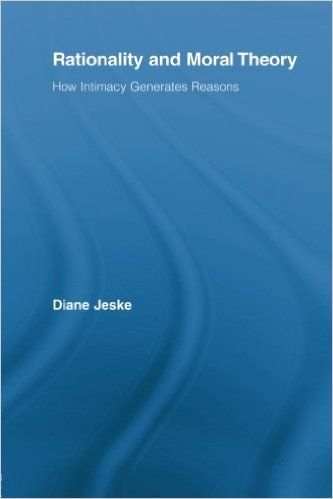
“This book provides answers to both normative and metaethical questions in a way that shows the interconnection of both types of questions, and also shows how a complete theory of reasons can be developed by moving back and forth between the two types of questions. It offers an account of the nature of intimate relationships and of the nature of the reasons that intimacy provides, and then uses that account to defend a traditional intuitionist metaethics. The book thus combines attention to the details of the lived moral life – the context in which many of our most pressing moral questions arise, how we deliberate and make moral decisions, the complexities that plague our attempts to know what we ought to do – with theoretical rigor in offering an account of the nature of reasons, how we come to have moral knowledge, and how we can adjudicate between competing positions.”–BOOK JACKET.
ما از اخلاق چه انتظاری داریم؟ این سوال شاید تاحدودی برای عموم مردم و یا متخصصان این رشته قابل پاسخ باشد؛ اینکه خوب بودن را به ما بیاموزد و در تنظیم روابط فردی م...

جشن کتاب تهران به ایستگاه سی و یکم رسیده است. حال و احوال نشر کتاب خوب نیست و باید فرهنگدوستان را به خرید و هدیه دادن کتاب ترغیب نمود. خانه اخلاقپژوهان جوان ب...

بنیاد کتابهای اخلاق اسلامی عمدتا پالایش جان از آلودگیها و آراستن آن به زیباییها است. اندیشه محوری این قبیل کتابها آن است که انسان فعلی آنی نیست که باید باشد...

-
0 Comments