Notice: تابع WP_Block_Type_Registry::register به طورنادرست فراخوانی شد. نامهای نوع بلوک نباید حروف بزرگ داشته باشند. لطفاً برای اطلاعات بیشتر، اشکال زدایی در وردپرس را مشاهده کنید. (این پیام در نگارش 5.0.0 افزوده شده است.) in /home/ethicsho/public_html/wp-includes/functions.php on line 5313
Warning: Use of undefined constant TDC_PATH_LEGACY - assumed 'TDC_PATH_LEGACY' (this will throw an Error in a future version of PHP) in /home/ethicsho/public_html/wp-content/plugins/td-composer/td-composer.php on line 109
Warning: Use of undefined constant TDSP_THEME_PATH - assumed 'TDSP_THEME_PATH' (this will throw an Error in a future version of PHP) in /home/ethicsho/public_html/wp-content/plugins/td-composer/td-composer.php on line 113 بایگانیهای George E. McCarthy - خانه اخلاق پژوهان جوان Notice: Trying to access array offset on value of type bool in /home/ethicsho/public_html/wp-content/plugins/wp-ulike/inc/general-functions.php on line 807
How can higher education today create a community of critical thinkers and searchers for truth that transcends the boundaries of class, gender, and nation? Martha C. Nussbaum, philosopher and classicist, argues that contemporary curricular reform is already producing such “citizens of the world” in its advocacy of diverse forms of cross-cultural studies. Her vigorous defense of “the new education” is rooted in Seneca’s ideal of the citizen who scrutinizes tradition critically and who respects the ability to reason wherever it is found–in rich or poor, native or foreigner, female or male.Drawing on Socrates and the Stoics, Nussbaum establishes three core values of liberal education–critical self-examination, the ideal of the world citizen, and the development of the narrative imagination. Then, taking us into classrooms and campuses across the nation, including prominent research universities, small independent colleges, and religious institutions, she shows how these values are (and in some instances are not) being embodied in particular courses. She defends such burgeoning subject areas as gender, minority, and gay studies against charges of moral relativism and low standards, and underscores their dynamic and fundamental contribution to critical reasoning and world citizenship.For Nussbaum, liberal education is alive and well on American campuses in the late twentieth century. It is not only viable, promising, and constructive, but it is essential to a democratic society. Taking up the challenge of conservative critics of academe, she argues persuasively that sustained reform in the aim and content of liberal education is the most vital and invigorating force in higher education today.
This book combines ancient, modern, and postmodern resources to argue that moral life and thought are inherently and radically creative. Human beings are called by their own primordially created depths to exceed historical evil and tragedy through the ongoing creative transformation together of their world. This creative capability can be understood in its fullest dimensions only as a religious or mythological affirmation of humanity as an image of its Creator. This thesis challenges Greek and biblical separations of ethics and poetic image-making, as well as contemporary conceptions of moral life as grounded in fixed principles or preconstituted traditions. It instead recasts a range of mythic, prophetic, and tragic resources to uncover moral life’s poetics, tension, dynamism, catharsis, disruptiveness, excess, and impossible possibility for renewal. The book takes as its starting point a critical reading of the hermeneutical poetics of the will of Paul Ricoeur, and from there enters into a range of conversations with Aristotle and contemporary Aristotelianism, Immanuel Kant and modernism, and current Continental, narrative, liberationist, and feminist ethics such as in Emmanuel Levinas, Richard Kearney, Martha Nussbaum, Jürgen Habermas, Gustavo Gutiérrez, Luce Irigaray, and Sallie McFague. In the process, it develops a meta-ethical phenomenology of moral creativity along the lines of four increasingly complex dimensions: ontology (creativity of the self), teleology (positive creativity of narrative goods), deontology (negative creativity in response to otherness), and social practice (mixed creativity between plural others in society). Moral creativity is in the end an original and necessary religious capability for responding anew to the tensions within and between selves in the world by forming over time, in love and hope, an ever more radically inclusive humanity.
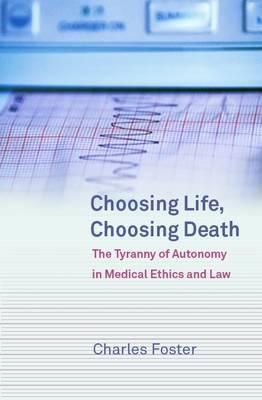
Autonomy is a vital principle in medical law and ethics which occupies a prominent place in all medico-legal and ethical debate. But there is a dangerous presumption that it should have the only vote, or at least the casting vote. This book is an assault
ما از اخلاق چه انتظاری داریم؟ این سوال شاید تاحدودی برای عموم مردم و یا متخصصان این رشته قابل پاسخ باشد؛ اینکه خوب بودن را به ما بیاموزد و در تنظیم روابط فردی م...

جشن کتاب تهران به ایستگاه سی و یکم رسیده است. حال و احوال نشر کتاب خوب نیست و باید فرهنگدوستان را به خرید و هدیه دادن کتاب ترغیب نمود. خانه اخلاقپژوهان جوان ب...

بنیاد کتابهای اخلاق اسلامی عمدتا پالایش جان از آلودگیها و آراستن آن به زیباییها است. اندیشه محوری این قبیل کتابها آن است که انسان فعلی آنی نیست که باید باشد...

-
0 Comments