Notice: تابع WP_Block_Type_Registry::register به طورنادرست فراخوانی شد. نامهای نوع بلوک نباید حروف بزرگ داشته باشند. لطفاً برای اطلاعات بیشتر، اشکال زدایی در وردپرس را مشاهده کنید. (این پیام در نگارش 5.0.0 افزوده شده است.) in /home/ethicsho/public_html/wp-includes/functions.php on line 5313
Warning: Use of undefined constant TDC_PATH_LEGACY - assumed 'TDC_PATH_LEGACY' (this will throw an Error in a future version of PHP) in /home/ethicsho/public_html/wp-content/plugins/td-composer/td-composer.php on line 109
Warning: Use of undefined constant TDSP_THEME_PATH - assumed 'TDSP_THEME_PATH' (this will throw an Error in a future version of PHP) in /home/ethicsho/public_html/wp-content/plugins/td-composer/td-composer.php on line 113 بایگانیهای Gary W. Fick - خانه اخلاق پژوهان جوان Notice: Trying to access array offset on value of type bool in /home/ethicsho/public_html/wp-content/plugins/wp-ulike/inc/general-functions.php on line 807
How do the hard facts of political responsibility shape and constrain the demands of ethical life? That question lies at the heart of the problem of ‘dirty hands’ in public life. Those who exercise political power often feel they must act in ways that would otherwise be considered immoral: indeed, paradoxically, they sometimes feel that it would be immoral of them not to perform or condone such acts as killing or lying. John Parrish offers a wide-ranging account of how this important philosophical problem emerged and developed, tracing it – and its proposed solutions – from ancient Greece through the Enlightenment. His central argument is that many of our most familiar concepts and institutions – from Augustine’s interiorised ethics, to Hobbes’s sovereign state, to Adam Smith’s ‘invisible hand’, understanding of the modern commercial economy – were designed partly as responses to the ethical problem of dirty hands in public life.
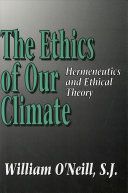
In this book, William O’Neill, S.J., offers an interpretation of the nature and scope of practical reasoning in light of postmodern philosophical criticism. He charts a via media between the abstract formalism of neo-Kantian morality and relativist interpretations of neo-Aristotelian ethics. The three parts of the book treat the eclipse of the classical Aristotelian conception of practical reason; the Kantian heritage in the modern moral theories of John Rawls and R.M. Hare; and the hermeneutical retrieval of a moral interpretation of the world. Drawing upon the philosophical hermeneutics of Hans-Georg Gadamer, modern analytical philosophy, and the discourse ethics of Jurgen Habermas, O’Neill offers a critical reconstruction of practical reason which upholds the primacy of moral community while recognizing the ethical import of historical and cultural difference. The final chapter applies the preceding hermeneutical critique to the question of the distinctiveness of Christian ethics in the writings of Karl Barth, Hans Urs von Balthasar, Josef Fuchs, and Bruno Schuller. This original contribution will be of special interest to students and teachers of moral philosophy and theology.
Social philosophers during the course of history and modern day researchers have expressed the belief that interpersonal trust is essential for harmonious and cooperative social relationships among people. Interpersonal trust has been described as the social cement that binds interpersonal relationships in society and is necessary for its survival. This book provides researchers and professionals who deal with children an insight into a critical facet of children’s social functioning. Interpersonal trust is conceptualized as children’ s confidence that a person’s verbal or nonverbal communication accurately conveys facts or internal states. This includes children’s sensitivity to lying, deception and promise violations.
This book by Michael Banner explores and attempts to understand the significance of Christian belief for a range of contemporary and controversial ethical issues including euthanasia, the environment, biotechnology, abortion, the family, sexual ethics, and the distribution of scarce resources for health care. Its importance lies in its attempt to show the crucial difference that Christian belief makes to an understanding of these issues, while at the same time demonstrating some of the weaknesses and confusions of certain popular approaches to them.
ما از اخلاق چه انتظاری داریم؟ این سوال شاید تاحدودی برای عموم مردم و یا متخصصان این رشته قابل پاسخ باشد؛ اینکه خوب بودن را به ما بیاموزد و در تنظیم روابط فردی م...

جشن کتاب تهران به ایستگاه سی و یکم رسیده است. حال و احوال نشر کتاب خوب نیست و باید فرهنگدوستان را به خرید و هدیه دادن کتاب ترغیب نمود. خانه اخلاقپژوهان جوان ب...

بنیاد کتابهای اخلاق اسلامی عمدتا پالایش جان از آلودگیها و آراستن آن به زیباییها است. اندیشه محوری این قبیل کتابها آن است که انسان فعلی آنی نیست که باید باشد...

-
0 Comments