Notice: تابع WP_Block_Type_Registry::register به طورنادرست فراخوانی شد. نامهای نوع بلوک نباید حروف بزرگ داشته باشند. لطفاً برای اطلاعات بیشتر، اشکال زدایی در وردپرس را مشاهده کنید. (این پیام در نگارش 5.0.0 افزوده شده است.) in /home/ethicsho/public_html/wp-includes/functions.php on line 5313
Warning: Use of undefined constant TDC_PATH_LEGACY - assumed 'TDC_PATH_LEGACY' (this will throw an Error in a future version of PHP) in /home/ethicsho/public_html/wp-content/plugins/td-composer/td-composer.php on line 109
Warning: Use of undefined constant TDSP_THEME_PATH - assumed 'TDSP_THEME_PATH' (this will throw an Error in a future version of PHP) in /home/ethicsho/public_html/wp-content/plugins/td-composer/td-composer.php on line 113 بایگانیهای Frans B.M. de Waal - خانه اخلاق پژوهان جوان Notice: Trying to access array offset on value of type bool in /home/ethicsho/public_html/wp-content/plugins/wp-ulike/inc/general-functions.php on line 807
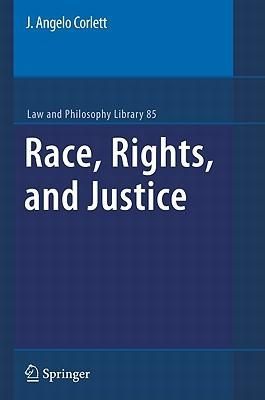
Race, Rights, and Justice explores questions of the nature of law and constitutional interpretation, international law and global justice, and the nature, function, and importance of rights each from a perspective that takes seriously the realities of race and racism. After a critical assessment of various contemporary theories of law is provided, a new theory of legal interpretation is set forth and defended. The respective words of Immanuel Kant and H. L. A. Hart on the possibility and desirability of international law are carefully explicated. Following this, Race, Rights, and Justice defends John Rawls’ Law of Peoples from the cosmopolitan liberal critique of it. The nature and importance of rights, both individual and collective, are clarified while correcting some political philosophies that have propagated confused rhetoric about rights. And the collective right to humanitarian intervention is investigated philosophically in terms of the recent problems in Colombia, with surprisingly original results. While the methodology of this book is thoroughly analytical, philosophically speaking, some of the conclusions drawn are substantially original, infusing the facts of race and racism into mainstream matters of philosophy of law.”In this collection of essays, J. Angelo Corlett continues his important work of bringing the perspective of indigenous peoples, and more generally of race, into mainstream philosophical debates about justice and rights. Corlett’s book also has very valuable insights into the nature of international law that will greatly enrich our contemporary debates.”Larry May, Washington University in St. Louis, USA”Angelo Corlett is a prolific writer whose work is invariably stimulating, provocative, and insightful. Race, Rights, and Justice is an important addition to the oeuvre. Corlett is not afraid to tackle big problems, and big names. See, for example, his scathing criticisms of Bork and Scalia on constitutional interpretation.”Burleigh T. Wilkins, University of California, Santa Barbara, USA
This book argues that the English law governing the end(ing) of life violates norms, such as the need for consistency and clarity, whose observance are vital for a properly functioning legal system. It will demonstrate that such difficulties stem from the law’s attempts to cleave to competing ethical injunctions concerning the value of human life and the individual’s proclaimed right to determine the ending of his or her life. In contrast to most contributions to the debate which tend to adopt more absolutist positions, this book concludes that a compromise position is defensible but that current compromise can be better articulated, thus restoring a measure of legal rationality.
For decades, Engelhardt has alluded to the ethics that binds moral friends. While his ‘Foundations of Bioethics’ explored the sparse ethics binding moral strangers, this long-awaited volume addresses the morality at the foundations of Christian bioethics. The volume opens with an analysis of the marginalization of Christian bioethics in the 1970s and the irremedial shortcomings of secular ethics in general. Drawing on the Christianity of the first millennium, Engelhardt provides the ontological and epistemological foundations for a Christian bioethics that can remedy the onesidedness of a secular bioethics and supply the bases for a Christian bioethics. The volume then addresses issues from abortion, third-party-assisted reproduction, and cloning, to withholding and withdrawing treatment, physician-assisted suicide, and euthanasia. Practices such as free and informed consent are relocated within a traditional Christian morality. Attention is also given to the allocation of scarce resources in health care, and to the challenge of maintaining the Christian identity of physicians, nurses, patients, and health care institutions in a culture that is now post-Christian.
Canadian Intellectual Property Law and Strategy provides a comprehensive overview of the Canadian law relating to trademarks, copyright and industrial designs, along with strategic, practice-oriented commentary regarding how such laws can best be used for business advantage. The first part of the book is devoted to trademarks. The material in this section, in addition to providing an overview of Canadian trademark law, will deal with how a foreign trademark owner can use the system most advantageously. The initial focus will be on acquisition of rights-for example, an application can be filed in Canada based on foreign registration and use and a registration can be obtained without having to show any use of the trade mark in Canada-while latter sections will emphasize the best strategies to maintain and protect trademark rights in Canada. The second part of the book is devoted to copyright, with less emphasis on the specific industries-e.g., movie production-that typically rely on the copyright system than a broad, business-oriented treatment that reflects the potentially far-reaching impact of the law. (For example, copyright can subsist in a design trade mark if sufficiently original.) The approach will thus be of a general commercial nature, emphasizing how legislation can be used to protect rights in Canada, with specific attention paid to understanding which rights are available and the steps that should be taken to protect those rights, whether by means of the appropriate assignments and registrations, or on enforcement actions in the Canadian courts. The third part of the book focuses on industrial designs, and will explain what needs to be done and when by manufacturers to protect their products. The emphasis will initially be on understanding the system and the potential benefits available by obtaining registrations, with the rest of the section focusing on the steps required to protect and assert those rights against infringers.
The position of rational egoism centres upon the thought that the rational thing to do must be to pursue one’s own self-interest. Focusing on the work of Hobbes and Sidgwick, this book is an extensive history and evaluation of rational egoism. They are, after the ancients, the foremost exponents of rational egoism. He also considers other figures – Grotius, Samuel Clarke, John Clarke, Butler, Hume, Reid, Kant, Paley and Bentham – and a related position: the instrumental theory of rationality. Robert Shaver’s conclusion is that none of the arguments for rational egoism or the instrumental theory are cogent. This is an important book not just for historians of philosophy but for all readers in philosophy or the social sciences interested in theories of morality and rationality.
ما از اخلاق چه انتظاری داریم؟ این سوال شاید تاحدودی برای عموم مردم و یا متخصصان این رشته قابل پاسخ باشد؛ اینکه خوب بودن را به ما بیاموزد و در تنظیم روابط فردی م...

جشن کتاب تهران به ایستگاه سی و یکم رسیده است. حال و احوال نشر کتاب خوب نیست و باید فرهنگدوستان را به خرید و هدیه دادن کتاب ترغیب نمود. خانه اخلاقپژوهان جوان ب...

بنیاد کتابهای اخلاق اسلامی عمدتا پالایش جان از آلودگیها و آراستن آن به زیباییها است. اندیشه محوری این قبیل کتابها آن است که انسان فعلی آنی نیست که باید باشد...

-
0 Comments