Notice: تابع WP_Block_Type_Registry::register به طورنادرست فراخوانی شد. نامهای نوع بلوک نباید حروف بزرگ داشته باشند. لطفاً برای اطلاعات بیشتر، اشکال زدایی در وردپرس را مشاهده کنید. (این پیام در نگارش 5.0.0 افزوده شده است.) in /home/ethicsho/public_html/wp-includes/functions.php on line 5313
Warning: Use of undefined constant TDC_PATH_LEGACY - assumed 'TDC_PATH_LEGACY' (this will throw an Error in a future version of PHP) in /home/ethicsho/public_html/wp-content/plugins/td-composer/td-composer.php on line 109
Warning: Use of undefined constant TDSP_THEME_PATH - assumed 'TDSP_THEME_PATH' (this will throw an Error in a future version of PHP) in /home/ethicsho/public_html/wp-content/plugins/td-composer/td-composer.php on line 113 بایگانیهای F. Neuhouser - خانه اخلاق پژوهان جوان Notice: Trying to access array offset on value of type bool in /home/ethicsho/public_html/wp-content/plugins/wp-ulike/inc/general-functions.php on line 807
“We hold these truths to be self-evident…” So begins the U.S. Declaration of Independence. What follows those words is a ringing endorsement of universal rights, but it is far from self-evident. Why did the authors claim that it was? William Talbott suggests that they were trapped by a presupposition of Enlightenment philosophy: That there was only one way to rationally justify universal truths, by proving them from self-evident premises. With the benefit of hindsight, it is clear that the authors of the U.S. Declaration had no infallible source of moral truth. For example, many of the authors of the Declaration of Independence endorsed slavery. The wrongness of slavery was not self-evident; it was a moral discovery. In this book, William Talbott builds on the work of John Rawls, Jurgen Habermas, J.S. Mill, Amartya Sen, and Henry Shue to explain how, over the course of history, human beings have learned how to adopt a distinctively moral point of view from which it is possible to make universal, though not infallible, judgments of right and wrong. He explains how this distinctively moral point of view has led to the discovery of the moral importance of nine basic rights. Undoubtedly, the most controversial issue raised by the claim of universal rights is the issue of moral relativism. How can the advocate of universal rights avoid being a moral imperialist? In this book, Talbott shows how to defend basic individual rights from a universal moral point of view that is neither imperialistic nor relativistic. Talbott avoids moral imperialism by insisting that all of us, himself included, have moral blindspots and that we usually depend on others to help us to identify those blindspots. Talbott’s book speaks to not only debates on human rights but to broader issues of moral and cultural relativism, and will interest a broad range of readers.
This series makes available in English important recent work by German philosophers on major figures in the German philosophical tradition. The volumes will provide critical perspectives on philosophers of great significance to the Anglo-American philosophical community–perspectives that have been largely ignored except by a handful of writers on German philosophy. This collection brings together in translation the finest post-war German language scholarship on Hegel’s social and political philosophy, concentrating on the Elements of the Philosophy of Right.
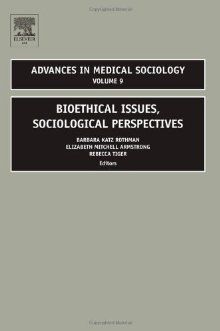
Book Summary of Bioethical Issues, Sociological PerspectivesThis volume deals with the topic of health inequalities and health disparities. The volume is divided into five sections. The first section includes an introductory look at the issue of health care inequalities and disparities and also an introduction to the volume. One of the backdrops to this topic in the United States was The National Healthcare Disparities Report and its focus on the ability of Americans to access health care and variation in the quality of care. Disparities related to socioeconomic status were included, as were disparities linked to race and ethnicity and the report also tried to explore the relationship between race/ethnicity and socioeconomic position, as explained in more detail in the first article in the book. The second article discusses a newer overall approach to issues related to health inequalities and health disparities.The remaining four sections of the book address more specific topics relating to inequalities and disparities. The second section examines racial and ethnic inequalities and disparities. The third section includes articles that address the issue from the perspective of research about health care providers and health care facilities. The last two sections of the book focus on consumers and topics of health care disparities, with Section 4 focused on issues related to substance abuse, mental health and related concerns. Section 5 includes articles looking at issues of vulnerable women, women with breast cancer and people with colorectal cancer.Inequalities and Disparities in Health Care and Health is important reading for medical sociologists and people working in other social science disciplines studying health-related issues. The volume also provides vital information for health services researchers, policy analysts and public health researchers..
Regenerative medicine is rich with promethean promises. The use of human embryonic stem cells in research is justified by its advocates in terms of promises to cure a wide range of diseases and disabilities, from Alzheimer’s and Parkinsonism to the results of heart attacks and spinal cord injuries. More broadly, there is the promethean allure of being able to redesign human biological nature in terms of the goals and concerns of humans. Needless to say, these allures and promises have provoked a wide range of not just moral but metaphysical reflections that reveal and reflect deep fault-lines in our cultures. The essays in this volume, directly and indirectly, present the points of controversy as they tease out the character of the moral issues that confront any attempt to develop the human regenerative technologies that might move us from a human to a post-human nature. Although one can appreciate the disputes as independently philosophical, they are surely also a function of the conflict between a Christian and a post-Christian culture, in that Christianity has from its beginning recognized a fundamental prohibition against the taking of early human life. Even the philosophical disputes that frame secular bioethics are often motivated and shaped by these background cultural conflicts. These essays display this circumstance in rich ways.
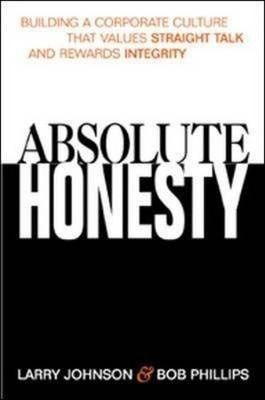
Dishonesty doesn’t pay, and in the wake of headlines involving the likes of Enron, WorldCom and Tyco, organizations need to establish ways of maintainingcultures where open, honest communication is the norm. Absolute Honesty demonstrates how readers can maintain an environment in which employees speak their mind without fearing reprisal, and truthfulness and accountabilityshow themselves for what they are: business assets.Demonstrates that cultivating a culture of honesty will help companies reap huge competitive benefitsContains a toolbox of strategies readers can use to improve their organizations’ ability to confront and resolve difficult issues.Uniquely structured around the Six Laws of Absolute Honesty, which readers can practice and encourage: “The Worst Truth Beats the Best Lie,” “Don’t Kill the Messenger,” “Use Constructive Confrontation,” and more. Covers provocative and sensitive issues such as dealing with a difficult or even dishonest boss, “agreeing to disagree,”and accepting criticism without becoming defensive.
ما از اخلاق چه انتظاری داریم؟ این سوال شاید تاحدودی برای عموم مردم و یا متخصصان این رشته قابل پاسخ باشد؛ اینکه خوب بودن را به ما بیاموزد و در تنظیم روابط فردی م...

جشن کتاب تهران به ایستگاه سی و یکم رسیده است. حال و احوال نشر کتاب خوب نیست و باید فرهنگدوستان را به خرید و هدیه دادن کتاب ترغیب نمود. خانه اخلاقپژوهان جوان ب...

بنیاد کتابهای اخلاق اسلامی عمدتا پالایش جان از آلودگیها و آراستن آن به زیباییها است. اندیشه محوری این قبیل کتابها آن است که انسان فعلی آنی نیست که باید باشد...

-
0 Comments