Notice: تابع WP_Block_Type_Registry::register به طورنادرست فراخوانی شد. نامهای نوع بلوک نباید حروف بزرگ داشته باشند. لطفاً برای اطلاعات بیشتر، اشکال زدایی در وردپرس را مشاهده کنید. (این پیام در نگارش 5.0.0 افزوده شده است.) in /home/ethicsho/public_html/wp-includes/functions.php on line 5313
Warning: Use of undefined constant TDC_PATH_LEGACY - assumed 'TDC_PATH_LEGACY' (this will throw an Error in a future version of PHP) in /home/ethicsho/public_html/wp-content/plugins/td-composer/td-composer.php on line 109
Warning: Use of undefined constant TDSP_THEME_PATH - assumed 'TDSP_THEME_PATH' (this will throw an Error in a future version of PHP) in /home/ethicsho/public_html/wp-content/plugins/td-composer/td-composer.php on line 113 بایگانیهای E.M. Dadlez - خانه اخلاق پژوهان جوان Notice: Trying to access array offset on value of type bool in /home/ethicsho/public_html/wp-content/plugins/wp-ulike/inc/general-functions.php on line 807
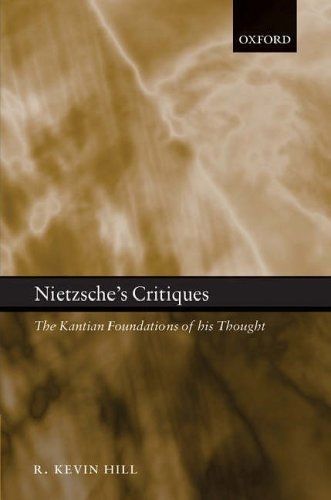
Kevin Hill presents a highly original study of Nietzsche’s thought, the first book to examine in detail his debt to the work of Kant. Hill argues that Nietzsche is a systematic philosopher who knew Kant far better than is commonly thought, and that he can only be properly understood in relation to him. Nietzsche’s Critiques will be of great value to scholars and students with interests in either of these philosophical giants, or in the history of ideas generally.
“In this book, David Konstan argues that the modern concept of interpersonal forgiveness, in the full sense of the term, did not exist in ancient Greece and Rome. Even more startlingly, it is not fully present in the Hebrew Bible, nor again in the New Testament, or in the early Jewish and Christian commentaries on the Holy Scriptures. It would still be centuries– many centuries– before the idea of interpersonal forgiveness, with its accompanying ideas of apology, remorse, and a change of heart on thepart of the wrongdoer, would emerge. For all its vast importance today in religion, law, politics, and psychotherapy, interpersonal forgiveness is creation of the 18th and 19th centuries, when the Christian concept of divine forgiveness was finally secularized. Forgiveness was God’s province, and it took a revolution in thought to bring it to earth and make it a human trait”–
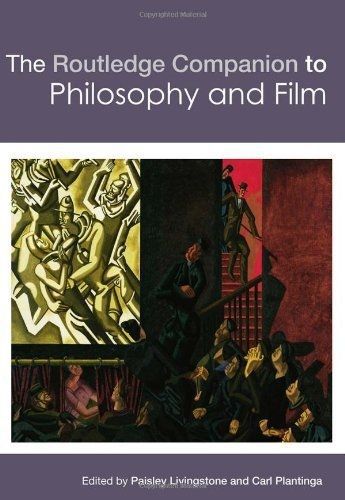
The Routledge Companion to Philosophy and Filmis the first comprehensive volume to explore the main themes, topics, thinkers and issues in philosophy and film. The Companionfeatures sixty specially commissioned chapters from international scholars and is divided into four clear parts: ⬢ issues and concepts ⬢ authors and trends ⬢ genres ⬢ film as philosophy. Part one is a comprehensive section examining key concepts, including chapters on acting, censorship, character, depiction, ethics, genre, interpretation, narrative, reception and spectatorship and style. Part two covers authors and scholars of film and significant theories Part three examines genres such as documentary, experimental cinema, horror, comedy and tragedy. Part four includes chapters on key directors such as Tarkovsky, Bergman and Terrence Malick and on particular films including Memento. Each chapter includes a section of annotated further reading and is cross-referenced to related entries. The Routledge Companion to Philosophy and Filmis essential reading for anyone interested in philosophy of film, aesthetics and film and cinema studies.
From subtle discrimination in everyday life, to horrors like lynching in the Old South, cultural imperialism, and “ethnic cleansing”, racism exists in many different forms, in almost every facet of society. Despite civil rights movements and other attempts at progress, racial prejudices and stereotypes remain deeply embedded in Western culture. Racism takes a frank and objective look at why these notions exist. It explores how racism has come to be so firmly established, and looks at how race, ethnicity, and xenophobia are related. This book incorporates the latest research to demystify the subject of racism and explore its history, science, and culture. It sheds light not only on how racism has evolved since its earliest beginnings, but also explores the numerous embodiments of racism, highlighting the paradox of its survival, despite the scientific discrediting of the notion of ‘race’ with the latest advances in genetics. As encompassing as it is concise, Racism is a valuable guide to one of the world’s most destructive problems.
ما از اخلاق چه انتظاری داریم؟ این سوال شاید تاحدودی برای عموم مردم و یا متخصصان این رشته قابل پاسخ باشد؛ اینکه خوب بودن را به ما بیاموزد و در تنظیم روابط فردی م...

جشن کتاب تهران به ایستگاه سی و یکم رسیده است. حال و احوال نشر کتاب خوب نیست و باید فرهنگدوستان را به خرید و هدیه دادن کتاب ترغیب نمود. خانه اخلاقپژوهان جوان ب...

بنیاد کتابهای اخلاق اسلامی عمدتا پالایش جان از آلودگیها و آراستن آن به زیباییها است. اندیشه محوری این قبیل کتابها آن است که انسان فعلی آنی نیست که باید باشد...

-
0 Comments