Notice: تابع WP_Block_Type_Registry::register به طورنادرست فراخوانی شد. نامهای نوع بلوک نباید حروف بزرگ داشته باشند. لطفاً برای اطلاعات بیشتر، اشکال زدایی در وردپرس را مشاهده کنید. (این پیام در نگارش 5.0.0 افزوده شده است.) in /home/ethicsho/public_html/wp-includes/functions.php on line 5313
Warning: Use of undefined constant TDC_PATH_LEGACY - assumed 'TDC_PATH_LEGACY' (this will throw an Error in a future version of PHP) in /home/ethicsho/public_html/wp-content/plugins/td-composer/td-composer.php on line 109
Warning: Use of undefined constant TDSP_THEME_PATH - assumed 'TDSP_THEME_PATH' (this will throw an Error in a future version of PHP) in /home/ethicsho/public_html/wp-content/plugins/td-composer/td-composer.php on line 113 بایگانیهای E. Carlson - خانه اخلاق پژوهان جوان Notice: Trying to access array offset on value of type bool in /home/ethicsho/public_html/wp-content/plugins/wp-ulike/inc/general-functions.php on line 807
In academic and non-academic debates the practice of human rights enforcement is usually reduced to the intentions, interests and capabilities of agents – particularly the United States and other Western states. Whether seen as a policy adopted to promote national interest or an imperialist device used by the West, the practice of human rights enforcement is discussed in isolation from the structure of the late-modern Global Political Economy. This book develops a structural approach to post-Cold war military humanitarianism and demonstrates the nature of reciprocal causal relations between the global capitalist economy and the practice of human rights enforcement. It provides an historical analysis of the notion of individual rights and their relationship with capitalism and demonstrates that today the actors engaged in human rights enforcement – whether for selfish or humanitarian reasons – unintentionally provide global capital with a Gramscian quality of moral leadership thereby contributing to its hegemony.
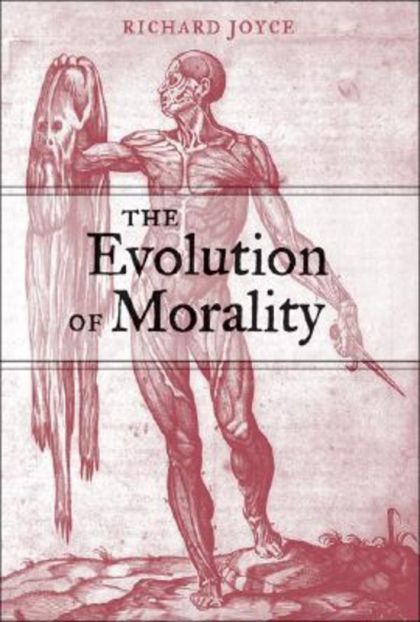
Moral thinking pervades our practical lives, but where did this way of thinking come from, and what purpose does it serve? Is it to be explained by environmental pressures on our ancestors a million years ago, or is it a cultural invention of more recent origin? In The Evolution of Morality, Richard Joyce takes up these controversial questions, finding that the evidence supports an innate basis to human morality. As a moral philosopher, Joyce is interested in whether any implications follow from this hypothesis. Might the fact that the human brain has been biologically prepared by natural selection to engage in moral judgment serve in some sense to vindicate this way of thinking—staving off the threat of moral skepticism, or even undergirding some version of moral realism? Or if morality has an adaptive explanation in genetic terms—if it is, as Joyce writes, “just something that helped our ancestors make more babies”—might such an explanation actually undermine morality’s central role in our lives? He carefully examines both the evolutionary “vindication of morality” and the evolutionary “debunking of morality,” considering the skeptical view more seriously than have others who have treated the subject.Interdisciplinary and combining the latest results from the empirical sciences with philosophical discussion, The Evolution of Morality is one of the few books in this area written from the perspective of moral philosophy. Concise and without technical jargon, the arguments are rigorous but accessible to readers from different academic backgrounds. Joyce discusses complex issues in plain language while advocating subtle and sometimes radical views. The Evolution of Morality lays the philosophical foundations for further research into the biological understanding of human morality.
Delineating implications for administrative ethics from other fields such as sociology, psychology, and philosophy, this reference provides a comprehensive review of administrative ethics in the public sector. Detailing the context within which contemporary ethics training has developed, the book examines the effectiveness of ethics training, legal and organizational devices for encouraging desired conduct, and other topics of particular relevance to the political and social contexts of public administration. Written by over 25 leading scholars in public administration ethics, the book creates a taxonomy for administrative ethics using the categories of modern philosophy.
ما از اخلاق چه انتظاری داریم؟ این سوال شاید تاحدودی برای عموم مردم و یا متخصصان این رشته قابل پاسخ باشد؛ اینکه خوب بودن را به ما بیاموزد و در تنظیم روابط فردی م...

جشن کتاب تهران به ایستگاه سی و یکم رسیده است. حال و احوال نشر کتاب خوب نیست و باید فرهنگدوستان را به خرید و هدیه دادن کتاب ترغیب نمود. خانه اخلاقپژوهان جوان ب...

بنیاد کتابهای اخلاق اسلامی عمدتا پالایش جان از آلودگیها و آراستن آن به زیباییها است. اندیشه محوری این قبیل کتابها آن است که انسان فعلی آنی نیست که باید باشد...

-
0 Comments