Notice: تابع WP_Block_Type_Registry::register به طورنادرست فراخوانی شد. نامهای نوع بلوک نباید حروف بزرگ داشته باشند. لطفاً برای اطلاعات بیشتر، اشکال زدایی در وردپرس را مشاهده کنید. (این پیام در نگارش 5.0.0 افزوده شده است.) in /home/ethicsho/public_html/wp-includes/functions.php on line 5313
Warning: Use of undefined constant TDC_PATH_LEGACY - assumed 'TDC_PATH_LEGACY' (this will throw an Error in a future version of PHP) in /home/ethicsho/public_html/wp-content/plugins/td-composer/td-composer.php on line 109
Warning: Use of undefined constant TDSP_THEME_PATH - assumed 'TDSP_THEME_PATH' (this will throw an Error in a future version of PHP) in /home/ethicsho/public_html/wp-content/plugins/td-composer/td-composer.php on line 113 بایگانیهای Dr. Roger W. Shuy - خانه اخلاق پژوهان جوان Notice: Trying to access array offset on value of type bool in /home/ethicsho/public_html/wp-content/plugins/wp-ulike/inc/general-functions.php on line 807
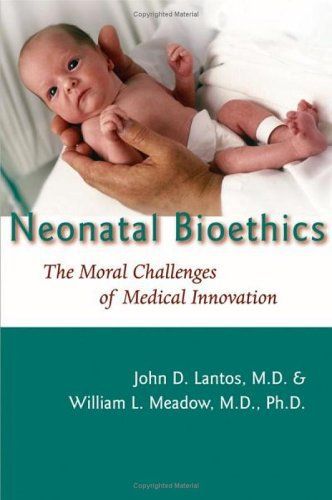
Neonatal intensive care has been one of the most morally controversial areas of medicine during the past thirty years. This study examines the interconnected development of four key aspects of neonatal intensive care: medical advances, ethical analysis, legal scrutiny, and econometric evaluation.The authors assert that a dramatic shift in societal attitudes toward newborns and their medical care was a stimulus for and then a result of developments in the medical care of newborns. They divide their analysis into three eras of neonatal intensive care. The first, characterized by the rapid advance of medical technology from the late 1960s to the Baby Doe case of 1982, established neonatal care as a legitimate specialty of medical care, separate from the rest of pediatrics and medicine. During this era, legal scholars and moral philosophers debated the relative importance of parental autonomy, clinical prognosis, and children’s rights. The second era, beginning with the Baby Doe case (a legal battle that spurred legislation mandating that infants with debilitating birth defects be treated unless the attending physician deems efforts to prolong life “futile”), stimulated efforts to establish a consistent federal standard on neonatal care decisions and raised important moral questions concerning the meaning of “futility” and of “inhumane” treatment. In the third era, a consistent set of decision-making criteria and policies was established. These policies were the result of the synergy and harmonization of newly agreed upon ethical principles and newly discovered epidemiological characteristics of neonatal care.Tracing the field’s recent history, notable advances, and considerable challenges yet to be faced, the authors present neonatal bioethics as a paradigm of complex conversation among physicians, philosophers, policy makers, judges, and legislators which has led to responsible societal oversight of a controversial medical innovation.
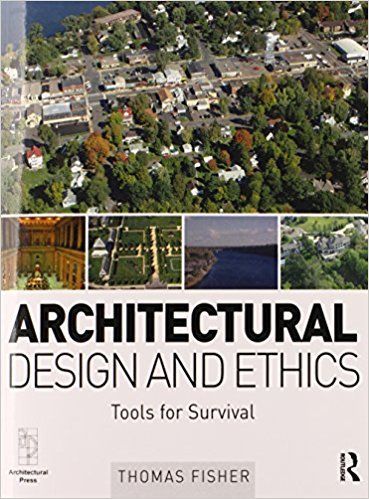
Architectural Design and Ethics offers both professional architects and architecture students a theoretical base and numerous suggestions as to how we might rethink our responsibilities to the natural world and design a more sustainable future for ourselves. As we find ourselves on the steep slope of several exponential growth curves in global population, in heat-trapping atmospheric gases, in the gap between the rich and poor, and in the demand for finite resources, Fisher lays down a theory of architecture based on ethics and explores how buildings can and do provide both social and moral dimensions. The book also has practical goals, demonstrating how architects can make better and more beautiful buildings whilst nurturing more responsible, sustainable development. Architectural Design and Ethics will prove an invaluable text not only to those in the architecture field, but to anyone simply interested in the ethical issues surrounding our built environment. * Joins the dots between architectural form, ethics and professional practice * Uses the history of ethics to present relevant lessons for todays practitioners * A wake up call to architects, advocating a greater focus on ethics over aesthetics
The Ethics of Aesthetics in Japanese Cinema and Literatureis a study of the ethics of modern Japanese aesthetics from the 1930s, through WWII and into the postwar period. What makes this book unique is that Nina Cornyetz opens up the field in new and controversial ways by exploring the tensions and harmonies between psychoanalytic ethics of the drive and socio-political ethics of relation to the other. Rejecting the convention of viewing these as contradictory, Cornyetz insists that the exemplars of psychoanalytic ethics are to the contrary, simultaneously politically ethical. Cornyetz embarks on innovative and unprecedented readings of some of the most significant literary and film texts of the Japanese canon, including works by Kawabata Yasunari, Mishima Yukio, Abe Kôbô and Shinoda Masahiro, all renowned for their texts’ aesthetic and philosophic brilliance. The study looks at how relations between individuals and communities in these texts either reiterate or transcend stereotypes, andhow desire is or is not limited by sociocultural norms. Cornyetz argues that these authors’ and filmmakers’ concepts of beauty and relation to others were, in fact, deeply impacted by political and social factors. Ranging from a discussion of fascist aesthetics to heterosexism in modern Japan,The Ethics of Aesthetics in Japanese Cinema and Literatureshows how certain changing political, intellectual and artistic issues, as well as sociocultural norms, variously nuanced these texts’ depictions of desire and the ‘other’. Through her analysis of cultural texts such as the filmsWoman in the DunesandDouble Suicide, Cornyetz challenges the convention that praises the universality of their artistic, existential or intellectual achievements. Rather she seeks to reorient these within a specifically Japanese historical context to give a new and insightful interpretation to the work. This ground breaking study is truly interdisciplinary and will appeal to students and scholars of Japaneseliterature, film, gender, culture, history and even psychoanalytic theory.
This book responds to the Bush Administration position on the “war on terror.” It examines preemption within the context of “just war”; justification for the United States-led invasion of Iraq, with some authors charging that its tactics serve to increase terror; global terrorism; and concepts such as reconciliation, Islamic identity, nationalism, and intervention.
ما از اخلاق چه انتظاری داریم؟ این سوال شاید تاحدودی برای عموم مردم و یا متخصصان این رشته قابل پاسخ باشد؛ اینکه خوب بودن را به ما بیاموزد و در تنظیم روابط فردی م...

جشن کتاب تهران به ایستگاه سی و یکم رسیده است. حال و احوال نشر کتاب خوب نیست و باید فرهنگدوستان را به خرید و هدیه دادن کتاب ترغیب نمود. خانه اخلاقپژوهان جوان ب...

بنیاد کتابهای اخلاق اسلامی عمدتا پالایش جان از آلودگیها و آراستن آن به زیباییها است. اندیشه محوری این قبیل کتابها آن است که انسان فعلی آنی نیست که باید باشد...

-
0 Comments