Notice: تابع WP_Block_Type_Registry::register به طورنادرست فراخوانی شد. نامهای نوع بلوک نباید حروف بزرگ داشته باشند. لطفاً برای اطلاعات بیشتر، اشکال زدایی در وردپرس را مشاهده کنید. (این پیام در نگارش 5.0.0 افزوده شده است.) in /home/ethicsho/public_html/wp-includes/functions.php on line 5313
Warning: Use of undefined constant TDC_PATH_LEGACY - assumed 'TDC_PATH_LEGACY' (this will throw an Error in a future version of PHP) in /home/ethicsho/public_html/wp-content/plugins/td-composer/td-composer.php on line 109
Warning: Use of undefined constant TDSP_THEME_PATH - assumed 'TDSP_THEME_PATH' (this will throw an Error in a future version of PHP) in /home/ethicsho/public_html/wp-content/plugins/td-composer/td-composer.php on line 113 بایگانیهای Dr. Aaron Hass - خانه اخلاق پژوهان جوان Notice: Trying to access array offset on value of type bool in /home/ethicsho/public_html/wp-content/plugins/wp-ulike/inc/general-functions.php on line 807
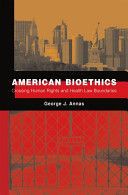
Bioethics was “born in the USA” and the values American bioethics embrace are based on American law, including liberty and justice. This book crosses the borders between bioethics and law, but moves beyond the domestic law/bioethics struggles for dominance by exploring attempts to articulate universal principles based on international human rights. The isolationism of bioethics in the US is not tenable in the wake of scientific triumphs like decoding the human genome, and civilizational tragedies like international terrorism. Annas argues that by crossing boundaries which have artificially separated bioethics and health law from the international human rights movement, American bioethics can be reborn as a global force for good, instead of serving mainly the purposes of U.S. academics. This thesis is explored in a variety of international contexts such as terrorism and genetic engineering, and in U.S. domestic disputes such as patient rights and market medicine. The citizens of the world have created two universal codes: science has sequenced the human genome and the United Nations has produced the Universal Declaration of Human Rights. The challenge for American bioethics is to combine these two great codes in imaginative and constructive ways to make the world a better, and healthier, place to live.
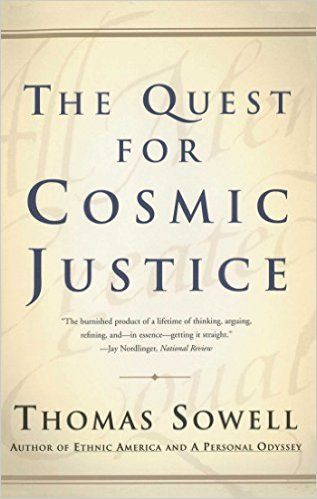
This is not a comforting book — it is a book about disturbing issues that are urgently important today and enduringly critical for the future. It rejects both “merit” and historical redress as principles for guiding public policy. It shows how “peace” movements have led to war and to needless casualties in those wars. It argues that “equality” is neither right nor wrong, but meaningless.The Quest for Cosmic Justice shows how confused conceptions of justice end up promoting injustice, how confused conceptions of equality end up promoting inequality, and how the tyranny of social visions prevents many people from confronting the actual consequences of their own beliefs and policies. Those consequences include the steady and dangerous erosion of the fundamental principles of freedom — and the quiet repeal of the American revolution.
When security is grounded in exclusion and alienation, ethics give license to killing and war, and freedom is a mask for imperial violence, how should we act? Security, Ethics & Violencesounds a warning; not only are global patterns of insecurity, violence and conflict getting ever more destructive and out of hand, but the ways we understand and respond to them will only prolong the crisis. In this book Anthony Burke critiques the fundamental categories of global political life, and then lights a path out. · Burke presents a ground-breaking analysis of the historical roots of sovereignty and security, his critique of just war theory, and offers important new essays on strategy, the concept of freedom and US exceptionalism. · This volume pursues searching critical engagements with thinkers such as Agamben, Hardt; Negri, Levinas, Clausewitz, Elshtain, Walzer, Foucault and Connolly. · Combining cutting-edge theoretical critique with analyses of the waron terror, Iraq, the Israeli-Palestinian conflict, the Vietnam war, the Indonesian crisis, globalization and the new drive for empire, this is a book that refuses easy answers, or to abandon hope. This new text will be of key interest to students and researchers of Politics and International Relations, Security Studies, Social and Cultural Theory and Philosophy.
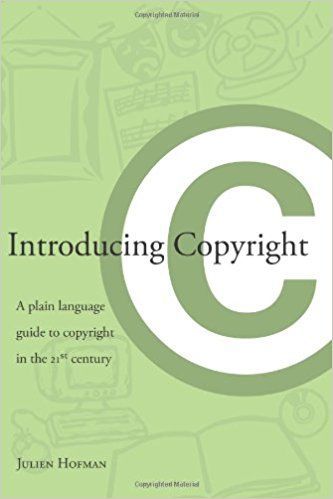
Works that copyright protects ā such as books, magazines, websites, computer programs, music and videos ā are an important part of modern life. Yet many who use these works, and even some who produce them, do not understand copyright. I wrote this introduction to copyright for those in business, the entertainment industry and education, and for those who use and create copyright works in all their different forms. The book explains what copyright protection means for copyright holders and for copyright users. It also introduces readers to contemporary copyright topics: digital rights management, open licences, software patents and protection for works of traditional knowledge. A final chapter tries to predict how technology will change the publishing and entertainment industries that depend on copyright. The book assumes no special knowledge and avoids technical language as much as possible.
The last few years have seen a remarkable revival of interest in the virtues, which have regained their central role in moral philosophy. This thought-provoking new collection is a much-needed survey of virtue ethics and virtue theory. The specially commissioned articles by an international team of philosophers represent the state of the art in this subject and will set the agenda for future work in the area. The contributors–including Lawrence Blum, John Cottingham, Julia Driver, Rosalind Hursthouse, Terence Irwin, Susan Moller Okin, Onora O’Neill, Michael Slote, Michael Stocker, and David Wiggins–cover practical virtue ethics, ancient views of the virtues, impartiality and partiality, Kant, utilitarianism, human nature, natural and artificial virtues, virtue and the good life, the vices, emotions, politics, feminism, moral education, and community.
ما از اخلاق چه انتظاری داریم؟ این سوال شاید تاحدودی برای عموم مردم و یا متخصصان این رشته قابل پاسخ باشد؛ اینکه خوب بودن را به ما بیاموزد و در تنظیم روابط فردی م...

جشن کتاب تهران به ایستگاه سی و یکم رسیده است. حال و احوال نشر کتاب خوب نیست و باید فرهنگدوستان را به خرید و هدیه دادن کتاب ترغیب نمود. خانه اخلاقپژوهان جوان ب...

بنیاد کتابهای اخلاق اسلامی عمدتا پالایش جان از آلودگیها و آراستن آن به زیباییها است. اندیشه محوری این قبیل کتابها آن است که انسان فعلی آنی نیست که باید باشد...

-
0 Comments