Notice: تابع WP_Block_Type_Registry::register به طورنادرست فراخوانی شد. نامهای نوع بلوک نباید حروف بزرگ داشته باشند. لطفاً برای اطلاعات بیشتر، اشکال زدایی در وردپرس را مشاهده کنید. (این پیام در نگارش 5.0.0 افزوده شده است.) in /home/ethicsho/public_html/wp-includes/functions.php on line 5313
Warning: Use of undefined constant TDC_PATH_LEGACY - assumed 'TDC_PATH_LEGACY' (this will throw an Error in a future version of PHP) in /home/ethicsho/public_html/wp-content/plugins/td-composer/td-composer.php on line 109
Warning: Use of undefined constant TDSP_THEME_PATH - assumed 'TDSP_THEME_PATH' (this will throw an Error in a future version of PHP) in /home/ethicsho/public_html/wp-content/plugins/td-composer/td-composer.php on line 113 بایگانیهای Derek Stuart Wright - خانه اخلاق پژوهان جوان Notice: Trying to access array offset on value of type bool in /home/ethicsho/public_html/wp-content/plugins/wp-ulike/inc/general-functions.php on line 807
In this major new book, Matthew Kramer seeks to establish two main conclusions. On the one hand, moral requirements and other elements of ethics are strongly objective in a number of senses that that Kramer elaborates. On the other hand, the objectivity of ethics is itself an ethical matter that rests primarily on ethical considerations. Moral realism ? the doctrine that morality is indeed objective in the various respects which Kramer expounds ? is a moral doctrine. This volume therefore fights battles on two complicatedly criss-crossing fronts. Many philosophers who deny the objectivity of ethics have sought to base their arguments on non-ethical considerations. They take themselves to be impugning the intellectual solidity of ethical claims and values without advancing any such claims or endorsing any such values in the course of their reflections. Quite a few champions of ethical objectivity have responded in kind by seeking to adduce alternative non-ethical considerations. Kramer, while aiming to dispel doubts about ethical objectivity, goes against both the doubters and their realist opponents by insisting that the key questions concerning ethical objectivity are not only about the domain of ethics but also within it. Distinguished by its originality, ambition and quality of scholarship, “Moral Realism as a Moral Doctrine” will be of interest to a wide range of readers in metaethics and moral philosophy more broadly.
It is widely recognized that American culture is both exceptionally religious and exceptionally violent. Americans participate in religious communities in high numbers, yet American citizens also own guns at rates far beyond those of citizens in other industrialized nations. Since9/11, United States scholars have understandably discussed religious violence in terms of terrorist acts, a focus that follows United States policy. Yet, according to Jon Pahl, to identify religious violence only with terrorism fails to address the long history of American violence rooted in religion throughout the country’s history. In essence, Americans have found ways to consider blessed some very brutal attitudes and behaviors both domestically and globally.In Empire of Sacrifice, Pahl explains how both of these distinctive features of American culture work together by exploring how constructions along the lines of age, race, and gender have operated to centralize cultural power across American civil or cultural religions in ways that dont always appear to be “religious” at all. Pahl traces the development of these forms of systemic violence throughout American history, using evidence from popular culture, including movies such as Rebel without a Cause and Reefer Madness and works of literature such as The Narrative of the Life of Frederick Douglass and The Handmaid’s Tale, to illuminate historical events. Throughout, Pahl focuses an intense light on the complex and durable interactions between religion and violence in American history, from Puritan Boston to George W. Bushs Baghdad.
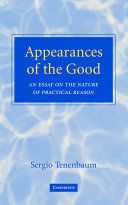
‘We desire all and only those things we conceive to be good; we avoid what we conceive to be bad.’ This slogan was once the standard view of the relationship between desire or motivation and rational evaluation. Many critics have rejected this scholastic formula as either trivial or wrong. It appears to be trivial if we just define the good as ‘what we want’, and wrong if we consider apparent conflicts between what we seem to want and what we seem to think is good. In Appearances of the Good, Sergio Tenenbaum argues that the old slogan is both significant and right, even in cases of apparent conflict between our desires and our evaluative judgments. Maintaining that the good is the formal end of practical inquiry in much the same way as truth is the formal end of theoretical inquiry, he provides a fully unified account of motivation and evaluation.
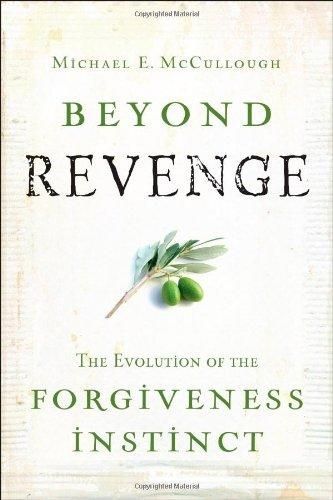
Why is revenge such a pervasive and destructive problem? How can we create a future in which revenge is less common and forgiveness is more common? Psychologist Michael McCullough argues that the key to a more forgiving, less vengeful world is to understand the evolutionary forces that gave rise to these intimately human instincts and the social forces that activate them in human minds today. Drawing on exciting breakthroughs from the social and biological sciences, McCullough dispenses surprising and practical advice for making the world a more forgiving place. Michael E. McCullough (Miami, Florida), an internationally recognized expert on forgiveness and revenge, is a professor of psychology at the University of Miami in Coral Gables, Florida, where he directs the Laboratory for Social and Clinical Psychology.
Most readers of Spinoza treat him as a pure metaphysician, a grim determinist, or a stoic moralist, but none of these descriptions captures the author of the Ethics, argues Steven B. Smith in this intriguing book. Offering a new reading of Spinoza’s masterpiece, Smith asserts that the Ethics is a celebration of human freedom and its attendant joys and responsibilities and should be placed among the great founding documents of the Enlightenment. Two aspects of Smith’s book distinguish it from other studies. It treats the famous “geometrical method” of the Ethics as a form of moral rhetoric, a model for the construction of individuality. And it presents the Ethics as a companion to Spinoza’s major work of political philosophy, the Theologico-Political Treatise, each work helping to explore the problem of freedom. Affirming Spinoza’s centrality for both critics and defenders of modernity, the book will be of value to students of political theory, philosophy, and intellectual history.
ما از اخلاق چه انتظاری داریم؟ این سوال شاید تاحدودی برای عموم مردم و یا متخصصان این رشته قابل پاسخ باشد؛ اینکه خوب بودن را به ما بیاموزد و در تنظیم روابط فردی م...

جشن کتاب تهران به ایستگاه سی و یکم رسیده است. حال و احوال نشر کتاب خوب نیست و باید فرهنگدوستان را به خرید و هدیه دادن کتاب ترغیب نمود. خانه اخلاقپژوهان جوان ب...

بنیاد کتابهای اخلاق اسلامی عمدتا پالایش جان از آلودگیها و آراستن آن به زیباییها است. اندیشه محوری این قبیل کتابها آن است که انسان فعلی آنی نیست که باید باشد...

-
0 Comments