Notice: تابع WP_Block_Type_Registry::register به طورنادرست فراخوانی شد. نامهای نوع بلوک نباید حروف بزرگ داشته باشند. لطفاً برای اطلاعات بیشتر، اشکال زدایی در وردپرس را مشاهده کنید. (این پیام در نگارش 5.0.0 افزوده شده است.) in /home/ethicsho/public_html/wp-includes/functions.php on line 5313
Warning: Use of undefined constant TDC_PATH_LEGACY - assumed 'TDC_PATH_LEGACY' (this will throw an Error in a future version of PHP) in /home/ethicsho/public_html/wp-content/plugins/td-composer/td-composer.php on line 109
Warning: Use of undefined constant TDSP_THEME_PATH - assumed 'TDSP_THEME_PATH' (this will throw an Error in a future version of PHP) in /home/ethicsho/public_html/wp-content/plugins/td-composer/td-composer.php on line 113 بایگانیهای David Little - خانه اخلاق پژوهان جوان Notice: Trying to access array offset on value of type bool in /home/ethicsho/public_html/wp-content/plugins/wp-ulike/inc/general-functions.php on line 807
The Emotive Theory was theory ahead of its time, and a theory which was, perhaps understandably, misinterpreted, misrepresented, and ridiculed by its critics from the outset. In Emotion, Truth and Meaning, Dr Wilks not only acquaints the reader with what the original emotivists actually claimed (and clarifies what they actually meant when they made some of the more controversial claims), he enriches their claims by psychologically expanding them. Like its predecessor, Dr Wilks’s enriched emotive theory distinguishes between moral conflicts which are rationally resolvable and moral conflicts which are not, but, unlike its predecessor, it traces the irresolvability of the latter to the psychological fact that they are merely symptomatic of more fundamental conflict at the level of world view – the level where questions about the meaning of life are answered, and where the truth of the answers arrived at is emotionally-felt rather than empirically-sensed.
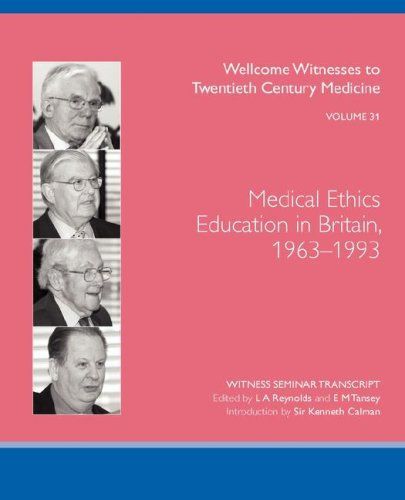
Changing attitudes toward human experimentation along with other controversial moral issues emerged after the Second World War and, in 1963, led to the establishment of the London Medical Group, organized by Ted Shotter, with similar Medical Groups elsewhere from 1967. These became forums for discussion and debate arising from dilemmas encountered in medical settings. Medical ethics did not become a recognized subject in the syllabus of Britain’s medical schools until 1993. This Witness Seminar transcript records the development of international ethical codes, the response to them over the period 1963-93 by students and doctors and the extent of resistance encountered from deans, hospital administrators and others; the Groups’ influence on medical practice; the impact on both Medical Group organizers and participants in their subsequent careers; the local and regional variations and their significant lasting contributions. The meeting was chaired by Dr Stephen Lock and included former Medical Group members, scientists, physicians and policy makers, such as Professors Kenneth Boyd, Bill Fulford, Roger Higgs, Sir Ian Kennedy, David Morton and Sir Malcolm Macnaughton. An introduction by Professor Sir Kenneth Calman and appendices of the Very Revd Edward Shotter’s reflections on the influence of the Medical Groups as a report for the Institute of Medical Ethics complete the transcript.
Oxford Studies in Metaethics is the only periodical publication devoted exclusively to original philosophical work on the foundations of ethics. It provides an annual selection of much of the best new scholarship being done in the field. Its broad purview includes work being done at the intersections of ethical theory with metaphysics, epistemology, philosophy of language, and philosophy of mind. OSME provides an excellent basis for understanding recent developments in the field; those who would like to acquaint themselves with the current state of play in metaethics would do well to start here.
Epistemology, the philosophy of knowledge, is at the core of many of the central debates and issues in philosophy, interrogating the notions of truth, objectivity, trust, belief and perception. The Routledge Companion to Epistemologyprovides a comprehensive and the up-to-date survey of epistemology, charting its history, providing a thorough account of its key thinkers and movements, and addressing enduring questions and contemporary research in the field. Organized thematically, the Companionis divided into ten sections: Foundational Issues, The Analysis of Knowledge, The Structure of Knowledge, Kinds of Knowledge, Skepticism, Responses to Skepticism, Knowledge and Knowledge Attributions, Formal Epistemology, The History of Epistemology, and Metaepistemological Issues. Seventy-eight chapters, each between 5000 and 7000 words and written by the world “s leading epistemologists, provide students with an outstanding and accessible guide to the field. Designed to fit the most comprehensive syllabus in the discipline, this text will be an indispensible resource for anyone interested in this central area of philosophy. The Routledge Companion to Epistemologyis essential reading for students of philosophy.
ما از اخلاق چه انتظاری داریم؟ این سوال شاید تاحدودی برای عموم مردم و یا متخصصان این رشته قابل پاسخ باشد؛ اینکه خوب بودن را به ما بیاموزد و در تنظیم روابط فردی م...

جشن کتاب تهران به ایستگاه سی و یکم رسیده است. حال و احوال نشر کتاب خوب نیست و باید فرهنگدوستان را به خرید و هدیه دادن کتاب ترغیب نمود. خانه اخلاقپژوهان جوان ب...

بنیاد کتابهای اخلاق اسلامی عمدتا پالایش جان از آلودگیها و آراستن آن به زیباییها است. اندیشه محوری این قبیل کتابها آن است که انسان فعلی آنی نیست که باید باشد...

-
0 Comments