Notice: تابع WP_Block_Type_Registry::register به طورنادرست فراخوانی شد. نامهای نوع بلوک نباید حروف بزرگ داشته باشند. لطفاً برای اطلاعات بیشتر، اشکال زدایی در وردپرس را مشاهده کنید. (این پیام در نگارش 5.0.0 افزوده شده است.) in /home/ethicsho/public_html/wp-includes/functions.php on line 5313
Warning: Use of undefined constant TDC_PATH_LEGACY - assumed 'TDC_PATH_LEGACY' (this will throw an Error in a future version of PHP) in /home/ethicsho/public_html/wp-content/plugins/td-composer/td-composer.php on line 109
Warning: Use of undefined constant TDSP_THEME_PATH - assumed 'TDSP_THEME_PATH' (this will throw an Error in a future version of PHP) in /home/ethicsho/public_html/wp-content/plugins/td-composer/td-composer.php on line 113 بایگانیهای Darin Weinberg - خانه اخلاق پژوهان جوان Notice: Trying to access array offset on value of type bool in /home/ethicsho/public_html/wp-content/plugins/wp-ulike/inc/general-functions.php on line 807
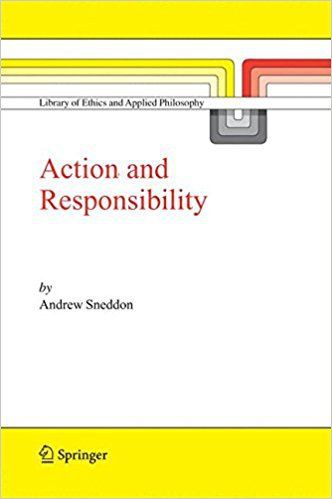
What makes an event count as an action? Typical answers appeal to the way in which the event was produced: e.g., perhaps an arm movement is an action when caused by mental states (in particular ways), but not when caused in other ways. Andrew Sneddon argues that this type of answer, which he calls “productionism”, is methodologically and substantially mistaken. In particular, productionist answers to this question tend to be either individualistic or foundationalist, or both, without explicit defence. Instead, Sneddon offers an externalist, anti-foundationalist account of what makes an event count as an action, which he calls neo-ascriptivism, after the work of H.L.A. Hart. Specifically, Sneddon argues that our practices of attributing moral responsibility to each other are at least partly constitutive of events as actions.
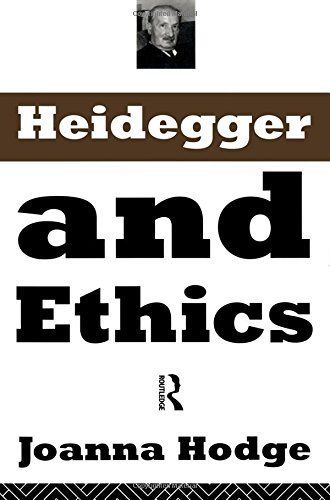
Heidegger and ethics is a contentious conjunction of terms. Martin Heidegger himself rejected the notion of ethics, while his endorsement of Nazism is widely seen as unethical. This major study examines the complex and controversial issues involved in bringing Heidegger and ethics together. Working backwards through his work, from his 1964 claim that philosophy has been completed to his first major book,Being and Time,Joanna Hodge questions Heidegger’s denial that his inquiries were concerned with ethics. She discovers a form of ethics in Heidegger’s thinking which elucidates his important distinction between metaphysics and philosophy. Opposing many contemporary views, Hodge proposes that ethics can be retrieved and questions the relation between ethics and metaphysics that Heidegger made so pervasive.
Richard Sorabji presents a ground-breaking study of ancient Greek views of the emotions and their influence on subsequent theories and attitudes, pagan and Christian. The key questions are ones that concern everyone: what is emotion, and how does one cope with one’s own emotions and establish peace of mind? The central focus of the book is the Stoics, but Sorabji draws on a vast range of texts to give a rich historical survey of how Western thinking about this central aspect of human nature developed. The result is a magisterial work of scholarship which will be fascinating for anyone with an interest in the emotions from a historical or contemporary perspective.
Ambitious legal thinkers have become mesmerized by moral philosophy, believing that great figures in the philosophical tradition hold the keys to understanding and improving law and justice and even to resolving the most contentious issues of constitutional law. They are wrong, contends Richard Posner in this book. Posner characterizes the current preoccupation with moral and constitutional theory as the latest form of legal mystification – an evasion of the real need of American law, which is for a greater understanding of the social, economic, and political facts out of which great legal controversies arise. In pursuit of that understanding, Posner advocates a rebuilding of the law on the pragmatic basis of open-minded and systematic empirical inquiry and the rejection of cant and nostalgia – the true professionalism foreseen by Holmes a century ago.
ما از اخلاق چه انتظاری داریم؟ این سوال شاید تاحدودی برای عموم مردم و یا متخصصان این رشته قابل پاسخ باشد؛ اینکه خوب بودن را به ما بیاموزد و در تنظیم روابط فردی م...

جشن کتاب تهران به ایستگاه سی و یکم رسیده است. حال و احوال نشر کتاب خوب نیست و باید فرهنگدوستان را به خرید و هدیه دادن کتاب ترغیب نمود. خانه اخلاقپژوهان جوان ب...

بنیاد کتابهای اخلاق اسلامی عمدتا پالایش جان از آلودگیها و آراستن آن به زیباییها است. اندیشه محوری این قبیل کتابها آن است که انسان فعلی آنی نیست که باید باشد...

-
0 Comments