Notice: تابع WP_Block_Type_Registry::register به طورنادرست فراخوانی شد. نامهای نوع بلوک نباید حروف بزرگ داشته باشند. لطفاً برای اطلاعات بیشتر، اشکال زدایی در وردپرس را مشاهده کنید. (این پیام در نگارش 5.0.0 افزوده شده است.) in /home/ethicsho/public_html/wp-includes/functions.php on line 5313
Warning: Use of undefined constant TDC_PATH_LEGACY - assumed 'TDC_PATH_LEGACY' (this will throw an Error in a future version of PHP) in /home/ethicsho/public_html/wp-content/plugins/td-composer/td-composer.php on line 109
Warning: Use of undefined constant TDSP_THEME_PATH - assumed 'TDSP_THEME_PATH' (this will throw an Error in a future version of PHP) in /home/ethicsho/public_html/wp-content/plugins/td-composer/td-composer.php on line 113 بایگانیهای Daniel M. Annechino - خانه اخلاق پژوهان جوان Notice: Trying to access array offset on value of type bool in /home/ethicsho/public_html/wp-content/plugins/wp-ulike/inc/general-functions.php on line 807
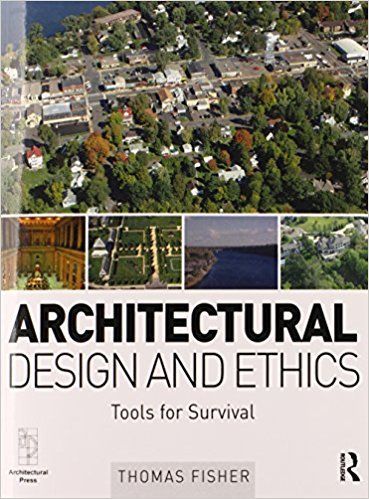
Architectural Design and Ethics offers both professional architects and architecture students a theoretical base and numerous suggestions as to how we might rethink our responsibilities to the natural world and design a more sustainable future for ourselves. As we find ourselves on the steep slope of several exponential growth curves in global population, in heat-trapping atmospheric gases, in the gap between the rich and poor, and in the demand for finite resources, Fisher lays down a theory of architecture based on ethics and explores how buildings can and do provide both social and moral dimensions. The book also has practical goals, demonstrating how architects can make better and more beautiful buildings whilst nurturing more responsible, sustainable development. Architectural Design and Ethics will prove an invaluable text not only to those in the architecture field, but to anyone simply interested in the ethical issues surrounding our built environment. * Joins the dots between architectural form, ethics and professional practice * Uses the history of ethics to present relevant lessons for todays practitioners * A wake up call to architects, advocating a greater focus on ethics over aesthetics
D. D. Raphael provides a critical account of the moral philosophy of Adam Smith, presented in his first book, The Theory of Moral Sentiments. Whilst it does not have the same prominence in its field as his work on economics, The Wealth of Nations, Smith’s writing on ethics is of continuing importance and interest today, especially for its theory of conscience. Smith sees the origin of conscience in the sympathetic and antipathetic feelings of spectators. As spectators of the actions of other people, we can imagine how we would feel in their situation. If we would share their motives, we approve of their action. If not, we disapprove. When we ourselves take an action, we know from experience what spectators would feel, approval or disapproval. That knowledge forms conscience, an imagined impartial spectator who tells us whether an action is right or wrong. In describing the content of moral judgment, Smith is much influenced by Stoic ethics, with an emphasis on self-command, but he voices criticism as well as praise. His own position is a combination of Stoic and Christian values. There is a substantial difference between the first five editions of the Moral Sentiments and the sixth. Failure to take account of this has led some commentators to mistaken views about the supposed youthful idealism of the Moral Sentiments as contrasted with the mature realism of The Wealth of Nations. A further source of error has been the supposition that Smith treats sympathy as the motive of moral action, as contrasted with the supposedly universal motive of self-interest in The Wealth of Nations.
Which political principles should govern global politics? In his new book, Simon Caney engages with the work of philosophers, political theorists, and international relations scholars in order to examine some of the most pressing global issues of our time. Are there universal civil, political, and economic human rights? Should there be a system of supra-state institutions? Can humanitarian intervention be justified?
Although the environmental movement and the environmental justice movement would seem to be natural allies, their relationship over the years has often been characterized by conflict and division. The environmental justice movement has charged the mainstream environmental movement with racism and elitism and has criticized its activist agenda on the grounds that it values wilderness over people. Environmental justice advocates have called upon environmental organizations to act on environmental injustice and address racism and classism in their own hiring and organizational practices, lobbying agenda, and political platforms. This book examines the current relationship between the two movements in both conceptual and practical terms and explores the possibilities for future collaboration. In ten original essays, contributors from a variety of disciplines consider such topics as the relationship between the two movements’ ethical commitments and activist goals, instances of successful cooperation in U.S. contexts, and the challenges posed to both movements by globalization and climate change. They examine the possibility and desirability of one unified movement as opposed to two complementary ones by means of analyses and case studies; these include a story of asbestos hazards that begins in a Montana mine and ends with the release of asbestos insulation into the air of Manhattan after the collapse of the World Trade Center. This book, part of a necessary rethinking of the relationship between the two movements, shows that effective, mutually beneficial alliances can advance the missions of both.Contributors:Kim Allen, J. Robert Cox, Vinci Daro, Kevin DeLuca, Giovanna Di Chiro, Daniel Faber, Dorothy Holland, Dale Jamieson, M. Nils Peterson, Markus John Peterson, Tarla Rai Peterson, Phaedra C. Pezzullo, J. Timmons Roberts, Ronald Sandler, Steve Schwarze, Peter Wenz
We live our lives through our emotions, writes Robert Solomon, and it is our emotions that give our lives meaning. What interests or fascinates us, who we love, what angers us, what moves us, what bores us–all of this defines us, gives us character, constitutes who we are. In True to Our Feelings, Solomon illuminates the rich life of the emotions–why we don’t really understand them, what they really are, and how they make us human and give meaning to life. Emotions have recently become a highly fashionable area of research in the sciences, with brain imaging uncovering valuable clues as to how we experience our feelings. But while Solomon provides a guide to this cutting-edge research, as well as to what others–philosophers and psychologists–have said on the subject, he also emphasizes the personal and ethical character of our emotions. He shows that emotions are not something that happen to us, nor are they irrational in the literal sense–rather, they are judgements we make about the world, and they are strategies for living in it. Fear, anger, love, guilt, jealousy, compassion–they are all essential to our values, to living happily, healthily, and well. Solomon highlights some of the dramatic ways that emotions fit into our ethics and our sense of the good life, how we can make our emotional lives more coherent with our values and be more “true to our feelings” and cultivate emotional integrity. The story of our lives is the story of our passions. We fall in love, we are gripped by scientific curiosity and religious fervor, we fear death and grieve for others, we humble ourselves in envy, jealousy, and resentment. In this remarkable book, Robert Solomon shares his fascination with the emotions and illuminates our passions in an exciting new way.
ما از اخلاق چه انتظاری داریم؟ این سوال شاید تاحدودی برای عموم مردم و یا متخصصان این رشته قابل پاسخ باشد؛ اینکه خوب بودن را به ما بیاموزد و در تنظیم روابط فردی م...

جشن کتاب تهران به ایستگاه سی و یکم رسیده است. حال و احوال نشر کتاب خوب نیست و باید فرهنگدوستان را به خرید و هدیه دادن کتاب ترغیب نمود. خانه اخلاقپژوهان جوان ب...

بنیاد کتابهای اخلاق اسلامی عمدتا پالایش جان از آلودگیها و آراستن آن به زیباییها است. اندیشه محوری این قبیل کتابها آن است که انسان فعلی آنی نیست که باید باشد...

-
0 Comments