Notice: تابع WP_Block_Type_Registry::register به طورنادرست فراخوانی شد. نامهای نوع بلوک نباید حروف بزرگ داشته باشند. لطفاً برای اطلاعات بیشتر، اشکال زدایی در وردپرس را مشاهده کنید. (این پیام در نگارش 5.0.0 افزوده شده است.) in /home/ethicsho/public_html/wp-includes/functions.php on line 5313
Warning: Use of undefined constant TDC_PATH_LEGACY - assumed 'TDC_PATH_LEGACY' (this will throw an Error in a future version of PHP) in /home/ethicsho/public_html/wp-content/plugins/td-composer/td-composer.php on line 109
Warning: Use of undefined constant TDSP_THEME_PATH - assumed 'TDSP_THEME_PATH' (this will throw an Error in a future version of PHP) in /home/ethicsho/public_html/wp-content/plugins/td-composer/td-composer.php on line 113 بایگانیهای Craig Walton - خانه اخلاق پژوهان جوان Notice: Trying to access array offset on value of type bool in /home/ethicsho/public_html/wp-content/plugins/wp-ulike/inc/general-functions.php on line 807
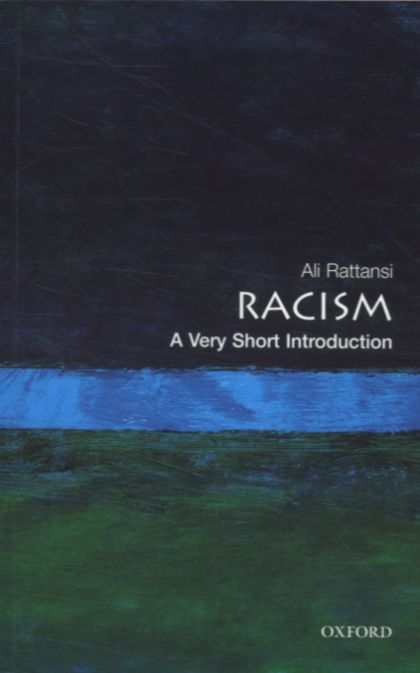
From subtle discrimination in everyday life, to horrors like lynching in the Old South, cultural imperialism, and “ethnic cleansing”, racism exists in many different forms, in almost every facet of society. Despite civil rights movements and other attempts at progress, racial prejudices and stereotypes remain deeply embedded in Western culture. Racism takes a frank and objective look at why these notions exist. It explores how racism has come to be so firmly established, and looks at how race, ethnicity, and xenophobia are related. This book incorporates the latest research to demystify the subject of racism and explore its history, science, and culture. It sheds light not only on how racism has evolved since its earliest beginnings, but also explores the numerous embodiments of racism, highlighting the paradox of its survival, despite the scientific discrediting of the notion of ‘race’ with the latest advances in genetics. As encompassing as it is concise, Racism is a valuable guide to one of the world’s most destructive problems.
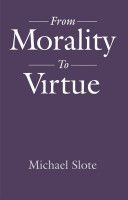
In this book, Slote offers the first full-scale foundational account of virtue ethics to have appeared since the recent revival of interest in the ethics of virtue. Slote advocates a particular form of such ethics for its intuitive and structural advantages over Kantianism, utilitarianism, and common-sense morality, and he argues that the problems of other views can be avoided and a contemporary plausible version of virtue ethics achieved only by abandoning specifically moral concepts for general aretaic notions like admirability and virtue. Although this study is not bound by particular Aristotelian doctrines, it places an Aristotelian emphasis on both self-benefiting and other-benefiting virtues. Slote criticizes Kantian and common-sense morality for internal incoherencies and for downgrading the moral individual and her well-being in some previously unnoticed ways. By contrast, this book defends a distinctive, intuitive, and symmetric ethical principle according to which we should balance self-concern with concern for others, but it also concludes that there is, contrary to utilitarianism, no single basis for status as a virtue nor any simple relation between the virtues and human well-being.
Is it possible to apply a theoretical approach to ethics? The French philosopher Catherine Chalier addresses this question with an unusual combination of traditional ethics and continental philosophy. In a powerful argument for the necessity of moral reflection, Chalier counters the notion that morality can be derived from theoretical knowledge.Chalier analyzes the positions of two great moral philosophers, Kant and Levinas. While both are critical of an ethics founded on knowledge, their criticisms spring from distinctly different points of view. Chalier reexamines their conclusions, pitting Levinas against (and with) Kant, to interrogate the very foundations of moral philosophy and moral imperatives. She provides a clear, systematic comparison of their positions on essential ideas such as free will, happiness, freedom, and evil. Although based on a close and elegant presentation of Kant and Levinas, Chalier’s book serves as a context for the development of the author’s own reflections on the question “What am I supposed to do?” and its continued importance for contemporary philosophy.
ما از اخلاق چه انتظاری داریم؟ این سوال شاید تاحدودی برای عموم مردم و یا متخصصان این رشته قابل پاسخ باشد؛ اینکه خوب بودن را به ما بیاموزد و در تنظیم روابط فردی م...

جشن کتاب تهران به ایستگاه سی و یکم رسیده است. حال و احوال نشر کتاب خوب نیست و باید فرهنگدوستان را به خرید و هدیه دادن کتاب ترغیب نمود. خانه اخلاقپژوهان جوان ب...

بنیاد کتابهای اخلاق اسلامی عمدتا پالایش جان از آلودگیها و آراستن آن به زیباییها است. اندیشه محوری این قبیل کتابها آن است که انسان فعلی آنی نیست که باید باشد...

-
0 Comments