Notice: تابع WP_Block_Type_Registry::register به طورنادرست فراخوانی شد. نامهای نوع بلوک نباید حروف بزرگ داشته باشند. لطفاً برای اطلاعات بیشتر، اشکال زدایی در وردپرس را مشاهده کنید. (این پیام در نگارش 5.0.0 افزوده شده است.) in /home/ethicsho/public_html/wp-includes/functions.php on line 5313
Warning: Use of undefined constant TDC_PATH_LEGACY - assumed 'TDC_PATH_LEGACY' (this will throw an Error in a future version of PHP) in /home/ethicsho/public_html/wp-content/plugins/td-composer/td-composer.php on line 109
Warning: Use of undefined constant TDSP_THEME_PATH - assumed 'TDSP_THEME_PATH' (this will throw an Error in a future version of PHP) in /home/ethicsho/public_html/wp-content/plugins/td-composer/td-composer.php on line 113 بایگانیهای Christopher Peacocke - خانه اخلاق پژوهان جوان Notice: Trying to access array offset on value of type bool in /home/ethicsho/public_html/wp-content/plugins/wp-ulike/inc/general-functions.php on line 807
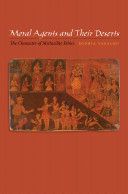
Must good deeds be rewarded and wrongdoers punished? Would God be unjust if He failed to punish and reward? And what is it about good or evil actions and moral identity that might generate such necessities? These were some of the vital religious and philosophical questions that eighth- and ninth-century Mu’tazilite theologians and their sophisticated successors attempted to answer, giving rise to a distinctive ethical position and one of the most prominent and controversial intellectual trends in medieval Islam. The Mu’tazilites developed a view of ethics whose distinguishing features were its austere moral objectivism and the crucial role it assigned to reason in the knowledge of moral truths. Central to this ethical vision was the notion of moral desert, and of the good and evil consequences–reward or punishment–deserved through a person’s acts. Moral Agents and Their Desertsis the first book-length study of this central theme in Mu’tazilite ethics, and an attempt to grapple with the philosophical questions it raises. At the same time, it is a bid to question the ways in which modern readers, coming to medieval Islamic thought with a philosophical interest, seek to read and converse with Mu’tazilite theology.Moral Agents and Their Desertstracks the challenges and rewards involved in the pursuit of the right conversation at the seams between modern and medieval concerns.
The Common Good and Christian Ethics rethinks the ancient tradition of the common good in a way that addresses contemporary social divisions, both urban and global. David Hollenbach draws on social analysis, moral philosophy, and theological ethics to chart new directions in both urban life and global society. He argues that the division between the middle class and the poor in major cities and the challenges of globalisation require a new commitment to the common good and that both believers and secular people must move towards new forms of solidarity.
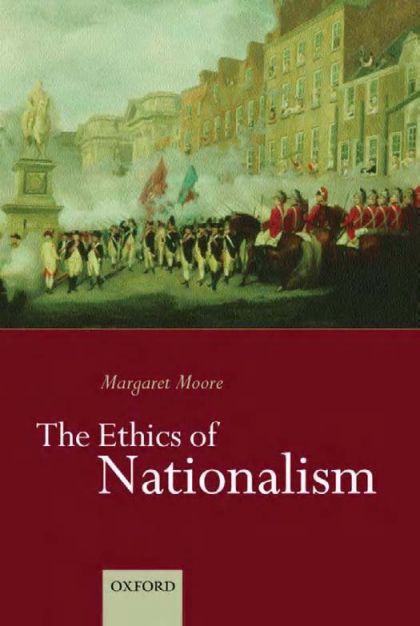
The Ethics of Nationalism blends a philosophical discussion of the ethical merits and limits of nationalism with a detailed understanding of nationalist aspirations and a variety of national conflict zones. The author discusses the controversial and contemporary issues of rights of secession,the policies of the state in privileging a particular national group, the kinds of accommodations of minority national, and multi cultural identity groups that are justifiable and appropriate. These insights are then applied to two central nationalist aspirations: nation-building and nationalself-determination projects. The discussion of nation-building projects invloves a theory of the appropriate policies and principles that the state should follow in giving preferences to a particular national group. The discussion of national self-determination projets analyses the kind of prodedualright to secession that should be institutionalized in domestic constitutions or international law, and the psooibilities for accomodation rival caims to national recognition in the changing international order.
ما از اخلاق چه انتظاری داریم؟ این سوال شاید تاحدودی برای عموم مردم و یا متخصصان این رشته قابل پاسخ باشد؛ اینکه خوب بودن را به ما بیاموزد و در تنظیم روابط فردی م...

جشن کتاب تهران به ایستگاه سی و یکم رسیده است. حال و احوال نشر کتاب خوب نیست و باید فرهنگدوستان را به خرید و هدیه دادن کتاب ترغیب نمود. خانه اخلاقپژوهان جوان ب...

بنیاد کتابهای اخلاق اسلامی عمدتا پالایش جان از آلودگیها و آراستن آن به زیباییها است. اندیشه محوری این قبیل کتابها آن است که انسان فعلی آنی نیست که باید باشد...

-
0 Comments