Notice: تابع WP_Block_Type_Registry::register به طورنادرست فراخوانی شد. نامهای نوع بلوک نباید حروف بزرگ داشته باشند. لطفاً برای اطلاعات بیشتر، اشکال زدایی در وردپرس را مشاهده کنید. (این پیام در نگارش 5.0.0 افزوده شده است.) in /home/ethicsho/public_html/wp-includes/functions.php on line 5313
Warning: Use of undefined constant TDC_PATH_LEGACY - assumed 'TDC_PATH_LEGACY' (this will throw an Error in a future version of PHP) in /home/ethicsho/public_html/wp-content/plugins/td-composer/td-composer.php on line 109
Warning: Use of undefined constant TDSP_THEME_PATH - assumed 'TDSP_THEME_PATH' (this will throw an Error in a future version of PHP) in /home/ethicsho/public_html/wp-content/plugins/td-composer/td-composer.php on line 113 بایگانیهای Carol Bly - خانه اخلاق پژوهان جوان Notice: Trying to access array offset on value of type bool in /home/ethicsho/public_html/wp-content/plugins/wp-ulike/inc/general-functions.php on line 807
An original study of the philosophical problems associated with inductive reasoning. Like most of the main questions in epistemology, the classical problem of induction arises from doubts about a mode of inference used to justify some of our most familiar and pervasive beliefs. The experience of each individual is limited and fragmentary, yet the scope of our beliefs is much wider; and it is the relation between belief and experience, in particular the belief that the future will in some respects resemble the past and the unobserved the observed, which forms the subject of this book. Dr Blackburn’s first aim is to state the problem of induction properly, to show that there does exist a genuine problem immune to the solutions in vogue at present, yet no tin principle insoluble. He gives an extended and original account of the concept of a reason and goes on to discuss prediction. In the end Dr Blackburn produces a rationale for belief in certain short-term predictions based on his reinterpretation of the classical principle of indifference. He claims that a justification for induction can be found along the lines he has suggested and must indeed be found there if anywhere.
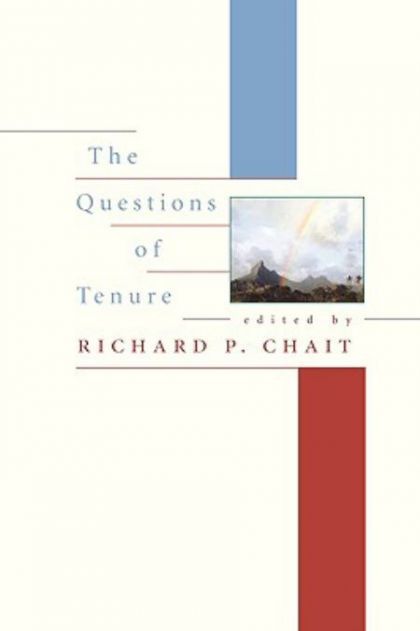
Tenure is the abortion issue of the academy, igniting arguments and inflaming near-religious passions. To some, tenure is essential to academic freedom and a magnet to recruit and retain top-flight faculty. To others, it is an impediment to professorial accountability and a constraint on institutional flexibility and finances. But beyond anecdote and opinion, what do we really know about how tenure works?In this unique book, Richard Chait and his colleagues offer the results of their research on key empirical questions. Are there circumstances under which faculty might voluntarily relinquish tenure? When might new faculty actually prefer non-tenure track positions? Does the absence of tenure mean the absence of shared governance? Why have some colleges abandoned tenure while others have adopted it? Answers to these and other questions come from careful studies of institutions that mirror the American academy: research universities and liberal arts colleges, including both highly selective and less prestigious schools.Lucid and straightforward, The Questions of Tenure offers vivid pictures of academic subcultures. Chait and his colleagues conclude that context counts so much that no single tenure system exists. Still, since no academic reward carries the cachet of tenure, few institutions will initiate significant changes without either powerful external pressures or persistent demands from new or disgruntled faculty.
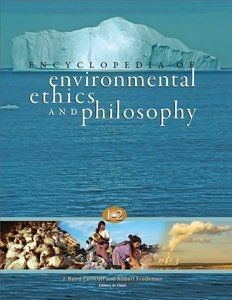
The field of environmental ethics is a new but now well-established sub-discipline of philosophy. Emerging in the mid-1970s, the field coalesced with the inaugural volume of the journal Environmental Ethics in 1979 and developed rapidly. By the turn of the century, most colleges and universities offered courses, if not major programs of study, in this important discipline. The Encyclopedia of Environmental Ethics and Philosophy addresses the needs of upper high school students, undergraduate researchers, teachers and professors, as well as general readers by examining the philosophical and ethical issues underlying contemporary and historical environmental issues, policies, and debates. More than 300 peer-reviewed articles cover concepts, institutions, topics, events and people, including global warming, animal rights, environmental movements, alternative energy, green chemistry, industrial ecology, and eco-sabotage. Encyclopedia of Environmental Ethics and Philosophy joins the suite of other MacMillan applied ethics titles: Encyclopedia of Bioethics and the Encyclopedia of Science, Technology, and Ethics. Additional features include 200 photographs and illustrations, thematic outline, annotated bibliography, and a comprehensive index.
ما از اخلاق چه انتظاری داریم؟ این سوال شاید تاحدودی برای عموم مردم و یا متخصصان این رشته قابل پاسخ باشد؛ اینکه خوب بودن را به ما بیاموزد و در تنظیم روابط فردی م...

جشن کتاب تهران به ایستگاه سی و یکم رسیده است. حال و احوال نشر کتاب خوب نیست و باید فرهنگدوستان را به خرید و هدیه دادن کتاب ترغیب نمود. خانه اخلاقپژوهان جوان ب...

بنیاد کتابهای اخلاق اسلامی عمدتا پالایش جان از آلودگیها و آراستن آن به زیباییها است. اندیشه محوری این قبیل کتابها آن است که انسان فعلی آنی نیست که باید باشد...

-
0 Comments