Notice: تابع WP_Block_Type_Registry::register به طورنادرست فراخوانی شد. نامهای نوع بلوک نباید حروف بزرگ داشته باشند. لطفاً برای اطلاعات بیشتر، اشکال زدایی در وردپرس را مشاهده کنید. (این پیام در نگارش 5.0.0 افزوده شده است.) in /home/ethicsho/public_html/wp-includes/functions.php on line 5313
Warning: Use of undefined constant TDC_PATH_LEGACY - assumed 'TDC_PATH_LEGACY' (this will throw an Error in a future version of PHP) in /home/ethicsho/public_html/wp-content/plugins/td-composer/td-composer.php on line 109
Warning: Use of undefined constant TDSP_THEME_PATH - assumed 'TDSP_THEME_PATH' (this will throw an Error in a future version of PHP) in /home/ethicsho/public_html/wp-content/plugins/td-composer/td-composer.php on line 113 بایگانیهای Bernard Bolzano - خانه اخلاق پژوهان جوان Notice: Trying to access array offset on value of type bool in /home/ethicsho/public_html/wp-content/plugins/wp-ulike/inc/general-functions.php on line 807
Over the past decade, researchers from different academic disciplines have paid increasing attention to the productivity of online environments. The ethical underpinnings of research in such settings, however, remain contested and often controversial. As traditional debates have been reignited by the need to respond to the particular characteristics of technologically-mediated environments, researchers have entered anew key debates regarding the moral, legal and regulative aspects of research ethics. A growing trend in this work has been towards the promotion of localized and contextualized research ethics – the suggestion that the decisions we make should be informed by the nature of the environments we study and the habits/expectations of participants within them. Despite such moves, the relationship between the empirical, theoretical and methodological aspects of Internet research ethics remains underexplored. Drawing from ongoing sociological research into the practices of media cultures online, this book provides a timely and distinctive response to this need.This book explores the relationship between the production of ethical stances in two different contexts: the ethical manoeuvring of participants within online media-fan communities and the ethical decision-making of the author as Internet researcher, manoeuvring, as it were, in the academic community. In doing so, the book outlines a reflexive framework for exploring research ethics at different levels of analysis; the empirical settings of research; the theoretical perspectives which inform the researcher’s objectification of the research settings; and the methodological issues and practical decisions that constitute the activity as research. The analysis of these different levels develops a way of thinking about ethical practice in terms of stabilizing and destabilizing moves within and between research and researched communities. The analysis emphasizes the continuities and discontinuities between both research practice and online media-fan activity, and social activity in on and offline environments.
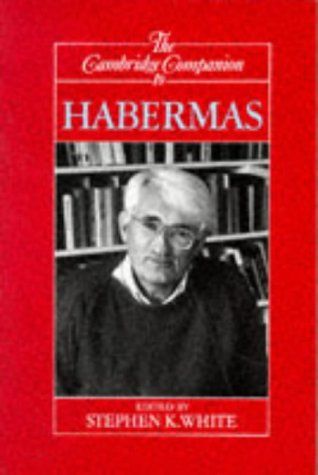
Jurgen Habermas is unquestionably one of the foremost philosophers writing today. His notions of communicative action and rationality have exerted a profound influence within philosophy and the social sciences. This volume examines the historical and intellectual contexts out of which Habermas’ work emerged, and offers an overview of his main ideas, including those in his most recent publication. Amongst the topics discussed are his relationship to the Frankfurt School of critical theory and Marx, his unique contributions to the philosophy of the social sciences, the concept of ‘communicative ethics’, and the critique of post-modernism. New readers and non-specialists will find this the most convenient, accessible guide to Habermas currently available. Advanced students will find a conspectus of recent developments in the interpretation of Habermas.
A renowned radio psychologist and a respected Rabbi bring the Bible’s Ten Commandments into the twentieth century with an honest yet often witty look at their relevance and significance in today’s world. 300,000 first printing. $250,000 ad/promo.
Governments now face complex dilemmas regarding the promotion of human rights, the punishment of crimes against humanity, and the scope for humanitarian intervention. This book offers a theoretical and empirical analysis of these issues. The contributors explore the meaning of “ethical foreign policy” and look at potential or actual instruments of ethical foreign policy-making. Finally, three case studies examine more closely developments in the foreign policies of the U.S., the U.K., and the European Union, to assess the difficulties raised by the incorporation of ethical considerations into foreign policy.
What is the relation between time and change? Does time depend on the mind? Is the present always the same or is it always different? Aristotle tackles these questions in the Physics, and Time for Aristotle is the first book in English devoted to this discussion. Aristotle claims that time is not a kind of change, but that it is something dependent on change; he defines it as a kind of “number of change.” Ursula Coope argues that what this means is that time is a kind of order (not, as is commonly supposed, a kind of measure). It is universal order within which all changes are related to each other. This interpretation enables Coope to explain two puzzling claims that Aristotle makes: that the now is like a moving thing, and that time depends for its existence on the mind. Brilliantly lucid in its explanation of this challenging section of the Physics, Time for Aristotle shows his discussion to be of enduring philosophical interest.
ما از اخلاق چه انتظاری داریم؟ این سوال شاید تاحدودی برای عموم مردم و یا متخصصان این رشته قابل پاسخ باشد؛ اینکه خوب بودن را به ما بیاموزد و در تنظیم روابط فردی م...

جشن کتاب تهران به ایستگاه سی و یکم رسیده است. حال و احوال نشر کتاب خوب نیست و باید فرهنگدوستان را به خرید و هدیه دادن کتاب ترغیب نمود. خانه اخلاقپژوهان جوان ب...

بنیاد کتابهای اخلاق اسلامی عمدتا پالایش جان از آلودگیها و آراستن آن به زیباییها است. اندیشه محوری این قبیل کتابها آن است که انسان فعلی آنی نیست که باید باشد...

-
0 Comments