Notice: تابع WP_Block_Type_Registry::register به طورنادرست فراخوانی شد. نامهای نوع بلوک نباید حروف بزرگ داشته باشند. لطفاً برای اطلاعات بیشتر، اشکال زدایی در وردپرس را مشاهده کنید. (این پیام در نگارش 5.0.0 افزوده شده است.) in /home/ethicsho/public_html/wp-includes/functions.php on line 5313
Warning: Use of undefined constant TDC_PATH_LEGACY - assumed 'TDC_PATH_LEGACY' (this will throw an Error in a future version of PHP) in /home/ethicsho/public_html/wp-content/plugins/td-composer/td-composer.php on line 109
Warning: Use of undefined constant TDSP_THEME_PATH - assumed 'TDSP_THEME_PATH' (this will throw an Error in a future version of PHP) in /home/ethicsho/public_html/wp-content/plugins/td-composer/td-composer.php on line 113 بایگانیهای Benjamin Rand - خانه اخلاق پژوهان جوان Notice: Trying to access array offset on value of type bool in /home/ethicsho/public_html/wp-content/plugins/wp-ulike/inc/general-functions.php on line 807
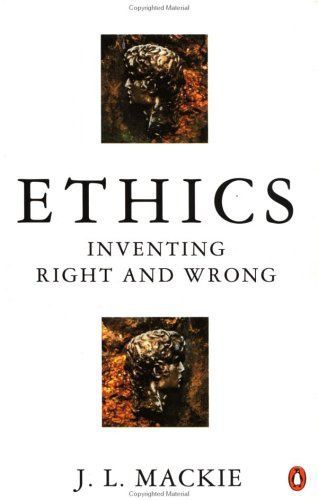
John Mackie’s stimulating book is a complete and clear treatise on moral theory. His writings on normative ethics-the moral principles he recommends-offer a fresh approach on a much neglected subject, and the work as a whole is undoubtedly a major contribution to modern philosophy.The author deals first with the status of ethics, arguing that there are not objective values, that morality cannot be discovered but must be made. He examines next the content of ethics, seeing morality as a functional device, basically the same at all times but changing significantly in response to changes in the human condition. He sketches a practical moral system, criticizing but also borrowing from both utilitarian and absolutist views. Thirdly, the frontiers of ethics, areas of contact with psychology, metaphysics, theology, law and politcs, are explored.Throughout, his aim is to discuss a wide range of questions that are both philosophical and practical, working within a distinctive version of subjectivism-an “error” theory of the apparent objectivity of values. John Mackie has drawn on the contributions of such classic thinkers as Plato, Aristotle, Hobbes, Hume, Kant and Sidgwick, and on more recent discussions, to produce a thought-provoking account that will inspire both the general reader and the student of philosophy.
Does Farmer Field really know his prize cow, Daisy, is in the field? When is an unexpected exam not wholly unexpected? Are all bachelors (really) unmarried? Martin Cohen’s bestselling 101 Philosophy Problems is a witty and engaging introduction to philosophy, covering classical as well as contemporary problems from the fields of medical ethics, modern physics and artificial intelligence. For the third edition, many of the problems have been revised and there are several brand new ones, including Lewis Carroll’s problem of people who don’t eat lentils and Poincare’s problem of the gaseous people whose measurements keep changing. With an updated glossary of helpful terms and possible solutions to the problems at the end of the book, 101 Philosophy Problems is essential reading for anyone coming to philosophy for the first time.
What is a human right? How can we tell whether a proposed human right really is one? How do we establish the content of particular human rights, and how do we resolve conflicts between them? These are pressing questions for philosophers, political theorists, jurisprudents, international lawyers, and activists. James Griffin offers answers in his compelling new investigation of the foundations of human rights. First, On Human Rights traces the idea of a natural right from its origin in the late Middle Ages, when the rights were seen as deriving from natural laws, through the seventeenth and eighteenth centuries, when the original theological background was progressively dropped and ‘natural law’ emptied of most of its original meaning. By the end of the Enlightenment, the term “human rights” (droits de l’homme) appeared, marking the purge of the theological background. But the Enlightenment, in putting nothing in its place, left us with an unsatisfactory, incomplete idea of a human right. Griffin shows how the language of human rights has become debased. There are scarcely any accepted criteria, either in the academic or the public sphere, for correct use of the term. He takes on the task of showing the way towards a determinate concept of human rights, based on their relation to the human status that we all share. He works from certain paradigm cases, such as freedom of expression and freedom of worship, to more disputed cases such as welfare rights–for instance the idea of a human right to health. His goal is a substantive account of human rights–an account with enough content to tell us whether proposed rights really are rights. Griffin emphasizes the practical as well as theoretical urgency of this goal: as the United Nations recognized in 1948 with its Universal Declaration, the idea of human rights has considerable power to improve the lot of humanity around the world. We can’t do without the idea of human rights, and we need to get clear about it. It is our job now–the job of this book–to influence and develop the unsettled discourse of human rights so as to complete the incomplete idea.
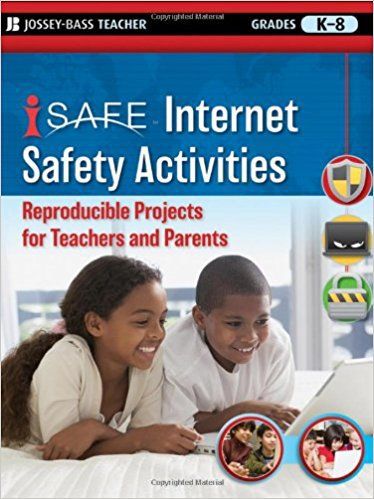
Easy-to-use guide that helps elementary and middle school students develop their Internet skills while keeping safeMost school-age children use the Internet every day. However, many posses na?ve attitudes about their online safety and can inadvertently engage in a range of high-risk behaviors. Developed by i-SAFE, the leading nonprofit organization dedicated to Internet safety education, this important resource offers a series of fun lessons and teachers’ guides to help students in grades K-8 learn how to stay safe online. Filled with activities, the book shows young children how to have fun online while keeping safe From i-SAFE the organization dedicated to Internet safety education Topics include basic Internet safety, protecting personal information, preventing cyberbullying, avoiding predators, netiquette, and much moreThis is a must-have book that teachers and parents can use to help kids become Internet-savvy.
ما از اخلاق چه انتظاری داریم؟ این سوال شاید تاحدودی برای عموم مردم و یا متخصصان این رشته قابل پاسخ باشد؛ اینکه خوب بودن را به ما بیاموزد و در تنظیم روابط فردی م...

جشن کتاب تهران به ایستگاه سی و یکم رسیده است. حال و احوال نشر کتاب خوب نیست و باید فرهنگدوستان را به خرید و هدیه دادن کتاب ترغیب نمود. خانه اخلاقپژوهان جوان ب...

بنیاد کتابهای اخلاق اسلامی عمدتا پالایش جان از آلودگیها و آراستن آن به زیباییها است. اندیشه محوری این قبیل کتابها آن است که انسان فعلی آنی نیست که باید باشد...

-
0 Comments