Notice: تابع WP_Block_Type_Registry::register به طورنادرست فراخوانی شد. نامهای نوع بلوک نباید حروف بزرگ داشته باشند. لطفاً برای اطلاعات بیشتر، اشکال زدایی در وردپرس را مشاهده کنید. (این پیام در نگارش 5.0.0 افزوده شده است.) in /home/ethicsho/public_html/wp-includes/functions.php on line 5313
Warning: Use of undefined constant TDC_PATH_LEGACY - assumed 'TDC_PATH_LEGACY' (this will throw an Error in a future version of PHP) in /home/ethicsho/public_html/wp-content/plugins/td-composer/td-composer.php on line 109
Warning: Use of undefined constant TDSP_THEME_PATH - assumed 'TDSP_THEME_PATH' (this will throw an Error in a future version of PHP) in /home/ethicsho/public_html/wp-content/plugins/td-composer/td-composer.php on line 113 بایگانیهای Avicenna - خانه اخلاق پژوهان جوان Notice: Trying to access array offset on value of type bool in /home/ethicsho/public_html/wp-content/plugins/wp-ulike/inc/general-functions.php on line 807
Nanotechnology is an emerging and rapidly growing field whose dynamics and prospects pose many great challenges not only to scientists and engineers but also to society at large. This volume includes the state-of-the-art philosophical, ethical, and sociological reflection on nanotechnology, written by leading scholars from the humanities and social sciences in North America and Europe. It unravels the philosophical underpinnings of nanotechnology, its metaphysical and epistemological foundations, and its conceptual complexity. It explores the ethical issues of nanotechnology, its impact on human, environmental, and social conditions, and the options for reasonable risk management. It examines the public discourse on nanotechnology and its related visions and provides both lessons from the past and outlooks for the future.
In an age plagued by selfishness, materialism, and violence, ethicists feel impelled to find a universal system of values. To arrive at such a “rule” requires that they struggle with a series of seemingly irreconcilable questions. First, are universal values possible in a pluralistic world, and how does one do justice to both human equality and to individual and cultural differences? How is one to understand the interface between religious moral teachings and the ethics of secular humanism? Finally, can such a system integrate moral intuition and moral reason? In the first scholarly book in English on the golden rule since the seventeenth century, Jeffrey Wattles demonstrates how a clear understanding of the psychological, philosophical, and religious ramifications of the rule can form the synthesis needed to solve these dilemas. The golden rule, “do to others as you would have others do to you,” is widely assumed to have a single meaning, shared by virtually all the world’s religions. It strikes the average person as intuitively true, though most modern philosophers reject it or recast it in more rational form. Wattles surveys the history of the golden rule and its spectrum of meanings in diverse contexts, ranging from Confusius to Plato and Aristotle, from classical Jewish literature to the New Testament. He also considers medieval, Reformation, and modern theological and philosophical responses and objections to the rule, as well as how some early twentieth-century American leaders have tried to use the rule. Wattles draws these diverse interpretation into a synthesis that responds, at the psychological, philosophical, and religious levels, to the challenges to moral living in any given culture. Emotionally, the rules counsels consideration for others feelings by asking that “you place yourself in their shoes.” Intellectually, it activates moral thinking about what is fair. At the same time, it retains a spiritual appeal as “the principle of the practice of the family of God.” Demonstrating how, despite its contentious history, this age-old ethical principle contiues to be relevant in dealing with contemporary issues, The Golden Rule should interest students and scholars working in religious studies, philosophy and ethics, and psychology, as well as anyone looking for an alternative to postmodern cynicism and alienation.
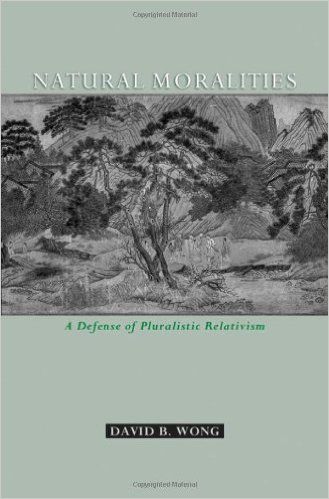
David B. Wong proposes that there can be a plurality of true moralities, moralities that exist across different traditions and cultures, all of which address facets of the same problem: how we are to live well together. Wong examines a wide array of positions and texts within the Western canon as well as in Chinese philosophy, and draws on philosophy, psychology, evolutionary theory, history, and literature, to make a case for the importance of pluralism in moral life, and to establish the virtues of acceptance and accommodation. Wong’s point is that there is no single value or principle or ordering of values and principles that offers a uniquely true path for human living, but variations according to different contexts that carry within them a common core of human values. We should thus be modest about our own morality, learn from other approaches, and accommodate different practices in our pluralistic society.
This book examines the ethical controversies that have surrounded the design and conduct of international medical research sponsored by industrialized countries or industry, and carried out in developing countries. The chief concern is that research subjects in developing countries may be exploited because sponsors of research employ double standards. One debate focuses on whether the standard of care provided to subjects of medical research in developing countries should be the same as what research subjects receive in North America and Europe. Other concerns are whether the process of obtaining informed consent in developing countries is adequate, and whether prior ethical review of research meets standards that are well established in the industrialized world. Recent international developments show that essential medications can be made affordable and accessible to developing countries, and that double standards need not prevail.
ما از اخلاق چه انتظاری داریم؟ این سوال شاید تاحدودی برای عموم مردم و یا متخصصان این رشته قابل پاسخ باشد؛ اینکه خوب بودن را به ما بیاموزد و در تنظیم روابط فردی م...

جشن کتاب تهران به ایستگاه سی و یکم رسیده است. حال و احوال نشر کتاب خوب نیست و باید فرهنگدوستان را به خرید و هدیه دادن کتاب ترغیب نمود. خانه اخلاقپژوهان جوان ب...

بنیاد کتابهای اخلاق اسلامی عمدتا پالایش جان از آلودگیها و آراستن آن به زیباییها است. اندیشه محوری این قبیل کتابها آن است که انسان فعلی آنی نیست که باید باشد...

-
0 Comments