Notice: تابع WP_Block_Type_Registry::register به طورنادرست فراخوانی شد. نامهای نوع بلوک نباید حروف بزرگ داشته باشند. لطفاً برای اطلاعات بیشتر، اشکال زدایی در وردپرس را مشاهده کنید. (این پیام در نگارش 5.0.0 افزوده شده است.) in /home/ethicsho/public_html/wp-includes/functions.php on line 5313
Warning: Use of undefined constant TDC_PATH_LEGACY - assumed 'TDC_PATH_LEGACY' (this will throw an Error in a future version of PHP) in /home/ethicsho/public_html/wp-content/plugins/td-composer/td-composer.php on line 109
Warning: Use of undefined constant TDSP_THEME_PATH - assumed 'TDSP_THEME_PATH' (this will throw an Error in a future version of PHP) in /home/ethicsho/public_html/wp-content/plugins/td-composer/td-composer.php on line 113 بایگانیهای Anne Rowe - خانه اخلاق پژوهان جوان Notice: Trying to access array offset on value of type bool in /home/ethicsho/public_html/wp-content/plugins/wp-ulike/inc/general-functions.php on line 807
Lisa Tessman’s Burdened Virtues is a deeply original and provocative work that engages questions central to feminist theory and practice, from the perspective of Aristotelian ethics. Focused primarily on selves who endure and resist oppression, she addresses the ways in which devastating conditions confronted by these selves both limit and burden their moral goodness, and affect their possibilities of flourishing. She describes two different forms of “moral trouble” prevalent under oppression. The first is that the oppressed self may be morally damaged, prevented from developing or exercising some of the virtues; the second is that the very conditions of oppression require the oppressed to develop a set of virtues that carry a moral cost to those who practice them–traits that Tessman refers to as “burdened virtues.” These virtues have the unusual feature of being disjoined from their bearer’s own well being. Tessman’s work focuses on issues that have been missed by many feminist moral theories, and her use of the virtue ethics framework brings feminist concerns more closely into contact with mainstream ethical theory. This book will appeal to feminist theorists in philosophy and women’s studies, but also more broadly, ethicists and social theorists.
This popular text helps today’s students bridge the gap between everyday culture and critical thinking. Using a proven step-by-step approach, this text covers all the basics of critical thinking, in clear, reader-friendly language. Its comprehensiveness allows instructors to tailor the material to their individual teaching styles, resulting in an exceptionally versatile text.
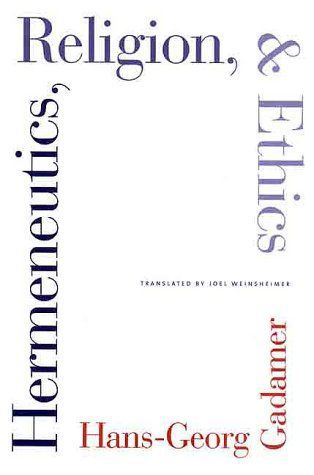
“In the years shortly before and after the publication of his classic Truth and Method (1960), the eminent German philosopher Hans-Georg Gadamer returned often to questions surrounding religion and ethics. In this selection of writings from Gesammelte Werke that are here translated into English for the first time, Gadamer probes deeply into the hermeneutic significance of these subjects.”–BOOK JACKET.
Talbot Brewer presents an invigorating new approach to ethical theory, in the context of human selfhood and agency. The first main theme of the book is that contemporary ethical theorists have focused too narrowly on actions and the discrete episodes of deliberation through which we choose them, and that the subject matter of the field looks quite different if one looks instead at unfolding activities and the continuous forms of evaluative awareness that carry them forward and that constitute an essential element of those activities. The second is that ethical reflection is itself a centrally important life activity, and that philosophical ethics is an extension of this practical activity rather than a merely theoretical reflection upon it. Brewer’s approach is founded on a far-reaching reconsideration of the notions of the nature and sources of human agency, and particularly of the way in which practical thinking gives shape to activities, relationships and lives. He contests the usual understanding of the relationship between philosophical psychology and ethics. The Retrieval of Ethics shows the need for a new contemplative vision of the point or value of human action–without which we will remain unable to make optimal sense of our efforts to unify our lives around a tenable conception of how best to live them, or of the yearnings that draw us to our ideals and to each other.
ما از اخلاق چه انتظاری داریم؟ این سوال شاید تاحدودی برای عموم مردم و یا متخصصان این رشته قابل پاسخ باشد؛ اینکه خوب بودن را به ما بیاموزد و در تنظیم روابط فردی م...

جشن کتاب تهران به ایستگاه سی و یکم رسیده است. حال و احوال نشر کتاب خوب نیست و باید فرهنگدوستان را به خرید و هدیه دادن کتاب ترغیب نمود. خانه اخلاقپژوهان جوان ب...

بنیاد کتابهای اخلاق اسلامی عمدتا پالایش جان از آلودگیها و آراستن آن به زیباییها است. اندیشه محوری این قبیل کتابها آن است که انسان فعلی آنی نیست که باید باشد...

-
0 Comments