Notice: تابع WP_Block_Type_Registry::register به طورنادرست فراخوانی شد. نامهای نوع بلوک نباید حروف بزرگ داشته باشند. لطفاً برای اطلاعات بیشتر، اشکال زدایی در وردپرس را مشاهده کنید. (این پیام در نگارش 5.0.0 افزوده شده است.) in /home/ethicsho/public_html/wp-includes/functions.php on line 5313
Warning: Use of undefined constant TDC_PATH_LEGACY - assumed 'TDC_PATH_LEGACY' (this will throw an Error in a future version of PHP) in /home/ethicsho/public_html/wp-content/plugins/td-composer/td-composer.php on line 109
Warning: Use of undefined constant TDSP_THEME_PATH - assumed 'TDSP_THEME_PATH' (this will throw an Error in a future version of PHP) in /home/ethicsho/public_html/wp-content/plugins/td-composer/td-composer.php on line 113 بایگانیهای Alvin Goldman - خانه اخلاق پژوهان جوان Notice: Trying to access array offset on value of type bool in /home/ethicsho/public_html/wp-content/plugins/wp-ulike/inc/general-functions.php on line 807
Hamlet tells Horatio that there are more things in heaven and earth than are dreamt of in his philosophy. InDouble Vision, philosopher and literary critic Tzachi Zamir argues that there are more things in Hamlet than are dreamt of–or at least conceded–by most philosophers. Making an original and persuasive case for the philosophical value of literature, Zamir suggests that certain important philosophical insights can be gained only through literature. But such insights cannot be reached if literature is deployed merely as an aesthetic sugaring of a conceptual pill. Philosophical knowledge is not opposed to, but is consonant with, the literariness of literature. By focusing on the experience of reading literature as literature and not philosophy, Zamir sets a theoretical framework for a philosophically oriented literary criticism that will appeal both to philosophers and literary critics. Double Visionis concerned with the philosophical understanding induced by the aesthetic experience of literature. Literary works can function as credible philosophical arguments–not ones in which claims are conclusively demonstrated, but in which claims are made plausible. Such claims, Zamir argues, are embedded within an experiential structure that is itself a crucial dimension of knowing. Developing an account of literature’s relation to knowledge, morality, and rhetoric, and advancing philosophical-literary readings ofRichard III, Macbeth, Romeo and Juliet, Othello, Antony and Cleopatra, Hamlet, andKing Lear, Zamir shows how his approach can open up familiar texts in surprising and rewarding ways.
J. B. Schneewind presents a selection of his published essays on ethics, the history of ethics and moral psychology, together with a new piece offering an intellectual autobiography. The volume ranges across the seventeenth, eighteenth, and nineteenth centuries: it includes Schneewind’s early anti-foundationalist “Moral Knowledge and Moral Principles,” the classic “The Misfortunes of Virtue,” and other early essays on Kant’s relation to pre-Kantian moral philosophy; also a long piece on “The Active Powers,” and Schneewind’s own interpretation of Kant’s moral philosophy. These writings provide excellent introductions to Schneewind’s two long books, and supplement them in important ways.
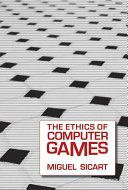
Despite the emergence of computer games as a dominant cultural industry (and the accompanying emergence of computer games as the subject of scholarly research), we know little or nothing about the ethics of computer games. Considerations of the morality of computer games seldom go beyond intermittent portrayals of them in the mass media as training devices for teenage serial killers. In this first scholarly exploration of the subject, Miguel Sicart addresses broader issues about the ethics of games, the ethics of playing the games, and the ethical responsibilities of game designers. He argues that computer games are ethical objects, that computer game players are ethical agents, and that the ethics of computer games should be seen as a complex network of responsibilities and moral duties. Players should not be considered passive amoral creatures; they reflect, relate, and create with ethical minds. The games they play are ethical systems, with rules that create gameworlds with values at play.Drawing on concepts from philosophy and game studies, Sicart proposes a framework for analyzing the ethics of computer games as both designed objects and player experiences. After presenting his core theoretical arguments and offering a general theory for understanding computer game ethics, Sicart offers case studies examining single-player games (using Bioshock as an example), multiplayer games (illustrated by Defcon), and online gameworlds (illustrated by World of Warcraft) from an ethical perspective. He explores issues raised by unethical content in computer games and its possible effect on players and offers a synthesis of design theory and ethics that could be used as both analytical tool and inspiration in the creation of ethical gameplay.
ما از اخلاق چه انتظاری داریم؟ این سوال شاید تاحدودی برای عموم مردم و یا متخصصان این رشته قابل پاسخ باشد؛ اینکه خوب بودن را به ما بیاموزد و در تنظیم روابط فردی م...

جشن کتاب تهران به ایستگاه سی و یکم رسیده است. حال و احوال نشر کتاب خوب نیست و باید فرهنگدوستان را به خرید و هدیه دادن کتاب ترغیب نمود. خانه اخلاقپژوهان جوان ب...

بنیاد کتابهای اخلاق اسلامی عمدتا پالایش جان از آلودگیها و آراستن آن به زیباییها است. اندیشه محوری این قبیل کتابها آن است که انسان فعلی آنی نیست که باید باشد...

-
0 Comments