Notice: تابع WP_Block_Type_Registry::register به طورنادرست فراخوانی شد. نامهای نوع بلوک نباید حروف بزرگ داشته باشند. لطفاً برای اطلاعات بیشتر، اشکال زدایی در وردپرس را مشاهده کنید. (این پیام در نگارش 5.0.0 افزوده شده است.) in /home/ethicsho/public_html/wp-includes/functions.php on line 5313
Warning: Use of undefined constant TDC_PATH_LEGACY - assumed 'TDC_PATH_LEGACY' (this will throw an Error in a future version of PHP) in /home/ethicsho/public_html/wp-content/plugins/td-composer/td-composer.php on line 109
Warning: Use of undefined constant TDSP_THEME_PATH - assumed 'TDSP_THEME_PATH' (this will throw an Error in a future version of PHP) in /home/ethicsho/public_html/wp-content/plugins/td-composer/td-composer.php on line 113 بایگانیهای Alessandro Giovannelli - خانه اخلاق پژوهان جوان Notice: Trying to access array offset on value of type bool in /home/ethicsho/public_html/wp-content/plugins/wp-ulike/inc/general-functions.php on line 807
East Asian medicine, biomedical research, and health care policy are framed by their own set of moral and cultural commitments. Chief among these is the influence of Confucian ideas. A rich portrayal is offered of the implications of Confucian moral and ontological understandings for medical decision-making, human embryonic stem cell research, and health care financing. What is offered is a multifaceted insight into what distinguishes East Asian bioethical reflections. This volume opens with an exploration of the Confucian recognition of the family as an entity existing in its own right and which is not reducible to its members or their interests. As the essays in this volume show, this recognition of the family supports a notion of family autonomy that contrasts with Western individualistic accounts of proper medical decision-making. There are analyses of basic concepts as well as explorations of their implications for actual medical practice. The conflicts in East Asian countries between traditional Confucian and Western bioethics are explored as well as the tension between the new reproductive technologies and traditional understandings of the family. The studies of East Asian reflections concerning the moral status of human embryos and the morality of human embryo stem cell research disclose a set of concerns quite different from those anchored in Christian and Muslim cultural perspectives. The volume closes with an exploration of how Confucian cultural resources can be drawn upon to meet the contemporary challenges of health care financing.
This book presents a critical analysis of the debate at the religious, legal and political level sparked off by the introduction of new biomedical technologies (cloning, genetics, organ transplants, IVF, etc.) in Muslim countries. It compares the positions of “classic” Muslim law and contemporary religious authorities; laws in Muslim countries; the attitudes and concrete behaviour of populations, families and individuals, as well as the regulations of medical associations, bioethics committees etc..The result is a mosaic of positions which are often different (including from the point of view of ethics) but all in pursuit of legitimisation according to the Koran and the Shari’a. The work has an interdisciplinary approach, drawing on law, sociology, anthropology, politics and the history of science. For this reason it will be of interest to scholars and operators in a wide variety of disciplines and fields.
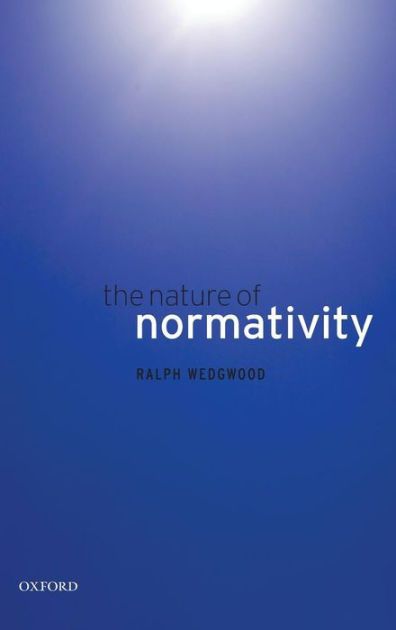
The Nature of Normativity presents a complete theory about the nature of normative thought –that is, the sort of thought that is concerned with what ought to be the case, or what we ought to do or think. Ralph Wedgwood defends a kind of realism about the normative, according to which normative truths or facts are genuinely part of reality. Anti-realists often complain that realism gives rise to demands for explanation that it cannot adequately meet. What is the nature of these normative facts? How could we ever know them or even refer to them in language or thought? Wedgwood accepts that any adequate version of realism must answer these explanatory demands. However, he seeks to show that these demands can be met — in large part by relying on a version of the idea, which has been much discussed in recent work in the philosophy of mind, that the intentional is normative — that is, that there is no way of explaining the nature of the various sorts of mental states that have intentional or representational content (such as beliefs, judgments, desires, decisions, and so on), without stating normative facts. On the basis of this idea, Wedgwood provides a detailed systematic theory that deals with the following three areas: the meaning of statements about what ought to be; the nature of the facts stated by these statements; and what justifies us in holding beliefs about what ought to be.
Social philosophers during the course of history and modern day researchers have expressed the belief that interpersonal trust is essential for harmonious and cooperative social relationships among people. Interpersonal trust has been described as the social cement that binds interpersonal relationships in society and is necessary for its survival. This book provides researchers and professionals who deal with children an insight into a critical facet of children’s social functioning. Interpersonal trust is conceptualized as children’ s confidence that a person’s verbal or nonverbal communication accurately conveys facts or internal states. This includes children’s sensitivity to lying, deception and promise violations.
The contributions to Law and Art address the interaction between law, justice, the ethical and the aesthetic. The exercise of the legal role and the scholarly understanding of legal texts were classically defined as ars iuris – an art of law – which drew on the panoply of humanist disciplines, from philology to fine art. That tradition has fallen by the wayside, particularly in the wake of modernism. But, as this book demonstrates, a consideration of the relationship between law and art can still bring jurisprudence, and particularly critical jurisprudence, to life. In its attention to the inexpressible, art can contribute to the liberation of legal doctrine from its own self-imposed limits. It can inform the ethics of a legal theory that is concerned to address how theoretical abstractions and concrete oppressions overlook the singularity and spontaneity to which art attests. The contributors to this volume – and their engagement with the full range of ‘the arts’ – seek, therefore, to disturb and to supplement conventional accounts of justice: raising the difficulty, but also the promise, of that surplus which art reveals: of life over legal formalisation.
ما از اخلاق چه انتظاری داریم؟ این سوال شاید تاحدودی برای عموم مردم و یا متخصصان این رشته قابل پاسخ باشد؛ اینکه خوب بودن را به ما بیاموزد و در تنظیم روابط فردی م...

جشن کتاب تهران به ایستگاه سی و یکم رسیده است. حال و احوال نشر کتاب خوب نیست و باید فرهنگدوستان را به خرید و هدیه دادن کتاب ترغیب نمود. خانه اخلاقپژوهان جوان ب...

بنیاد کتابهای اخلاق اسلامی عمدتا پالایش جان از آلودگیها و آراستن آن به زیباییها است. اندیشه محوری این قبیل کتابها آن است که انسان فعلی آنی نیست که باید باشد...

-
0 Comments