Notice: تابع WP_Block_Type_Registry::register به طورنادرست فراخوانی شد. نامهای نوع بلوک نباید حروف بزرگ داشته باشند. لطفاً برای اطلاعات بیشتر، اشکال زدایی در وردپرس را مشاهده کنید. (این پیام در نگارش 5.0.0 افزوده شده است.) in /home/ethicsho/public_html/wp-includes/functions.php on line 5313
Warning: Use of undefined constant TDC_PATH_LEGACY - assumed 'TDC_PATH_LEGACY' (this will throw an Error in a future version of PHP) in /home/ethicsho/public_html/wp-content/plugins/td-composer/td-composer.php on line 109
Warning: Use of undefined constant TDSP_THEME_PATH - assumed 'TDSP_THEME_PATH' (this will throw an Error in a future version of PHP) in /home/ethicsho/public_html/wp-content/plugins/td-composer/td-composer.php on line 113 بایگانیهای 19940329d1993 M. Y0frey50 Ba - خانه اخلاق پژوهان جوان Notice: Trying to access array offset on value of type bool in /home/ethicsho/public_html/wp-content/plugins/wp-ulike/inc/general-functions.php on line 807
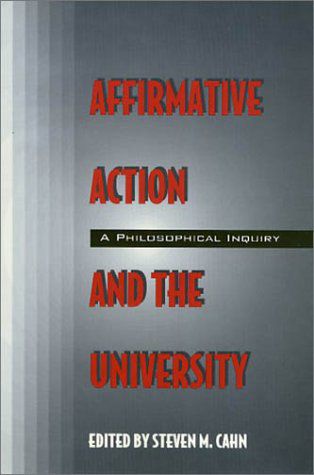
This book is recommended for anyone interested in understanding, questioning, articulating, and acting on the basis of their own and others’ perspectives on sexism, racism, and affirmative action in American higher education. –ChoiceWhile equal opportunity for all candidates is widely recognized as a goal within academia, the implementation of specific procedures to achieve equality has resulted in vehement disputes regarding both the means and ends. To encourage a reexamination of this issue, Cahn asked three prominent American social philosophers–Leslie Pickering Francis, Robert L. Simon, and Lawrence C. Becker–who hold divergent views about affirmative action, to write extended essays presenting their views. Twenty-two other philosophers then respond to these three principal essays. While no consensus is reached, the resulting clash of reasoned judgments will serve to revitalize the issues raised by affirmative action.ContentsIntroduction – Steven M. CahnPart I1. In Defense of Affirmative Action – Leslie Pickering Francis2. Affirmative Action and the University: Faculty Appointment and Preferential Treatment – Robert L. Simon3. Affirmative Action and Faculty Appointments – Lawrence C. BeckerPart II4. What Good Am I? – Laurence Thomas5. Who Counts on Campus? – Ann Hartle6. Reflections on Affirmative Action in Academia – Robert G. Turnbull7. The Injustice of Strong Affirmative Action – John Kekes8. Preferential Treatment Versus Purported Meritocratic Rights – Richard J. Arneson9. Faculties as Civil Societies: A Misleading Model for Affirmative Action – Jeffrie G. Murphy10. Facing Facts and Responsibilities – The White Man’s Burden and the Burden of Proof – Karen Hanson11. Affirmative Action: Relevant Knowledge and Relevant Ignorance – Joel J. Kupperman12. Remarks on Affirmative Action – Andrew Oldenquist13. Affirmative Action and the Multicultural Ideal – Philip L. Quinn14. Affirmative Action in the Cultural Wars – Frederick A. Olafson15. Quotas by Any Name: Some Problems of Affirmative Action in Faculty Appointments – Tom L. Beauchamp16. Are Quotas Sometimes Justified? – James Rachels17. Proportional Representation of Women and Minorities – Celia Wolf-Devine18. An Ecological Concept of Diversity – La Verne Shelton19. Careers Open to Talent – Ellen Frankel Paul20. Some Sceptical Doubts – Alasdair MacIntyre21. Affirmative Action and Tenure Decisions – Richard T. De George22. Affirmative Action and the Awarding of Tenure – Peter J. Markie23. The Case for Preferential Treatment – James P. Sterba24. Saying What We Think – Fred Sommers25. Comments on Compromise and Affirmative Action – Alan H. GoldmanAbout the AuthorsIndex About the Author(s)Steven M. Cahn is Professor of Philosophy and former Provost and Vice President for Academic Affairs at the Graduate Center of the City University of New York. He has published numerous other books, including Morality, Responsibility, and the University (Temple).Contributors: Laurence Thomas, Ann Hartle, Robert G. Turnbull, John Kekes, Richard J. Arneson, Jeffrie G. Murphy, Karen Hanson, Joel J. Kupperman, Andrew Oldenquist, Philip L. Quinn, Frederick A. Olafson, Tom L. Beauchamp, James Rachels, Celia Wolf-Devine, La Verne Shelton, Ellen Frankel Paul, Alasdair MacIntyre, Richard T. De George, Peter J. Markie, James P. Sterba, Fred Sommers, Alan H. Goldman, and the editor.
This book examines the many ways in which the Communist Party in China is still revolutionary by focusing on how, in recent years, it has attempted to mobilize Party members to become ethical subjects. In the context of the Party’s history of the military revolution, Cultural Revolution and Economic Reform (or economic revolution), the authors argue that under President Xi Jinping the Party has launched an ethical revolution within the Party for the sake of sustaining its legitimacy. This book examines the various combined components of this ethical revolution, including anti-corruption, anti-four undesirable working styles and Mass-Line Education programme from the perspective of the fifty current Communist Party officials. .
This is a close and comprehensive study of the main themes of Aristotle’s ethics. Sarah Broadie concentrates on what he has to teach about happiness, virtue, voluntary agency, practical reason, incontinence, pleasure, and the place of theoria in the best life. Never forgetting that ethics for Aristotle is above all a practical enterprise, she sheds new light on ways in which this practical orientation affects both content and method of his inquiry. The book culminates in a sustained argument showing how even Aristotle’s ideal of theoretic contemplation in integral to his essentially practical vision of human nature. Ethics with Aristotle is a major contribution toward the further understanding of Aristotle’s ethics.
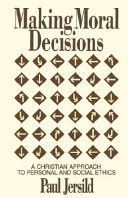
The question “What am I to do?” needs the balance and completion of “What are we to do?” With clarity and insight Jersild addresses the particular need of our time: a great awareness of our interdependence as a world community. The relationship between private and public morality is clarified by exploring such questions as: “What prompts Christians to disagree on moral issues?” “Is there a Christian morality?” and “How are convictions related to decisions?” Using critical incidents or cases to illustrate ethical points, Jersild examines such contemporary issues as euthanasia, employment and one’s sense of vocation, homosexuality, and more.
The central thesis of philosopher David Boonin is that the moral case against abortion can be shown to be unsuccessful on terms that critics of abortion can and do accept. Critically examining a wide array of arguments that have attempted to establish that every human fetus has a right to life, Boonin posits that all of these arguments fail on their own terms. He then argues that even if the fetus does have a right to life, abortion can still be shown to be morally permissible on the critic of abortion’s own terms. Finally, Boonin considers a number of arguments against abortion that do not depend on the claim that the fetus has a right to life, including those based on the golden rule, considerations of uncertainty and a commitment to certain feminist principles, and asserts that these positions, too, are ultimately unsuccessful. The result is the most thorough and detailed case for the moral permissibility of abortion that has yet been written. David Boonin is professor of philosophy at the University of Colorado. He is the author of Thomas Hobbes and the Science of Moral Virtue (Cambridge, 1994).
ما از اخلاق چه انتظاری داریم؟ این سوال شاید تاحدودی برای عموم مردم و یا متخصصان این رشته قابل پاسخ باشد؛ اینکه خوب بودن را به ما بیاموزد و در تنظیم روابط فردی م...

جشن کتاب تهران به ایستگاه سی و یکم رسیده است. حال و احوال نشر کتاب خوب نیست و باید فرهنگدوستان را به خرید و هدیه دادن کتاب ترغیب نمود. خانه اخلاقپژوهان جوان ب...

بنیاد کتابهای اخلاق اسلامی عمدتا پالایش جان از آلودگیها و آراستن آن به زیباییها است. اندیشه محوری این قبیل کتابها آن است که انسان فعلی آنی نیست که باید باشد...

-
0 Comments