Moral Stealth
by Arnold Goldberg
2007
2488
616.8914
9780226301204
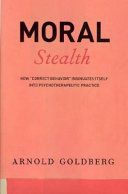
“In Moral Stealth, Goldberg explores and explains that problem of “correct behavior.” He demonstrates that the inflated and official expectations that are part of an analyst’s training – that therapists be universally curious, hopeful, kind, and purposeful, for example – are often of less help than simple empathy amid the ambiguous morality of actual patient interactions. Being a good therapist and being a good person, he argues, are not necessarily the same.” “Drawing on case studies from his own practice and from the experiences of others, as well as on philosophers such as John Dewey, Slavoj Zizek, and Jurgen Habermas, Goldberg breaks new ground and leads the way for therapists to understand the relationship between private morality and clinical practice.”–BOOK JACKET.
Warning: Invalid argument supplied for foreach() in /home/ethicsho/public_html/wp-content/themes/Hedayat/woocommerce/single-product.php on line 641




Notice: تابع id به طورنادرست فراخوانی شد. خاصیت های محصول نباید به صورت مستقیم مشاهده شود. Backtrace: require('wp-blog-header.php'), require_once('wp-includes/template-loader.php'), include('/themes/Hedayat/woocommerce/single-product.php'), WC_Abstract_Legacy_Product->__get, wc_doing_it_wrong لطفاً برای اطلاعات بیشتر، اشکال زدایی در وردپرس را مشاهده کنید. (این پیام در نگارش 3.0 افزوده شده است.) in /home/ethicsho/public_html/wp-includes/functions.php on line 5313